Stillwater taps unspent road tax money to speed up street projects
A Campus Corner rebuild in December and micro-surfacing on Main, Boomer, Washington and Perkins in November lead the list of what's next


A Campus Corner rebuild in December and micro-surfacing on Main, Boomer, Washington and Perkins in November lead the list of what's next
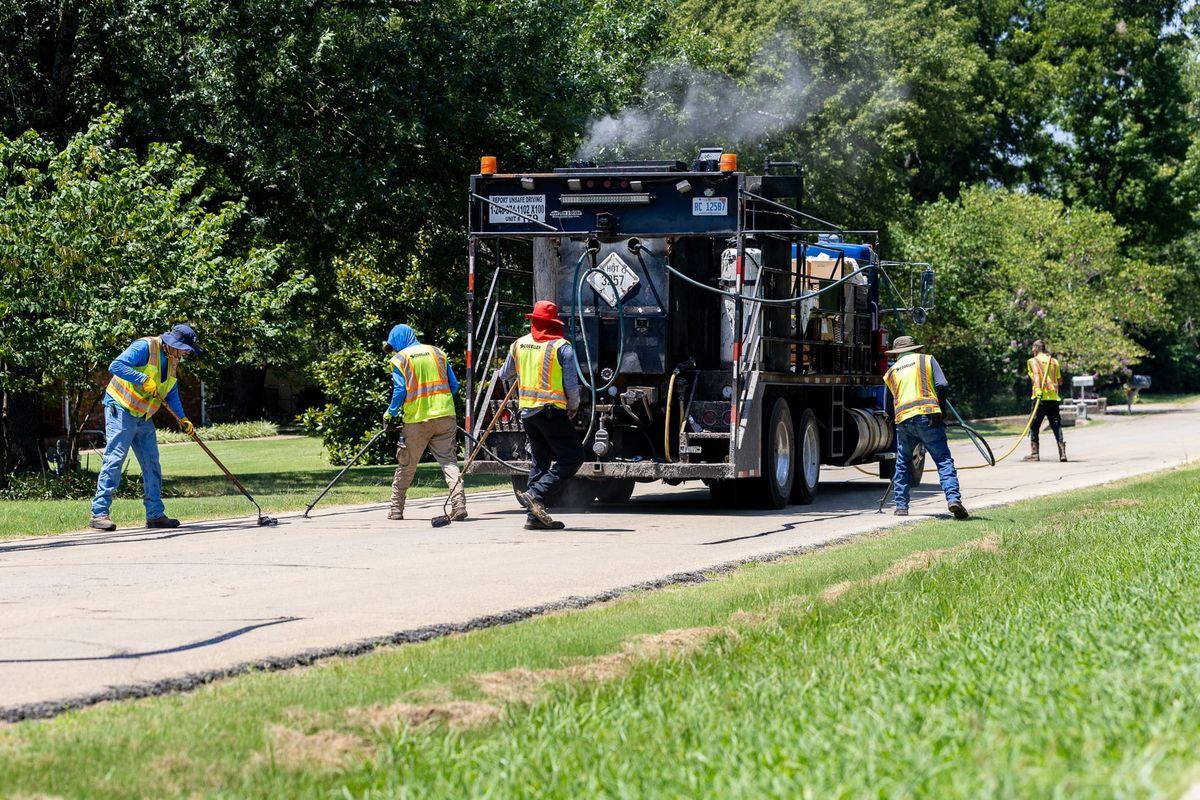
Stillwater is dipping into years of unspent road tax money to get more street projects designed, bid and built, city engineers told the City Council on Monday, with work planned in neighborhoods across town over the next two years.
The city expects to commit roughly twice what its transportation sales tax will bring in this fiscal year. Director of Engineering Bill Millis said a backlog of projects already existed when voters doubled the tax in 2022, and the city has spent the years since ramping up to spend at a much higher rate than it was used to.
The biggest projects residents will see soon include a reconstruction of Knoblock Street, Fourth Avenue and Lincoln Street at Campus Corner, planned to begin in December, and a micro-surfacing project on stretches of Main Street, Boomer Road, Washington Street and Perkins Road planned to start in November, according to the city's project implementation plan.
"I'd still rather see it on the street," Mayor Will Joyce said after City Manager Brady Moore noted the fund's remaining balance continues to earn interest.
"Oh, you will. In two or three years, absolutely," Moore said.
The update, presented by Millis and Capital Program Manager Jordan Coirier, was the first full look at the program in about a year. The council took no action.
Councilor Christie Hawkins asked whether the one-page program summary Millis presented would be available for residents to study. Moore said it would be posted on the city's transportation projects page the next day.
As of Tuesday afternoon, the summary was available on the mayor's page of the city's website. The city's Pavement Management Plan page still showed the previous plan.
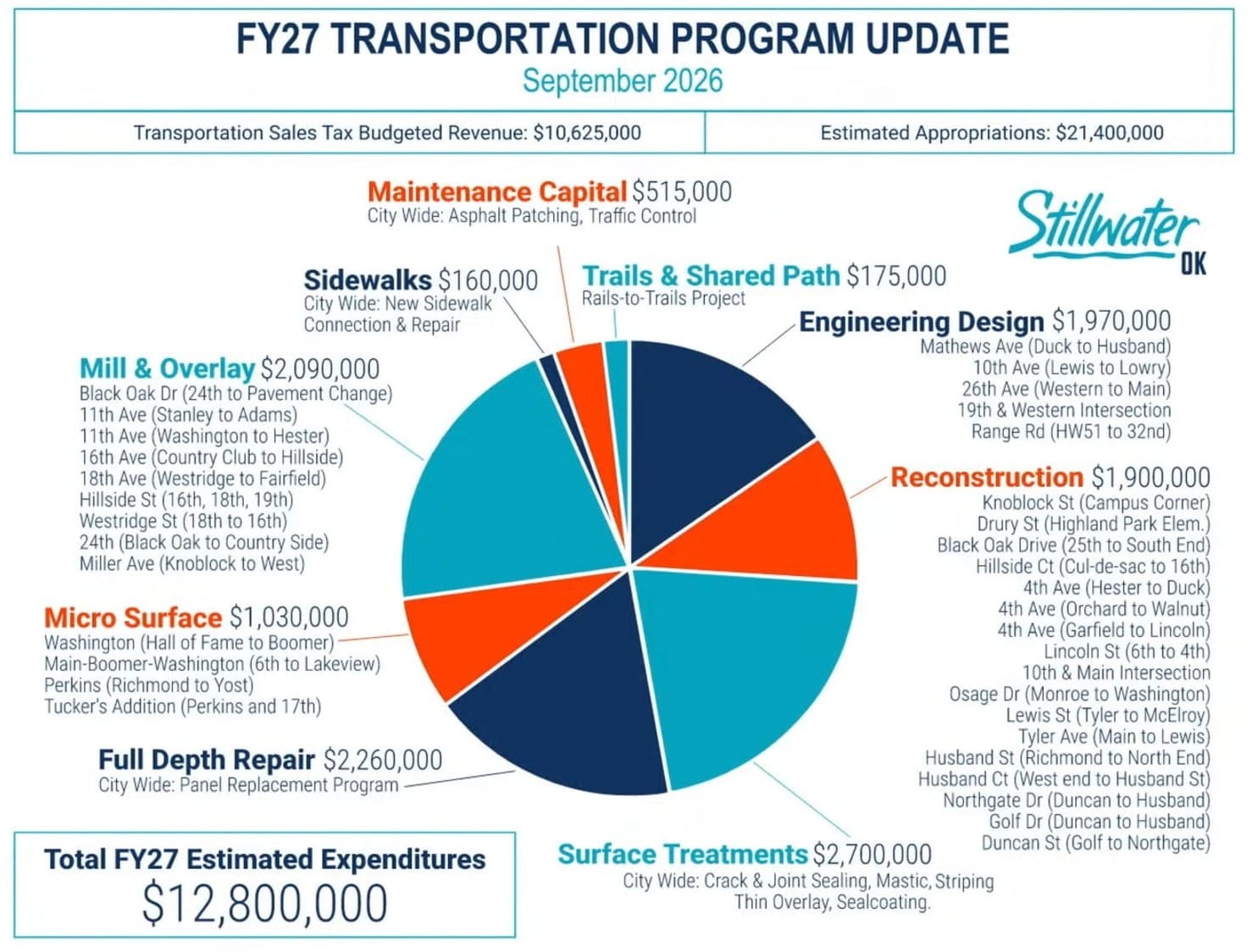
The city budgeted $10.6 million in transportation sales tax revenue for fiscal 2027 and estimates it will appropriate $21.4 million for projects, according to the summary. The difference comes from money that built up in the fund in earlier years.
Millis said the fund had about $25 million in available, unappropriated money at the end of fiscal 2026 and projected $14 million would remain at the end of fiscal 2027. He said the goal is to bring the balance down to $3 million to $5 million by the end of fiscal 2028 or 2029, when the city would likely need to slow spending to match revenue.
The city's Transportation Program Implementation Plan, a project-by-project spreadsheet staff shared with the city's Transportation Project Advisory Committee, known as TPAC, on Sept. 24, projects about $3 million remaining at the end of fiscal 2028.
Committing money is not the same as spending it. Of the $21.4 million the city expects to appropriate this year, the summary estimates $12.8 million will actually be paid out. Millis said the city appropriates the full cost of a project when a contract is awarded, but a contractor may take a year or two to finish the work and draw down the money.
Joyce said that lag is part of what can be hard to explain to residents.
"You can't just say, 'OK, here's a million dollars, let's go fix a road.' It takes time to get those projects through, it takes time to identify them." Joyce said.
The fund earned about $817,000 in interest in fiscal 2026, according to an unaudited financial report in TPAC's packet.
| Type of work | What it covers | FY27 estimated spending |
|---|---|---|
| Surface treatments | Citywide crack and joint sealing, mastic, striping, thin overlay and sealcoating | $2,700,000 |
| Full-depth repair | Citywide concrete panel replacement | $2,260,000 |
| Mill and overlay | Black Oak, 11th, 16th, 18th, Hillside, Westridge, 24th and Miller segments | $2,090,000 |
| Engineering design | Mathews, 10th, 26th, 19th and Western, Range Road | $1,970,000 |
| Reconstruction | Knoblock, Fourth Avenue and Lincoln at Campus Corner; Drury; 10th and Main; Black Oak Drive; Hillside Court; and Osage, Lewis, Tyler, Husband, Northgate, Golf and Duncan | $1,900,000 |
| Micro-surfacing | Main-Boomer, Washington, Perkins, and 12th, 14th and 16th avenues | $1,030,000 |
| Maintenance capital | Citywide asphalt patching and traffic control | $515,000 |
| Trails and shared path | Rails-to-Trails project | $175,000 |
| Sidewalks | Citywide new connections and repair | $160,000 |
| Total estimated FY27 expenditures | $12,800,000 | |
Councilor Kevin Clark asked what the engineering department is doing to move projects forward faster once the council allocates money.
Millis said much of the acceleration has happened in design, out of public view. Sometime in the past 12 to 24 months, the city hired the engineering firm Benham Design as a program manager to handle multiple projects at once rather than one at a time. The firm also helps staff turn the city's pavement condition data into defined projects, a step Millis said the department lacked the experience and personnel to handle on its own.
"You can't take that and create projects from it. So it takes a lot of judgment," Millis said of the raw data.

Tackling a big remodel or DIY project? Stillwater Building Center delivers the materials to match — lumber, panels, and supplies hauled straight to your site with our own fleet. No job too big.
The city still completes a condition assessment of every street about every five years, which feeds a pavement condition index model used to choose treatments and rank roads, Millis said. What has changed is how staff turn that data into a schedule.
For years, the city budgeted road work through annual pavement management plans. Staff assembled a list of streets and treatments for the coming fiscal year, took it to TPAC and then to the council for approval as a single plan. Staff returned to the council for individual contracts as projects became ready.
In August 2025, for example, the council approved a $10 million pavement management plan for fiscal 2026. It set aside $2.23 million for reconstruction of Mathews Avenue from Duck Street to Husband Street, 10th Avenue from Lewis Street to Lowry Street and 26th Avenue from Western Road to Main Street, along with intersection improvements at 19th Avenue and Western.
The plans overlapped. At that August 2025 meeting, Millis told the council the city was still closing out work from older plans.
"We did a five-year plan in 2021 and then we did another plan in 2025," Millis said then. "So we kind of doubled up on that year."

Shop Stillwater Sundays — Spend $50 at Stillwater shops, restaurants, hotels or attractions the Sunday after an OSU home football game and you're entered to win a $100 gift card to a local business from Visit Stillwater.
Monthly status reports to TPAC grouped projects under the plan year that paid for them, with an estimated cost and a written update for each. The transportation fund's financial report carried unfinished plans as lump sums. In October 2025, it listed $8.8 million still needed for the fiscal 2025 plan and $8.32 million for fiscal 2026.
Millis told councilors Monday that approach "simply wasn't meeting the needs of today's program" after the program doubled in size and projects "kind of bumped their way to the front of the line."
"So we needed a tool that was more flexible, more fluid, and more forward-looking," he said.
Moore previewed the replacement, the implementation plan, to TPAC in July, according to committee minutes. In August, Millis told the committee it would include forward-looking items and function as a live planning tool instead of only a monthly report. Millis on Monday called it "a fancy name for a forecasting spreadsheet."
The plan gives each project its own line, with its design start date, bid date, construction start and end dates, engineering and construction costs, and how much the city expects to appropriate and spend on it in each of the next three fiscal years. Those figures roll up into a projected fund balance at the end of each year.
The reconstruction projects from the old fiscal 2026 pavement management plan are now one line in the new spreadsheet. The Mathews, 10th and 26th reconstructions and a 19th and Western intersection study are grouped in a single package. The council approved its engineering July 7, and construction is planned from August 2027 through November 2028.
The city will also begin requesting appropriations only when a contract is ready to award, with a contingency, rather than estimating construction costs a year or two ahead of time, Millis said.
Moore said the change moves road work toward the kind of capital improvement planning the city already uses for water and wastewater.
Vice Mayor Amy Dzialowski said one of the most common questions she hears is why the city is working on one road when another is in visibly worse shape. She asked staff to consider a plain-language companion piece to the summary explaining how the city decides which roads get which treatment and when.
Millis said staff would look at condensing it, and he said the core principle is cost.
"The maintenance to keep a good road good is so much cheaper than to make a bad road good," Millis said.
He said the city wants to spend 60 to 70 percent or more of its roughly $10 million in annual revenue on maintenance rather than reconstruction.
"If you just started with the worst road and start replacing them there and just move up the list, we would never get done," Millis said.
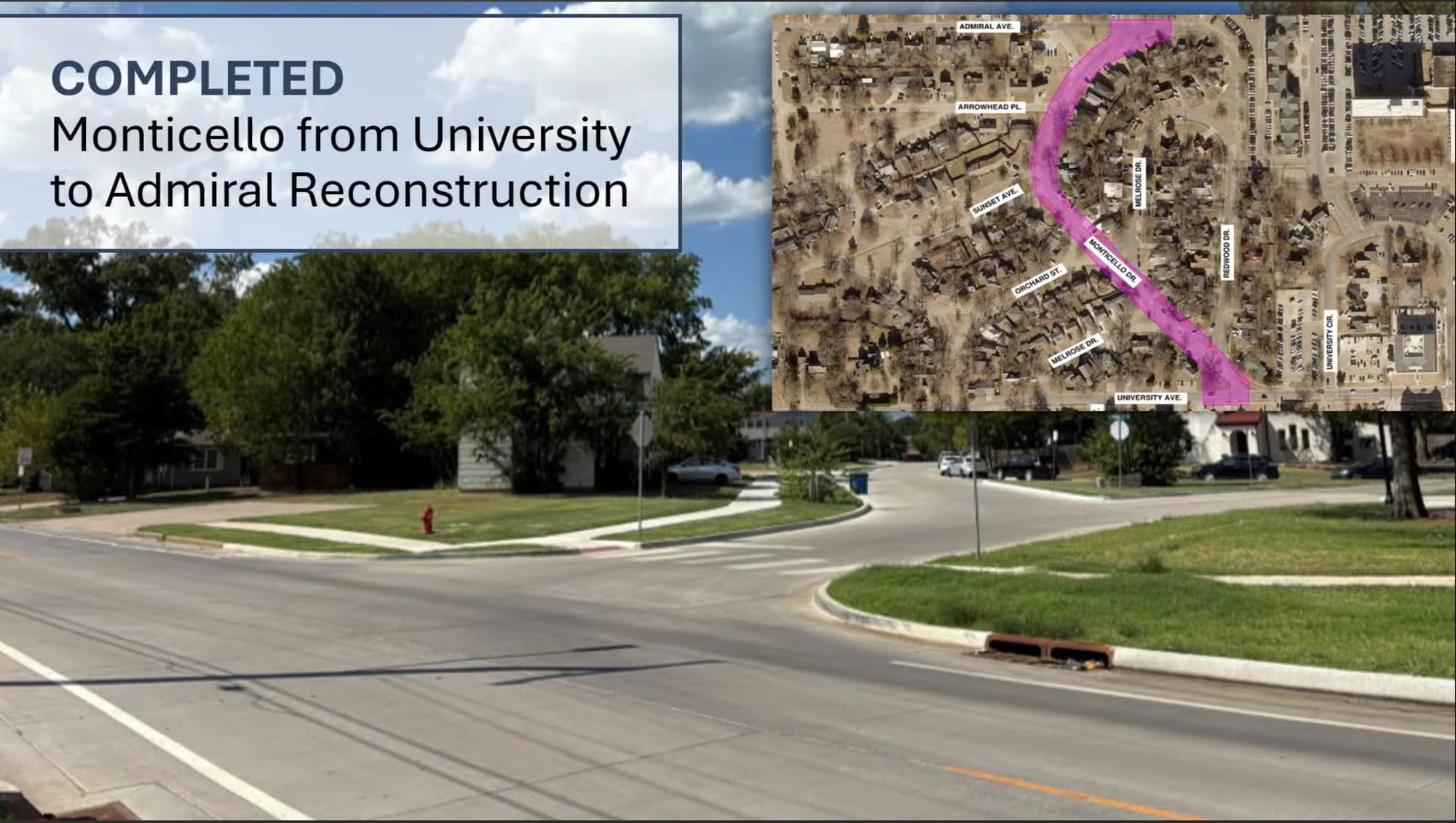
Joyce asked what the recently completed reconstruction of Monticello Drive from University Avenue to Admiral Avenue cost. Millis said the transportation portion was $3.2 million. Water and sewer work on the project was paid separately from the utility fund. The implementation plan lists the construction cost at $3.23 million, with another $750,000 for engineering.
Joyce noted that $3.2 million equals about 30 percent of a year's transportation sales tax revenue.
"And that's just one street, a quarter or a third of a mile," Millis said.
Joyce added that Monticello "needed to be fixed for a long time, but it's not exactly one of our major thoroughfares."
Asked by Dzialowski for a current cost per lane mile, Millis said the old rule of thumb of $1 million per lane mile is now probably closer to $1.5 million to $1.75 million. Joyce clarified that figure applies to full reconstruction.
Clark said the planning should also spread projects across town so drivers are not "running into another roadblock" at every turn.
Millis said that coordination extends to individual contracts. Washington Street and Boomer Road are both part of an upcoming micro-surfacing project, and staff must make sure the contractor does not have traffic control on both at the same time, he said. Staff also try to avoid sealcoating a road that is slated for a mill and overlay the following year.
Clark asked whether the city is timing its projects so that local bypass routes are not tied up when the state reconstructs Highway 51.
Millis said staff are already planning what Ninth Avenue needs in the short term to handle extra traffic during that work.
"Of course, we don't know how long that construction period's going to be, but that would be definitely the goal, is to have Ninth ready to handle extra traffic and not schedule a Ninth Avenue major project at the same time as Sixth Avenue," Millis said.
The state's Highway 51 project would widen Sixth Avenue to five lanes, including a two-way center turn lane, for 2 miles from Western Road east to U.S. 177. The $29.4 million project is scheduled to begin in 2029, the Stillwater News Press reported this month.
The Stillwegian has reached out to the Oklahoma Department of Transportation to confirm the project's dates and timeline.
"I would anticipate a construction duration of approximately a year and a half," Matt Mitchell, ODOT's District 4 engineer, told the News Press.
Planning and scoping for the project was completed in summer 2017, according to ODOT's online construction project status map. Environmental studies, which cover hazardous waste, biological and cultural resources and can include public outreach, have not started and are planned for fall 2026. Design, which includes final plans, right-of-way acquisition and utility relocation, is 60 percent complete and planned for summer 2027. Right-of-way work is 25 percent complete and planned for fall 2027.
ODOT says the work will be built in phases to maintain traffic.
The summary color-codes projects by when residents can expect to see crews.
Under construction now
Mill and overlay, which grinds off worn pavement and lays new asphalt, and reconstruction, about $2.24 million, 45 percent complete and expected to wrap up in January: 11th Avenue • Miller Avenue • Black Oak Drive • 24th Avenue and Countryside • 16th Avenue • 18th Avenue • Hillside neighborhood
South Drury Street culvert and roadway replacement near Highland Park Elementary, $630,000 and 75 percent complete. Coirier said the road has reopened and final completion is expected later this fall.
Full-depth repair, which replaces damaged concrete panels at scattered locations, with work finished so far at Monroe, Mansfield and Crosswinds.
Citywide surface treatments, which now include mastic repairs, sealcoating and striping in addition to crack sealing. Mastic is a hot-applied asphalt patching material mixed with small stone. It is used to fill wide cracks, shallow ruts, small potholes and other surface damage that is too large for standard crack sealant but too small to justify repaving. The plan budgets $3 million for pavement maintenance and $400,000 for striping, both running through September 2027.
In the next three to six months
Campus Corner reconstruction, including utility work, which Millis called "a significant project." It is estimated at $4.3 million, with bids in October and construction from December through March 2028: Knoblock Street • Fourth Avenue • Lincoln Street
10th Avenue and Main Street intersection repairs, including the center island and the western half of the pavement, estimated at $165,000 and planned for December through March.
Micro-surfacing, now advertised for bids, with bids due Oct. 14 and work planned from November through August: Main Street and Boomer Road from Sixth Avenue to Lakeview Road • Washington Street from Hall of Fame Avenue to Boomer Road • Perkins Road from Richmond Road to Yost Road • 12th, 14th and 16th avenues at various locations
Millis put the micro-surfacing price at just over $1 million, the amount the summary shows the city spending on it this fiscal year. The implementation plan lists the total construction cost at about $1.7 million.
Sidewalk improvements, first phase, estimated at about $200,000 and soon to be advertised, with construction planned from January through July. The city hired Gose & Associates for the two-phase program. Design of a second phase of about $1 million is underway, with construction planned to start next May.
Millis said the sidewalk list drew heavily from the city's Sidewalk Connect program, which has received at least 110 to 120 requests, mostly from residents. Staff are prioritizing obvious needs near schools and shopping centers, and requests for accessible routes, starting with projects that "make a big difference with small amount of money."
In the next six to nine months
Reconstruction, now in design, estimated at $2.7 million, with bids in January and work from March 2027 through January 2028: Lakeridge Drive • Osage Drive • Lewis Street • Tyler Avenue • Husband Street and Husband Court • Northgate Drive • Golf Drive • Duncan Street
Mill and overlay, estimated at $1.8 million, with construction planned to start in July 2027: • McElroy Road from the city limits to Lincoln Street • Lincoln Street from Tyler Avenue to McElroy Road
Further out
Reconstruction, estimated at $5 million, with construction planned from August 2027 through November 2028: Mathews Avenue from Duck Street to Husband Street • 10th Avenue from Lewis Street to Lowry Street • 26th Avenue from Western Road to Main Street • A study of the 19th Avenue and Western Road intersection
Range Road reconstruction from Sixth Avenue to 32nd Avenue, estimated at $5.15 million, with construction planned from November 2027 through February 2029.
Millis said another rehabilitation package in design will include at least one more micro-surfacing project.
Coirier, who joined the engineering department in February, walked councilors through projects finished over the past year.
Among them were drainage repairs near 400 S. Villa Drive in the East Villa mobile home park and at West Fifth Avenue and South Orchard Street. Coirier said both included reconstruction with new curb and gutter and storm drains. Both were finished May 15, according to a project status report in TPAC's June agenda packet.
When TPAC discussed the repairs in October 2025, the Orchard site had a collapsed side drainage structure, and the Villa site had a road and sidewalk collapsing over a deteriorating culvert. The two emergency storm sewer repairs were estimated together at about $212,000.
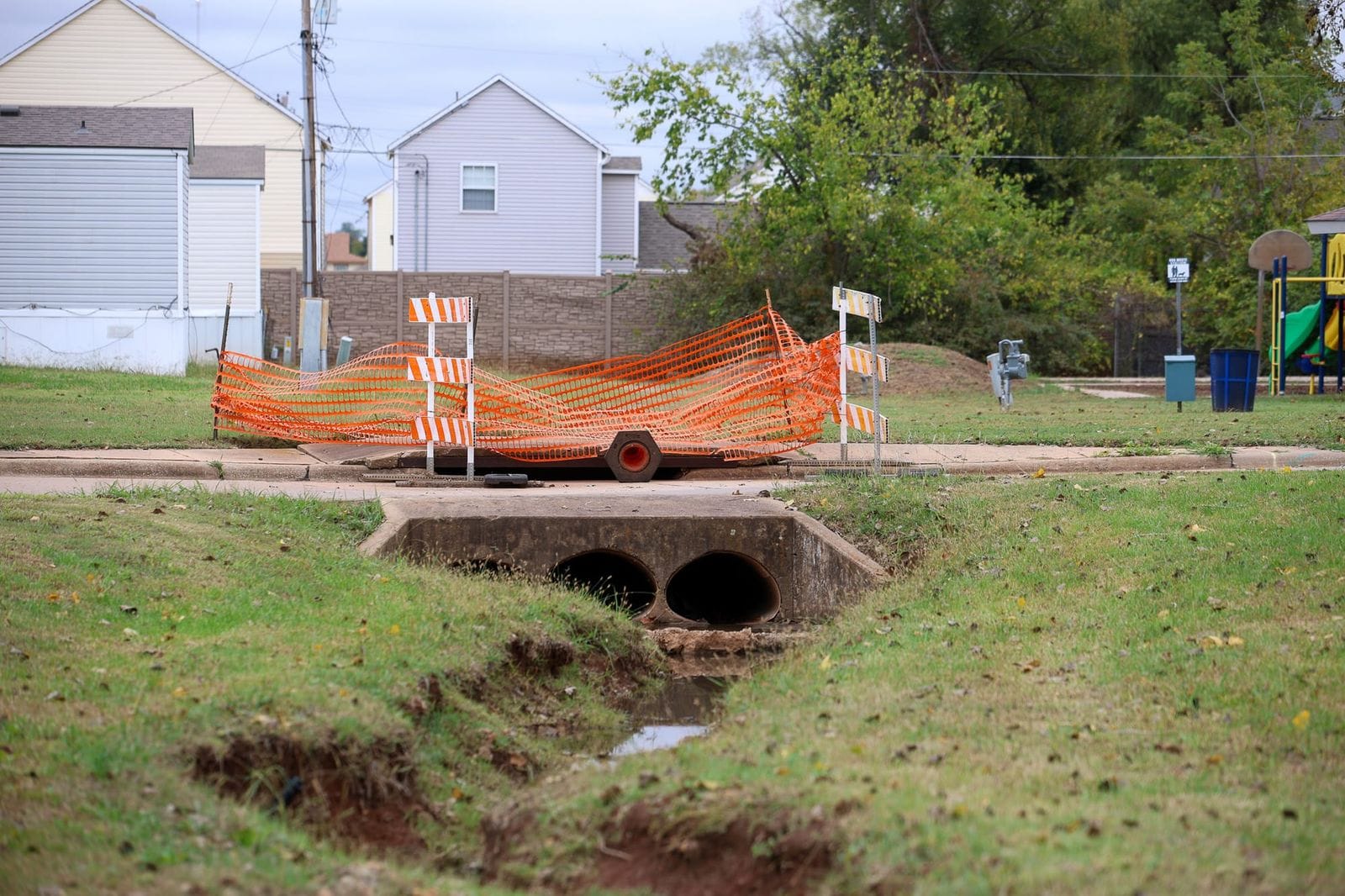
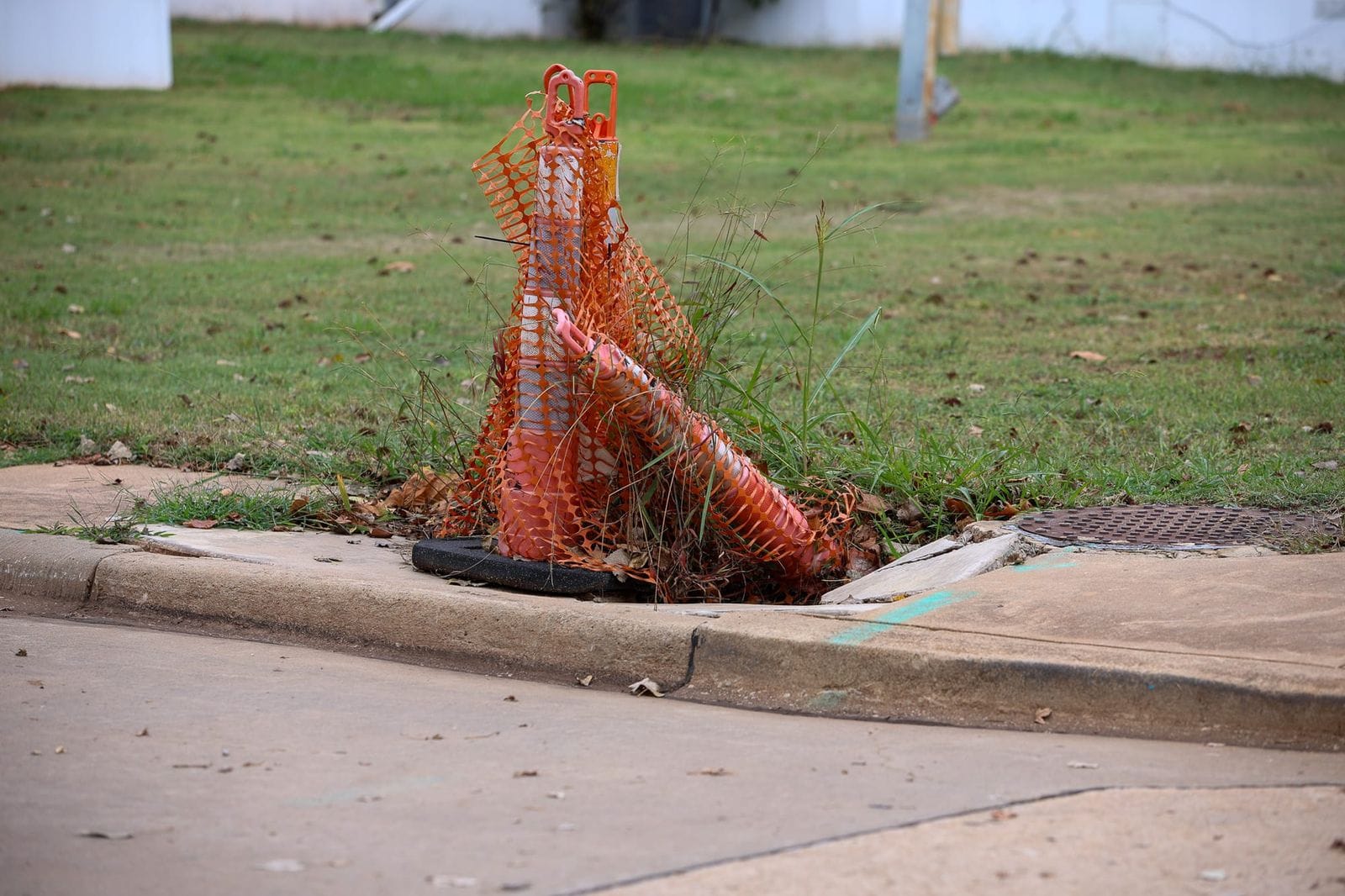
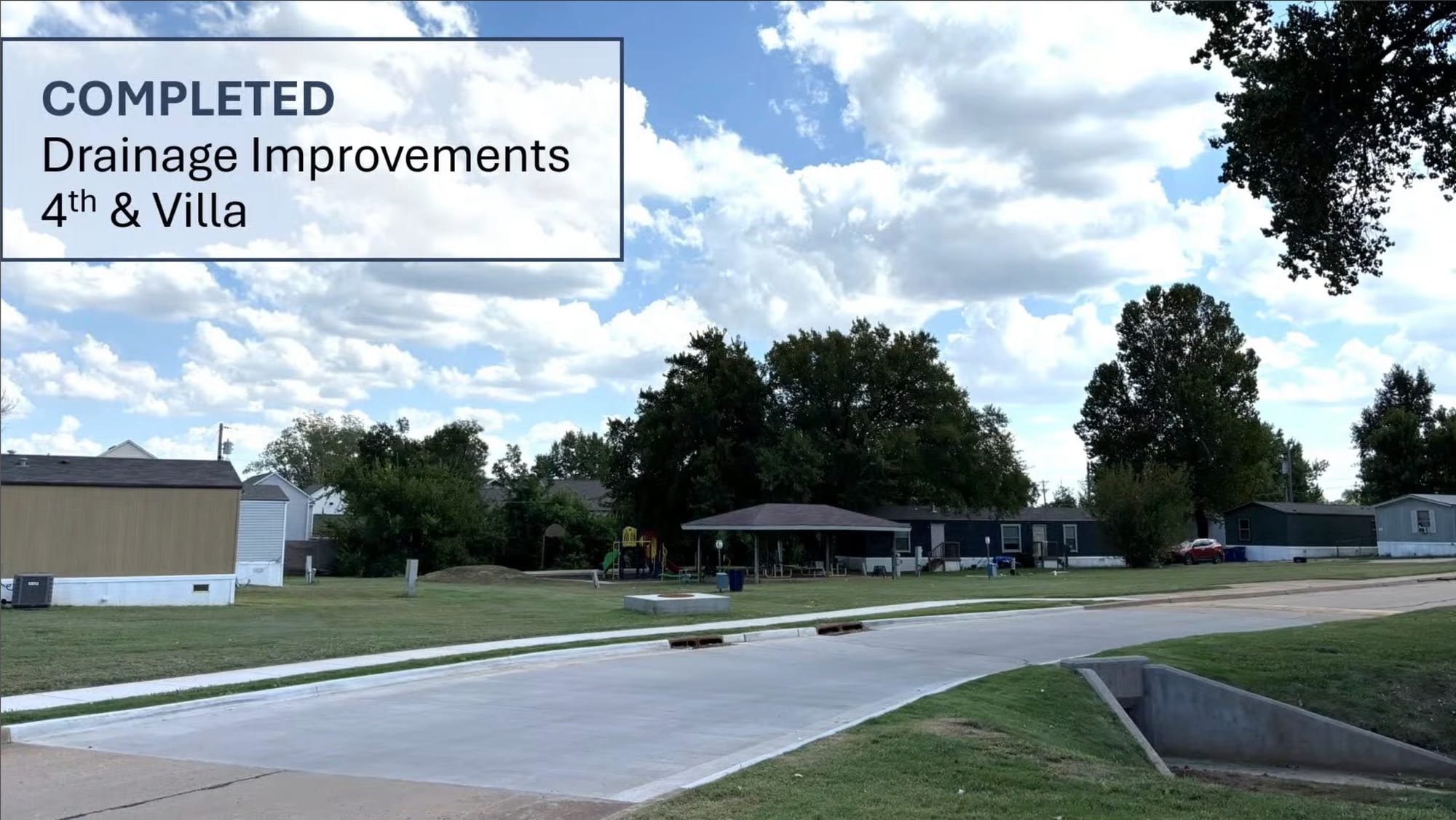
Left and center: Orange safety fencing marks a deteriorating culvert and a broken curb beside a storm drain in the East Villa mobile home park on Monday, Oct. 27, 2025. Right: The rebuilt street with new curb, gutter and storm drains, in an undated city photo. The city finished the repairs May 15. – Photos by Chris Peters (left, center) and courtesy of the City of Stillwater (right)
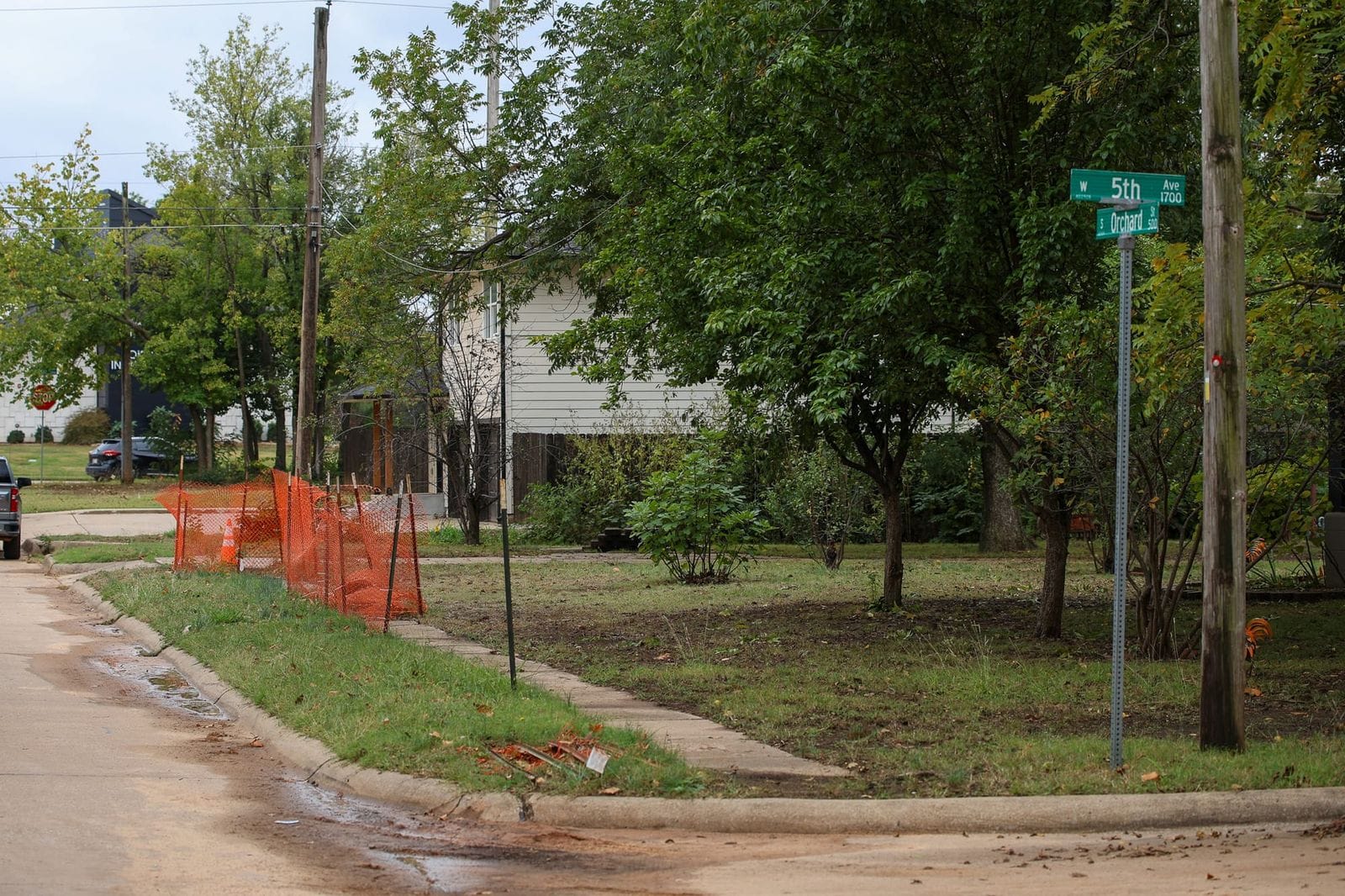
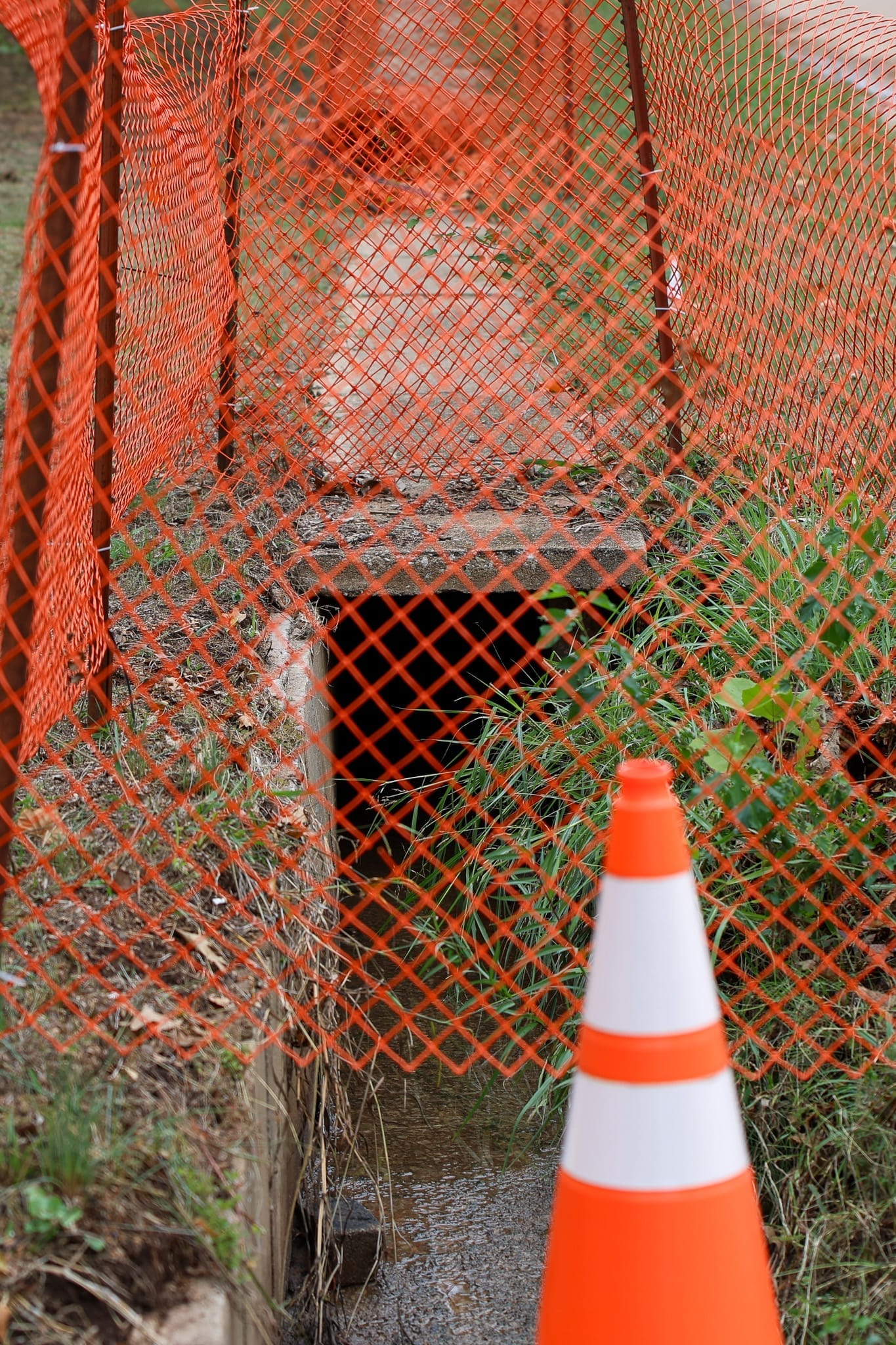
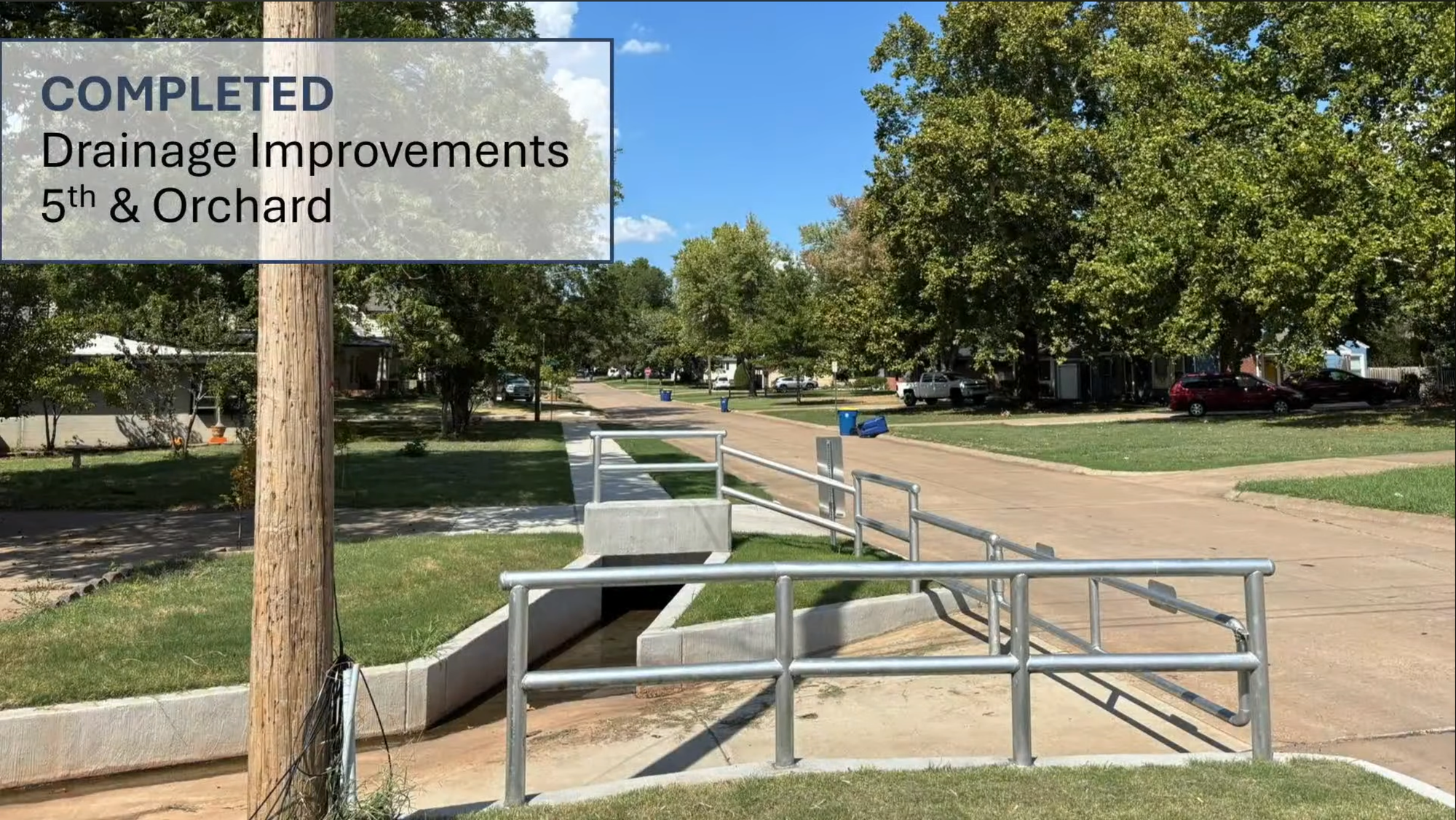
Left and center: Orange safety fencing blocks off a collapsed side drainage structure at West Fifth Avenue and South Orchard Street in the Westwood neighborhood on Monday, Oct. 27, 2025. Right: The rebuilt drainage channel, with new curb and guardrails, in an undated city photo. The city finished the repairs May 15. – Photos by Chris Peters (left, center) and courtesy of the City of Stillwater (right)
Other completed work Coirier listed:
Separately, the council approved on its consent docket a professional services agreement of up to $80,000 with Hudson Prince Engineering & Inspection to design safety improvements at the intersection of Perkins Road and Rogers Drive, according to the agenda packet. TPAC recommended the project Sept. 24. The consent docket passed 5-0.
Moore credited TPAC, which was created by resolution after the 2022 sales tax vote and meets monthly with staff to review projects and help ensure they are distributed fairly around town. He said Councilor Tim Hardin attends every TPAC meeting.
The TPAC committee next meets Oct. 22.
📺 Watch the presentation to City Council