SUA approves Boomer Lake Station demolition contract, new energy credit rate
Trustees hired an engineering firm to plan the plant's removal and approved a program letting large customers buy renewable energy certificates through GRDA


Trustees hired an engineering firm to plan the plant's removal and approved a program letting large customers buy renewable energy certificates through GRDA
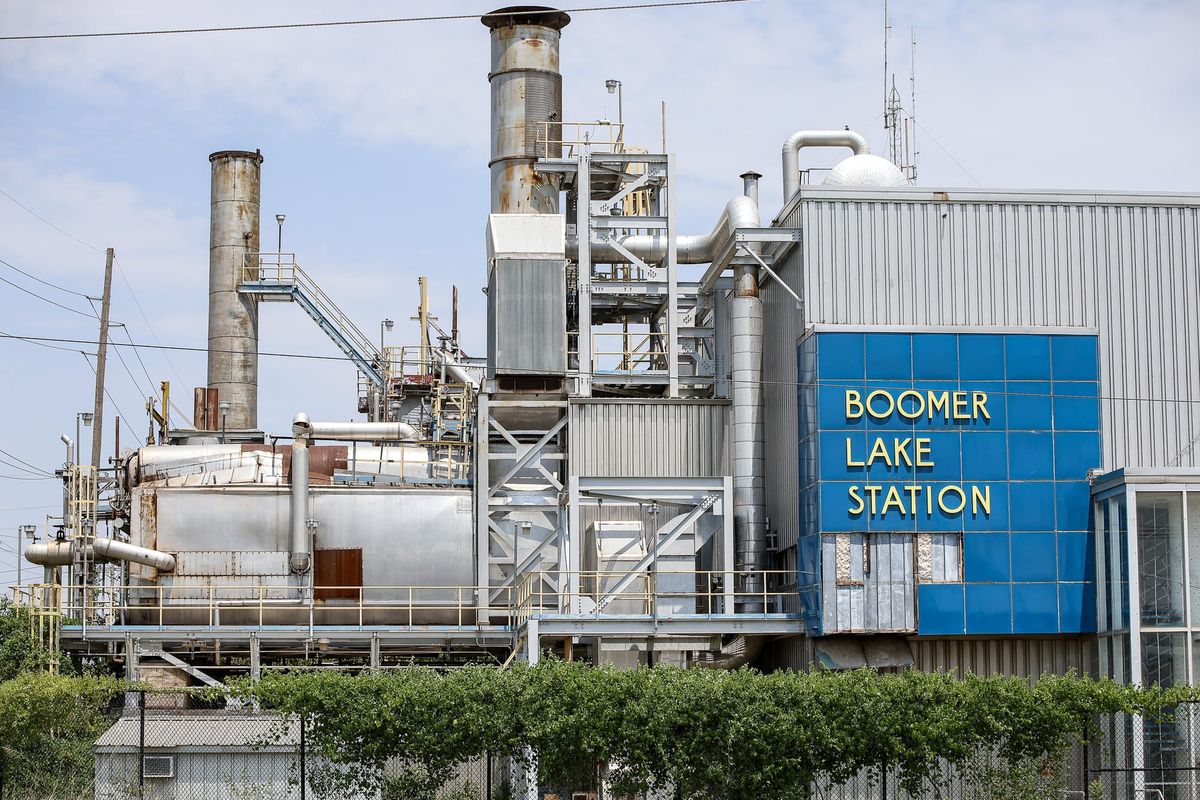
Stillwater Utilities Authority trustees voted unanimously Monday to hire Black & Veatch to engineer the demolition of the long-vacant Boomer Lake Station power plant, and separately adopted a new rate letting industrial customers buy renewable energy certificates.
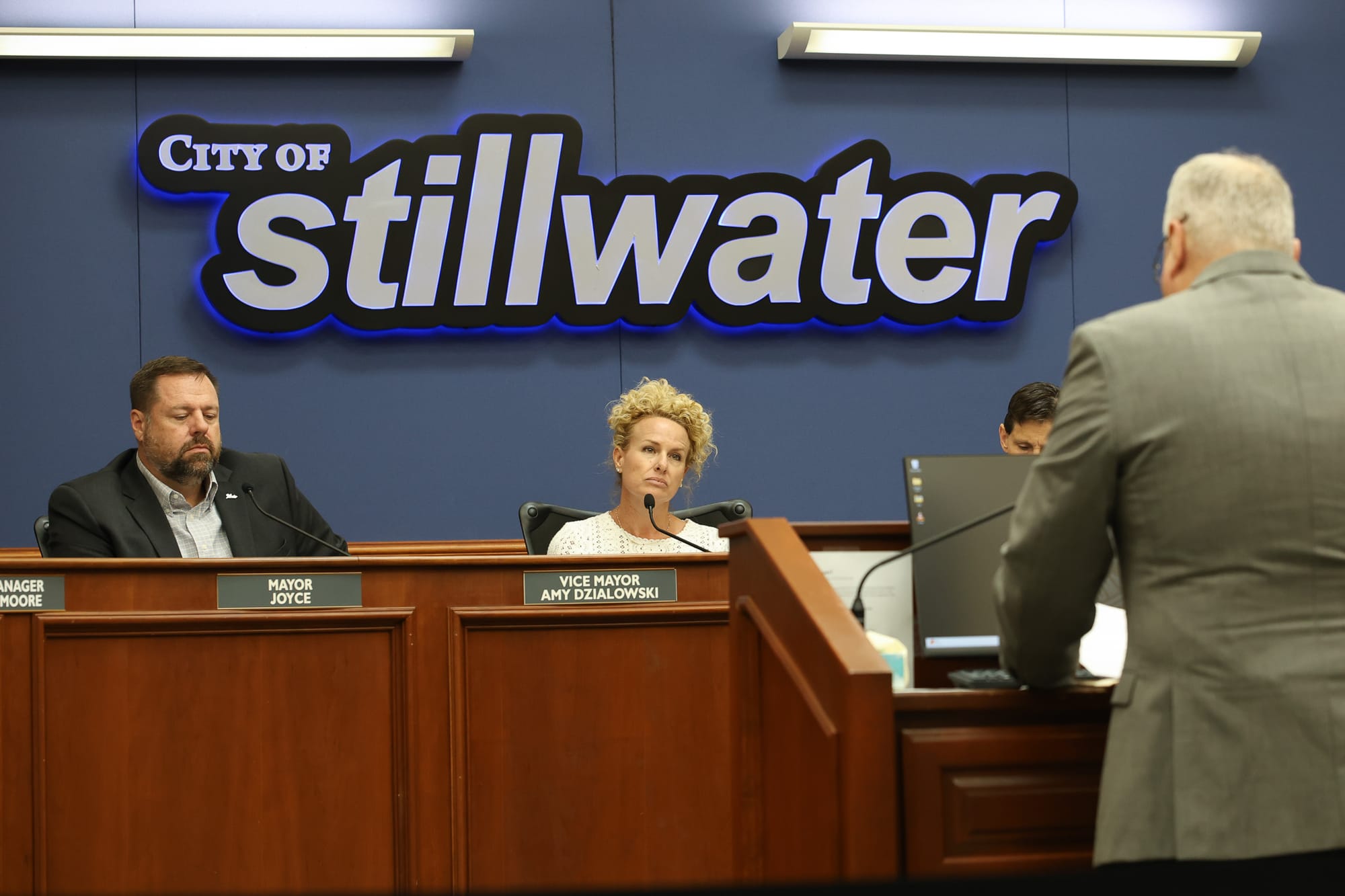
Trustees approved both items 5-0 at their Aug. 3 meeting. The full board — Chair Will Joyce, Vice Chair Amy Dzialowski and Trustees Christie Hawkins, Kevin Clark and Tim Hardin — sit on the authority as the same five members of the Stillwater City Council.
Boomer Lake Station, an electric generation facility built in the 1950s, has sat empty since it was decommissioned in June 2016, according to the trustees' report. The building and surrounding structures have degraded since then, and the authority has no plan to reuse them.
Trustees authorized General Manager Brady Moore to sign a contract with Black & Veatch for engineering and construction support services not to exceed $512,500, and approved spending up to $563,750 from the Electric Rate Stabilization Fund, an amount that includes a 10 percent contingency. Trustees also approved a related budget amendment.
Black & Veatch was the only firm to respond to a request for qualifications the authority issued in August 2025, Electric Utility Director Loren Smith told trustees. Staff spent months negotiating the scope of work, he said.
"Demolishing a power plant is complex due to the various large pieces of equipment in and around the building and infrastructure under the site," Smith said.
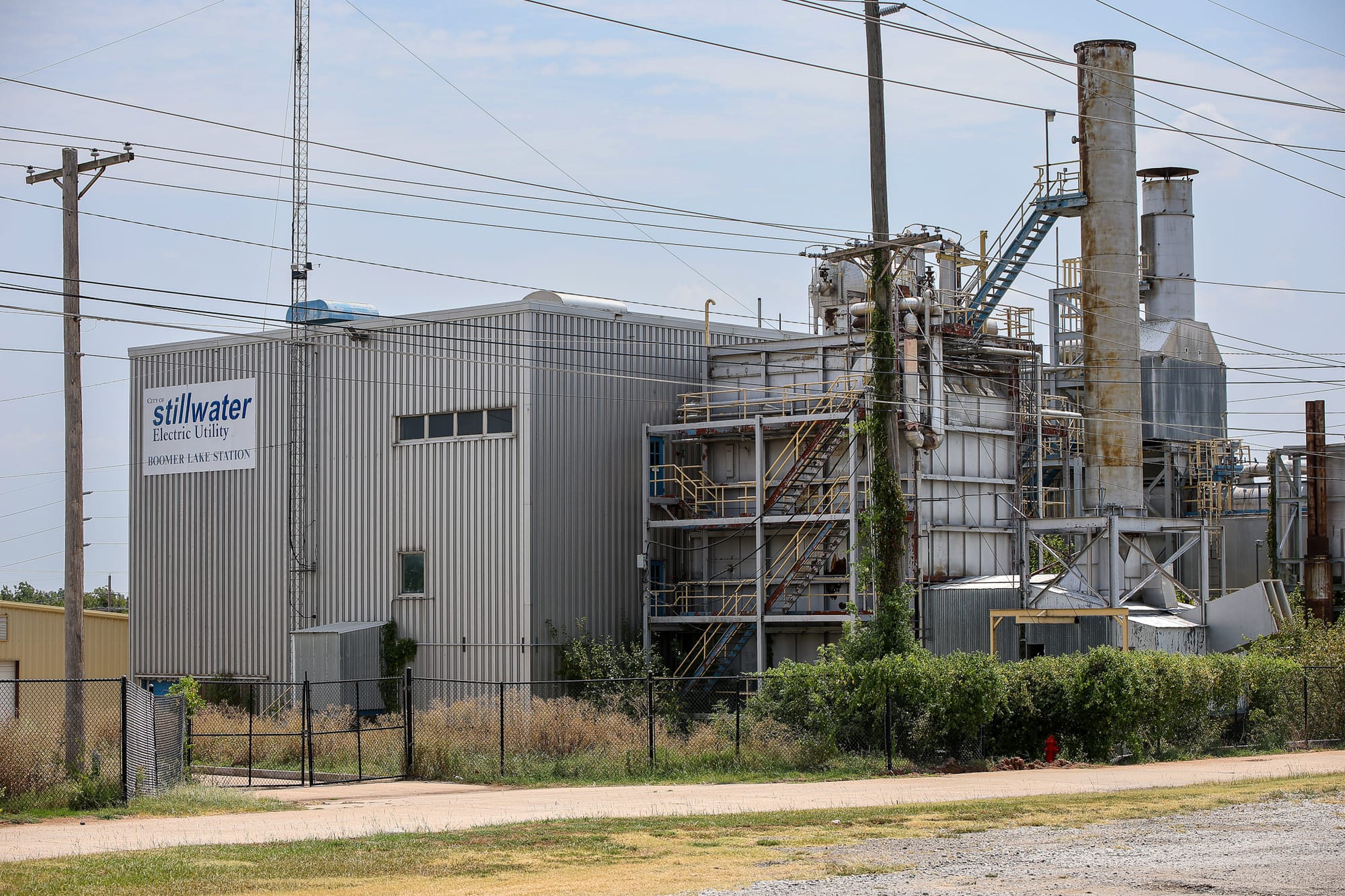
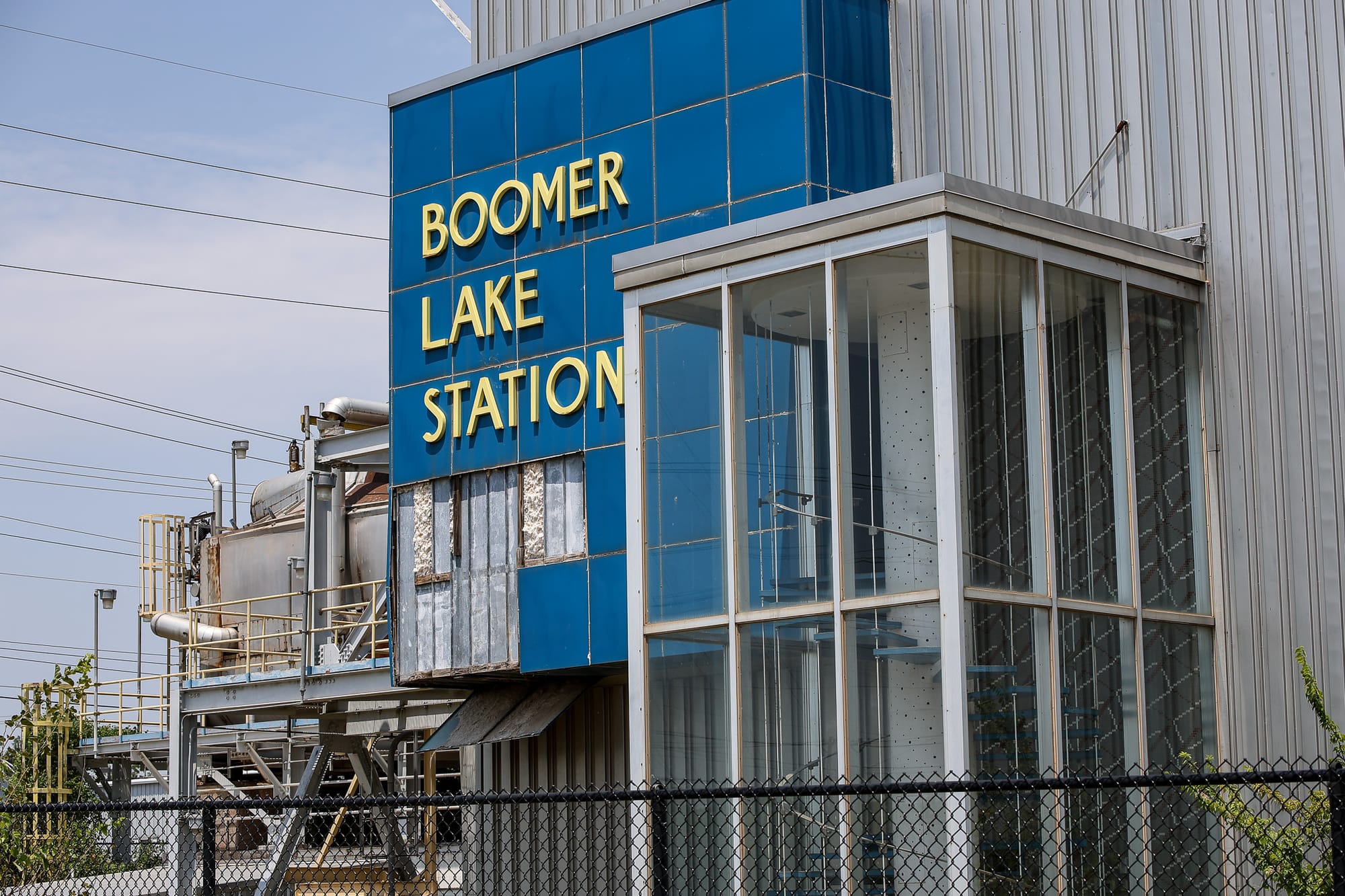
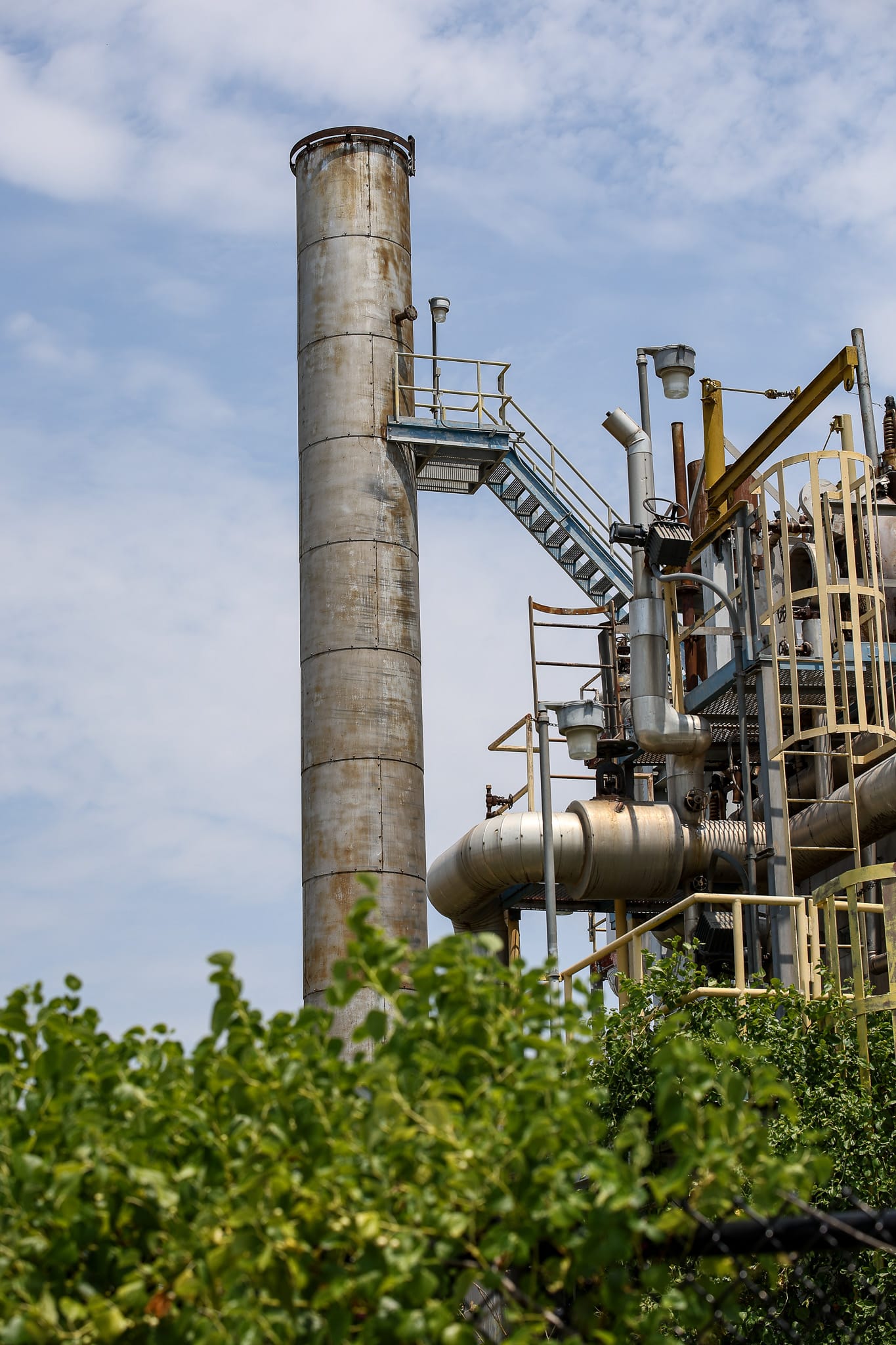
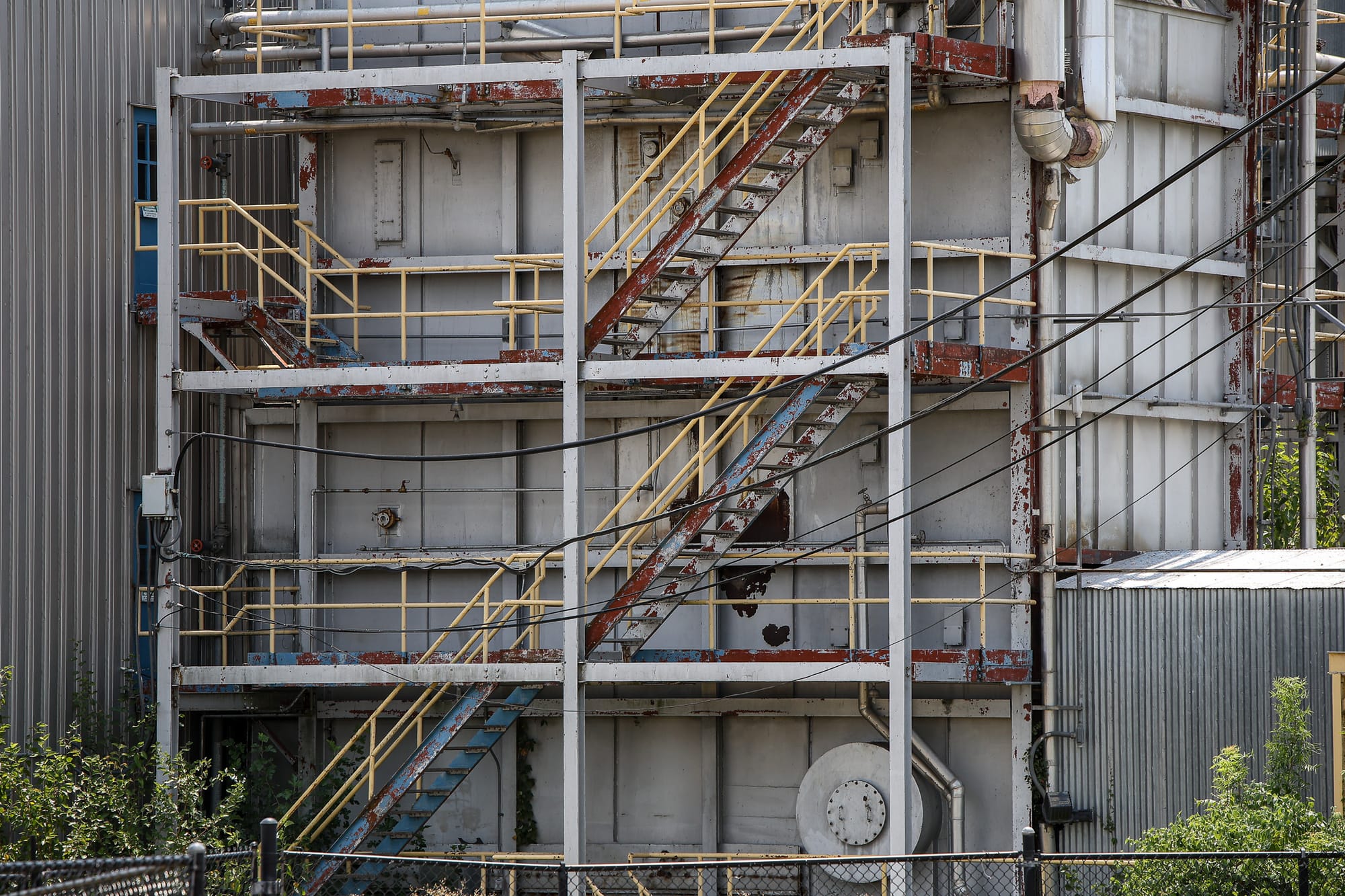
The Boomer Lake Station power plant sits vacant Wednesday, Aug. 5, 2026, in Stillwater. The decommissioned natural gas-fired steam turbine facility, built in the 1950s, is slated for demolition after the Stillwater Utilities Authority approved an engineering contract Aug. 3. – Photos by Chris Peters
The approved scope calls for removing all above- and below-grade infrastructure at the site, with the exception of the water intake structure in the lake and its underground piping, which will stay in place. Smith told trustees staff considered options ranging from $1.6 million to $4.4 million before settling on that scope. Black & Veatch's own estimate for the full demolition, separate from its engineering fee, is about $3.5 million, according to the trustees' report.
Smith said staff looked to Oklahoma State University, which recently demolished its own power plant near Hall of Fame Avenue and Washington Street, close to Boone Pickens Stadium, to inform Stillwater's approach.
"We were fortunate that OSU had recently completed the demolition of their power plant," Smith said. "We had several calls with them to discuss lessons learned."

Stillwater Building Center carries multiple Andersen window lines — and you can see them in person before you buy. Free estimates, local installers, and prices that may surprise you. Find us at 4521 S. Perkins Rd. on Highway 177 — open weekdays 7 a.m.–6 p.m., Saturdays 8 a.m.–noon.
📞 405-372-5959
One of those lessons: the authority hopes to recoup some of the project's cost through the scrap value of the plant's metal and equipment.
"There's scrappers that'll come in here and demo these type of facilities," Smith said. "If they do it right, that reduces the cost to them to do the demo." He said Oklahoma State's demolition drew a bid well below the rest once a scrap dealer factored in the resale value of the metal, and a scrapper has already contacted Stillwater about the Boomer Lake project.
Smith estimated it will take about six months to finalize contracts and bidding once Black & Veatch's engineering work is complete, followed by roughly six months of demolition.
The city previously tried to repurpose the plant rather than tear it down. The City Council created a tax increment financing district in December 2020 to help fund Lakeview Landing, a proposed private redevelopment that would have turned the plant into an entertainment complex with a brewpub, rooftop bar, retail space and lakefront townhomes, according to Stillwater News Press reporting at the time.
The city offered up to $9.3 million in incentives toward the roughly $30 million project, and the Stillwater Utilities Authority loaned up to $6 million of that toward the effort.
Developer Lakeview Landing LLC and the Stillwater Economic Development Authority mutually terminated their redevelopment agreement in October 2023, citing rising material and labor costs, according to the ordinance record. The City Council voted July 7 to formally dissolve the TIF district, known as Increment District No. 4, after no development occurred and no incremental tax revenue was ever collected or spent.
A message from Visit Stillwater
August is bursting with excitement in Stillwater! From the Payne County Free Fair and the return of Cowboy sports to the start of a new semester and can't-miss community events, there's something for everyone to enjoy.
City Manager Brady Moore said the city intends to prepare the site for economic development once the plant is gone. Moore pointed to the Lakeview Landing project as a lesson for how the city approaches the site's next chapter, noting that the cost to rehabilitate the existing structures had proved unworkable.
"We will, at the appropriate time, probably discuss this (with) city council and make a decision to move forward with maybe another (request for proposals)," Moore said, noting two additional lots facing Boomer Lake that were part of the earlier Lakeview Landing proposal could also be considered.
Dzialowski asked whether the demolition plan includes regrading the site back to grass once the buildings are removed. Smith said crews will bring in fill dirt, grade the site and seed it, in part for erosion control near the lake.
Trustees also adopted Resolution SUA-2026-5, creating a Renewable Energy Certificate Program rate and authorizing Moore to sign agreements with customers who want to buy the certificates.
Smith said the interest is coming primarily from industrial customers seeking to meet corporate renewable-energy commitments.
"A lot of these big industries, they have renewable energy goals, and a lot of these companies are worldwide," Smith said. He said companies pay a premium for the certificates even though the electricity a customer actually draws from the grid is not segregated by source — the power from wind, hydro or fossil-fuel generation runs through the same lines.
Smith told trustees Stillwater is the first Oklahoma community to take advantage of the GRDA program.
A renewable energy certificate, or REC, is a non-physical instrument representing the environmental and social benefits of one megawatt-hour of renewable energy generation, separate from the physical electricity itself.
Staff developed the program with the Grand River Dam Authority, which will retire the certificates on the authority's behalf. SUA will bill participating customers for the market cost of the certificates plus a $250 administrative fee per transaction, according to the adopted rate schedule. Participating customers will be billed every six months based on their electricity use during that period, and the program can be amended, suspended or terminated by the authority at its discretion.
Moore said a new industrial employer in Stillwater has been pushing for the program so it can advertise its products as made with renewable energy.
"They're going out and buying those credits, and they've been pushing for this," Moore said.
📺 Watch the presentation to City Council