Stillwater trash trucks trade paper-based routes for GPS tablets, AI-enabled cameras
Officials expect safer, more efficient routes. Trustees questioned facial recognition, license plate tracking, and data security before approving it


Officials expect safer, more efficient routes. Trustees questioned facial recognition, license plate tracking, and data security before approving it
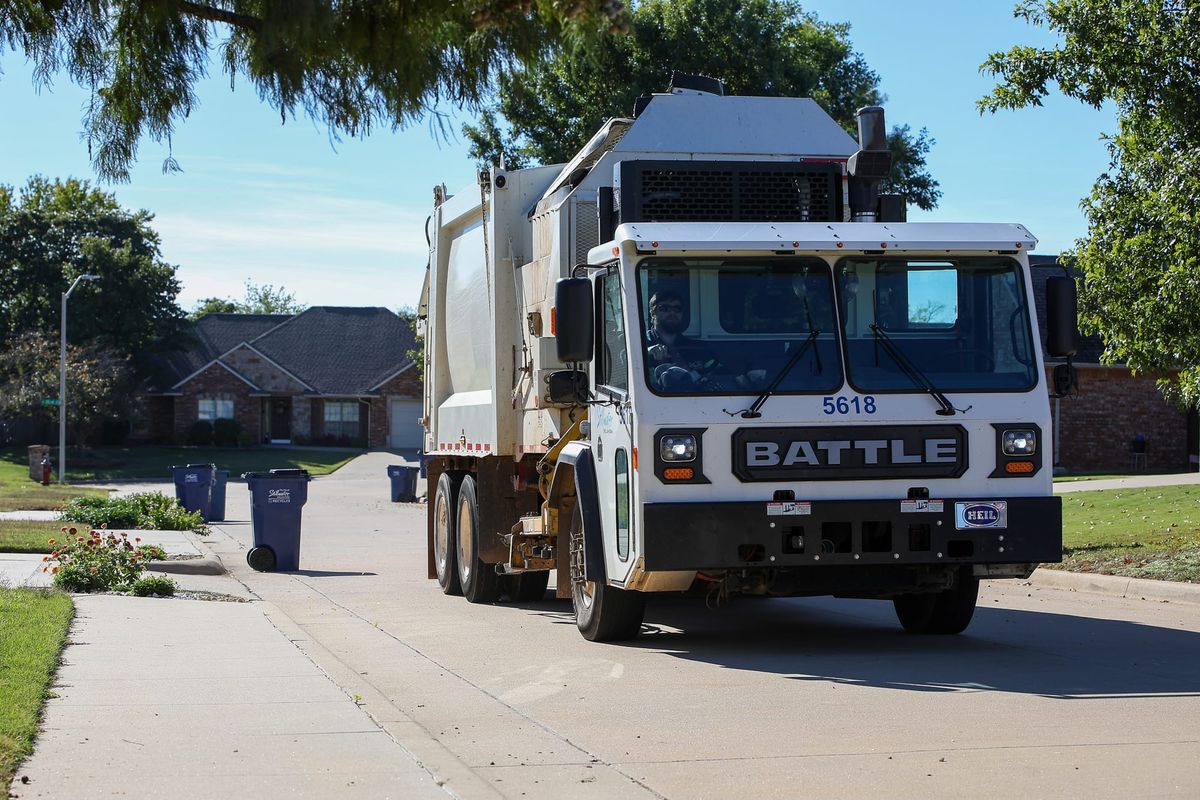
Stillwater's waste collection trucks will move from paper address lists to in-cab tablets, GPS routing, and AI-equipped cameras next year after city utility trustees approved a $121,717 Routeware subscription Nov. 2.
The Stillwater Utilities Authority, whose trustees are the five members of the City Council, voted 5-0 to approve the purchase and annual subscription for the waste management software. The money comes from the city's Waste Management Fund.
Waste Management Director Matt Faulkner told trustees the department's routing is entirely paper-based. Drivers receive a printed list of stops and addresses or a highlighted paper map, look up locations on Google Maps. New stops are added to the list by hand.
"We just hand people a piece of paper with a highlighted map on it and say, good luck," Faulkner said.
The department averages about 10 missed service calls a day, Faulkner said, and each one must be investigated by staff. Those investigations can take anywhere from 15 minutes to two hours.
🍂 Do it now, thank yourself in spring.
A little fall work now means an easier spring. Rake, trim, dig and tidy up before the hard freeze. Stillwater Building Center has the rakes, shovels and pruners to help.
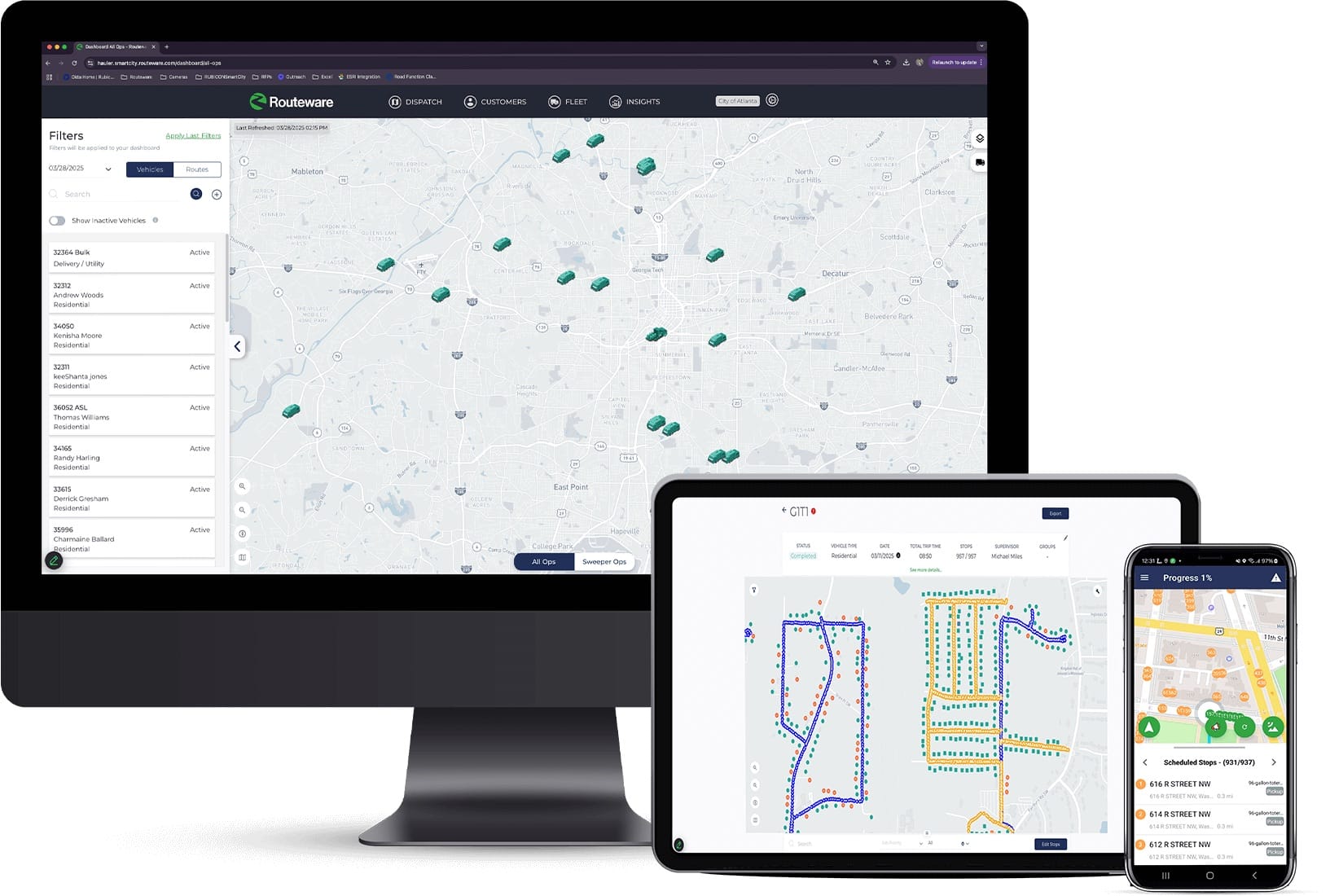
Routeware is software that municipalities use to manage waste collection, recycling, and street-sweeping vehicles. It includes route planning, dispatching, service tracking, real-time GPS vehicle tracking, driver behavior monitoring, and camera footage.
Drivers will sign into a tablet app that shows their full day, turn-by-turn navigation, and every stop on the route. Each stop appears as a dot that changes color once service is confirmed, Faulkner said. Daily commercial vehicle inspection sheets, now completed on paper, will move to the tablet.
“We have unfortunately had situations where somebody will move in from out of town, and we miss their stop two weeks in a row because it’s a brand new area, especially outside city limits,” Faulkner said. “With the turn-by-turn navigation, we will add those stops as soon as we get them, and it plugs it right into their route that day.”
When a customer reports a missed pickup, staff will be able to pull up that stop and review images to see whether the truck serviced it or something such as a parked car blocked the cart, Faulkner said.
Customers whose carts are missed can ask the city to make a return trip, though there may be an associated fee, according to the city's website. The site lists several common reasons a cart is not collected, including a cart that is not at the curb by 6 a.m., a lid that will not close, or a cart placed less than 5 feet from obstacles such as cars, poles, or mailboxes.
Drivers will also be able to photograph or video problems on the route, such as a construction site or water main break that blocks access to a neighborhood.
The system also reads vehicle fault codes in real time. Faulkner said a check-engine light now triggers a process of about an hour before a fleet technician can diagnose the truck and return with parts, and the new system should cut that roughly in half.
Councilor Tim Hardin asked whether the system would have prevented a recent miss in his neighborhood, where a new driver skipped about three blocks of recycling carts.
Faulkner said service verification is the feature he values most.
"I don't put a lot of value on they called, he said, she said. I just want to know why and how we can identify it. It could be our driver, and I want to fix that," Faulkner said.
He said missed service tends to come in large clusters when a new driver is learning a route.

Shop Stillwater Sundays — Spend $50 at Stillwater shops, restaurants, hotels or attractions the Sunday after an OSU home football game and you're entered to win a $100 gift card to a local business from Visit Stillwater.
The package includes Samsara cameras that Faulkner described as a driver safety and coaching tool. According to the vendor quote in the agenda packet, all 19 vehicles will receive a dual-facing camera, which records both the road and the driver, and seven will also receive side and rear cameras.
Faulkner said the system uses AI to flag driving behavior such as running a stoplight, not wearing a seatbelt, hard braking, and potentially speeding, and sends an alert to supervisors.
Footage is kept for 40 hours on the in-vehicle drive or 72 hours on Samsara's server before it is deleted, Faulkner said, though staff can download clips.
Hardin asked whether the cameras would use facial recognition or track license plates.
"There is no car tag tracking on this. There is recognition for the driver-facing camera, but it doesn't specifically recognize their face," Faulkner said.
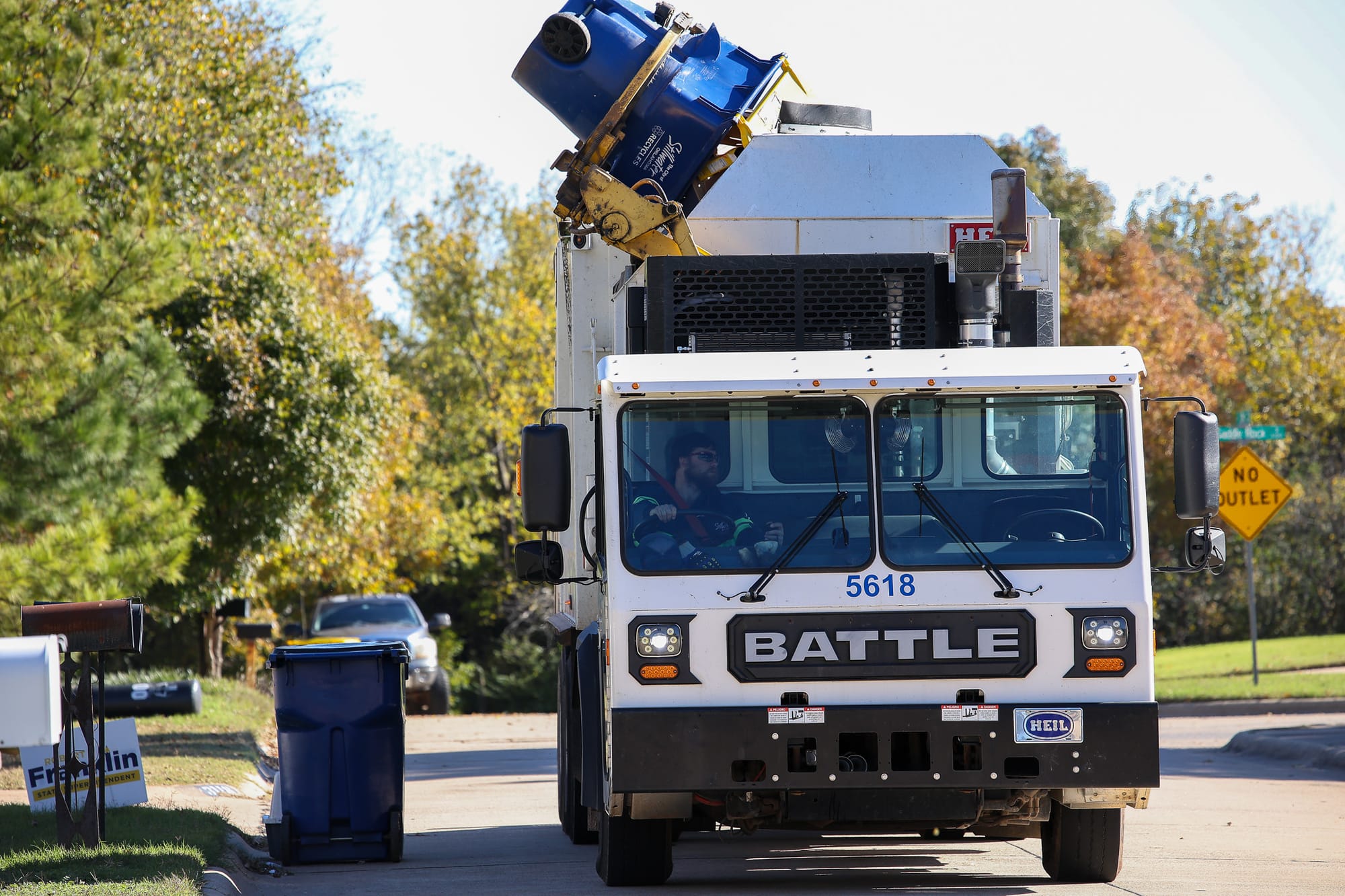
Faulkner said the side-facing camera does not record continuously, instead capturing images periodically during collection. He also said the cameras will not automatically identify problems such as potholes, overgrown yards, or illegally parked cars.
Councilor Christie Hawkins asked about data security. Faulkner said the software is cloud-hosted, requires no on-site server, and was reviewed with the city's IT department. The only data the city expects to store in the system is location data, he said.
The $121,717 first-year cost includes about $29,000 in one-time implementation and installation services and about $92,700 in annual subscription fees, according to the vendor quote and a cooperative purchasing worksheet in the agenda packet. Faulkner told trustees the subscription would cost about $92,700 a year going forward.
The city bought the system through HGACBuy, a cooperative purchasing program run by the Houston-Galveston Area Council, a Texas council of governments. The program competitively bids contracts that member governments across the country can then use to buy directly from vendors, according to its website. The city's purchasing policy exempts purchases made through government-sponsored purchasing cooperatives from competitive bidding, according to a staff report for a separate item in the same agenda packet.
Routeware's master agreement, included in the packet, allows the company to raise fees beginning on the one-year anniversary of the contract with 60 days' notice. The subscription hardware remains Routeware's property and must be returned at the end of the license period, according to the quote.
City Manager Brady Moore said he had seen demonstrations of the software and that several Oklahoma communities use it. He said the city's leadership is trying to adopt technology suited to younger employees who grew up with screens.
"Instead of handing them a clipboard with a bunch of addresses and they've got to go figure out where to go, this will have a guiding software app with GPS that will make it very clear and will definitely improve efficiency and safety," Moore said.
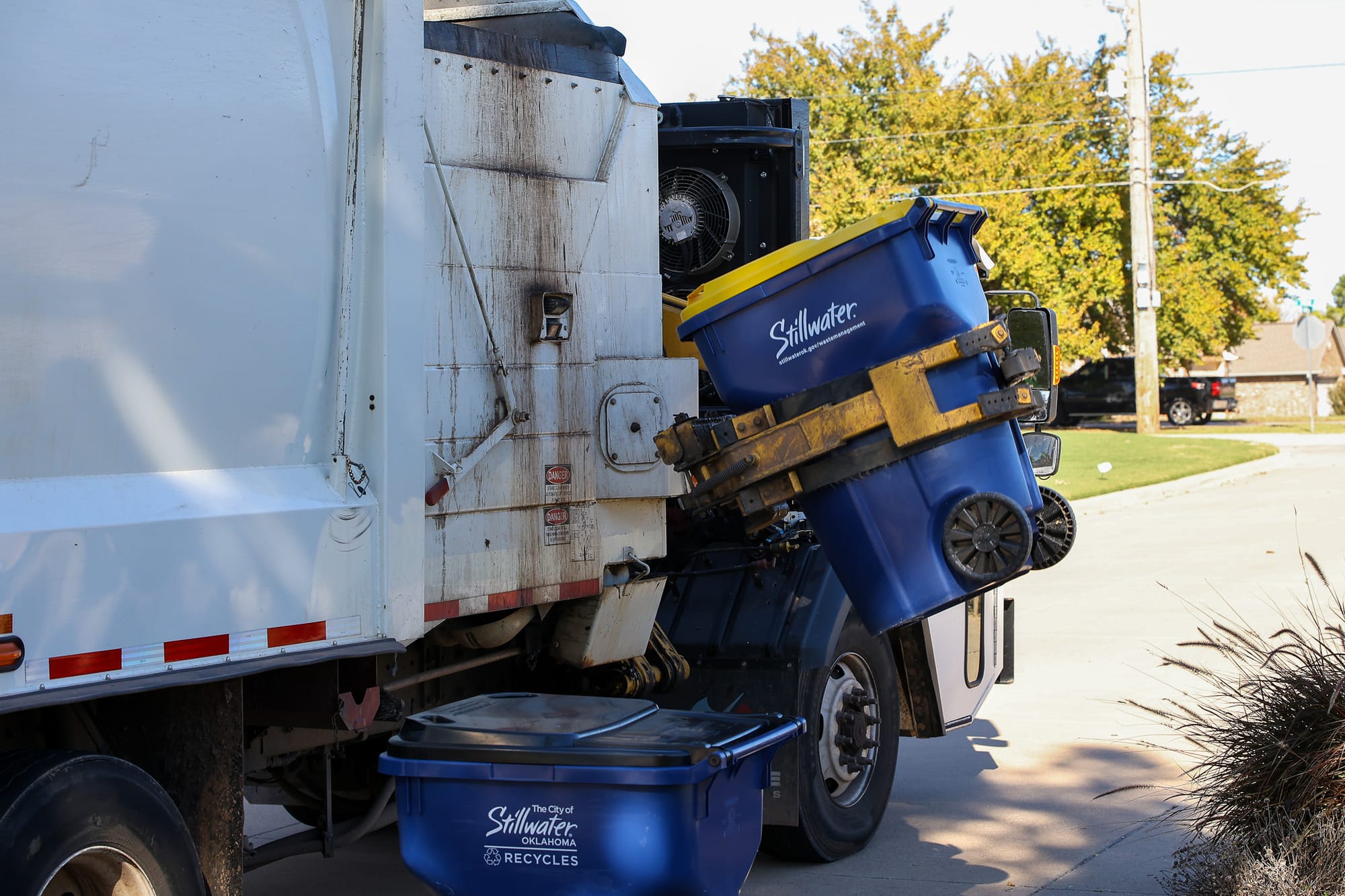
No new employees will be hired to run the system, Faulkner said. He and four current supervisory and administrative staff members will be trained on the desktop software, and they will then train drivers on the tablets.
Implementation is planned for the first part of 2027 and will take about 90 days, from a kickoff meeting through data collection and training, Faulkner said. Routeware will check in 30 and 90 days after the system goes live.
The software can also design more efficient routes based on historical data, Faulkner said, with the goal of reducing miles driven, truck wear, and fuel costs.
Hardin asked staff to report back on whether that happens.
"I'd like to see some numbers on that after a few months to see what happened to our miles driven," Hardin said.
📺 Watch the Presentation to Trustees