Stillwater adopts new short-term rental rules with owner-occupied exemption; fee vote deferred
A 20 percent block-level density cap survives, with a homestead exemption and six-month review added at the last meeting


A 20 percent block-level density cap survives, with a homestead exemption and six-month review added at the last meeting
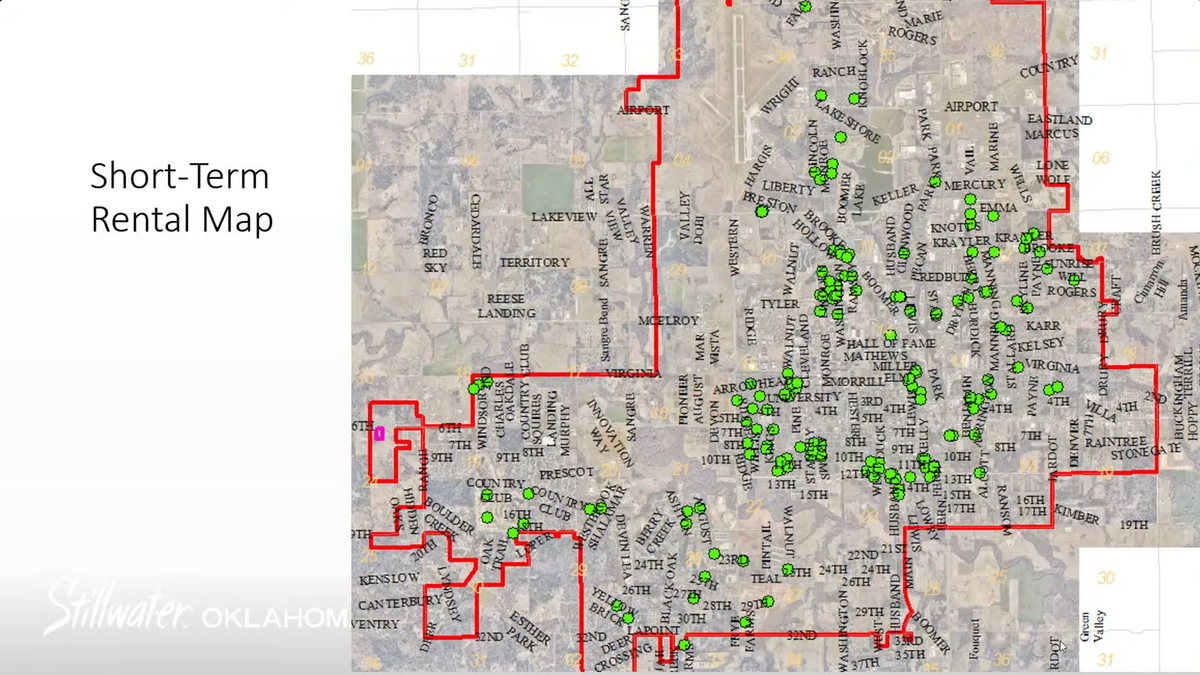
The Stillwater City Council adopted a comprehensive rewrite of the city's short-term rental licensing code Monday night, capping rentals in single-family neighborhoods while adding a homestead exemption that shields owner-occupied properties from the density limit. A companion resolution that would have set a $250 annual license fee was pulled from the agenda and deferred to a future meeting.
The council voted 4-0 to adopt Ordinance 3604, with Councilor Christie Hawkins absent. The vote completed a process that began in May when the council tabled an earlier version after a Stillwater short-term rental operator warned that a 20 percent density cap could be gamed — both by existing operators trying to lock out competitors and by residents trying to block new short-term rentals on their block.
The new code defines a short-term rental as any dwelling, portion thereof, or habitable accessory structure rented for a temporary period of up to 30 consecutive days per guest within a 90-day period. Short-term rentals are permitted by right in all zoning districts under the new framework.
In small lot and large lot single-family residential districts, however, no more than 20 percent of total dwelling units on any block may hold active licenses. Once a block reaches that threshold, no new licenses may be issued until an existing one lapses, is surrendered, or is revoked.

Buying or refinancing in Stillwater? Brittney, Misty and Angelica at OCCU bring local expertise and competitive rates to every home loan. And unlike many lenders, your loan stays right here — never sold, always local.
City Manager Brady Moore told the council that staff returned with responses to three specific concerns raised at the May 18 meeting.
The first was defensive licensing — obtaining a license to hold a slot in the density cap without any intent to actually rent the property. The revised code addresses this by defining an "active" short-term rental as any property listed on a rental platform and accepting bookings. Licenses for properties that do not meet that definition are subject to revocation. Moore said the third-party compliance software the city plans to use can generate reports showing which licenses are active and which are not.
The second was insurance. The revised code requires applicants to provide proof of current, valid liability and property insurance, incorporating a change directed by the council at the May 18 session.
The third concerned owner-occupied properties. Moore said staff had developed an exception that would exempt properties carrying a Payne County homestead exemption from the density cap requirement. Because the Payne County Assessor clearly marks homestead properties, Moore said, staff can verify eligibility without additional burden. City Attorney Kimberly Carnley drafted suggested amendment language for the council to adopt if it chose to add the exemption.
Councilor Tim Hardin moved to incorporate both the homestead exemption and a six-month review provision requiring Development Services Director to report back to the council on whether the 20 percent cap is working as intended. The council adopted both additions as amendments.
In discussion before the vote, Councilor Kevin Clark expressed discomfort with the cap itself.
"I am not especially comfortable with the caps," Clark said. "I think they're anti-competitive, they're anti-free market, they're anti-property rights."

A message from Visit Stillwater
Summer in America’s Friendliest College Town is full of live music, kids’ camps, livestock shows, art, and so much more. Explore everything happening this month in The Original Home of Red Dirt Music!
Mayor Will Joyce acknowledged the tension but said the pressure driving the code change — investor purchases converting vacant homes to full-time short-term rentals at the expense of the residential housing market — represented a genuine community concern.
"I think we need to do something to address the concern that we have with pretty much every vacant house in this community being bought for short-term rental," Joyce said. He added that the six-month review window gives the council a structured opportunity to reassess.
Clark noted that short-term rental guests typically generate fewer neighborhood disturbances than long-term tenants. Joyce agreed but raised a different concern.
"You have houses that are vacant for six months, eight months, nine months at a time in a neighborhood, which doesn't make it feel very much like a neighborhood," Joyce said.
The council reached general agreement that the ordinance, while imperfect, provides a workable starting point.
Also at Monday's meeting, the city council and the Stillwater Utilities Authority both deferred action on Resolution CC-2026-15 and SUA-2026-3 — a joint resolution that would have established the city's first formal Book of Fees and set the annual short-term rental license fee at $250. Mayor Joyce said the item was being pulled to be brought back at a later meeting but gave no date.
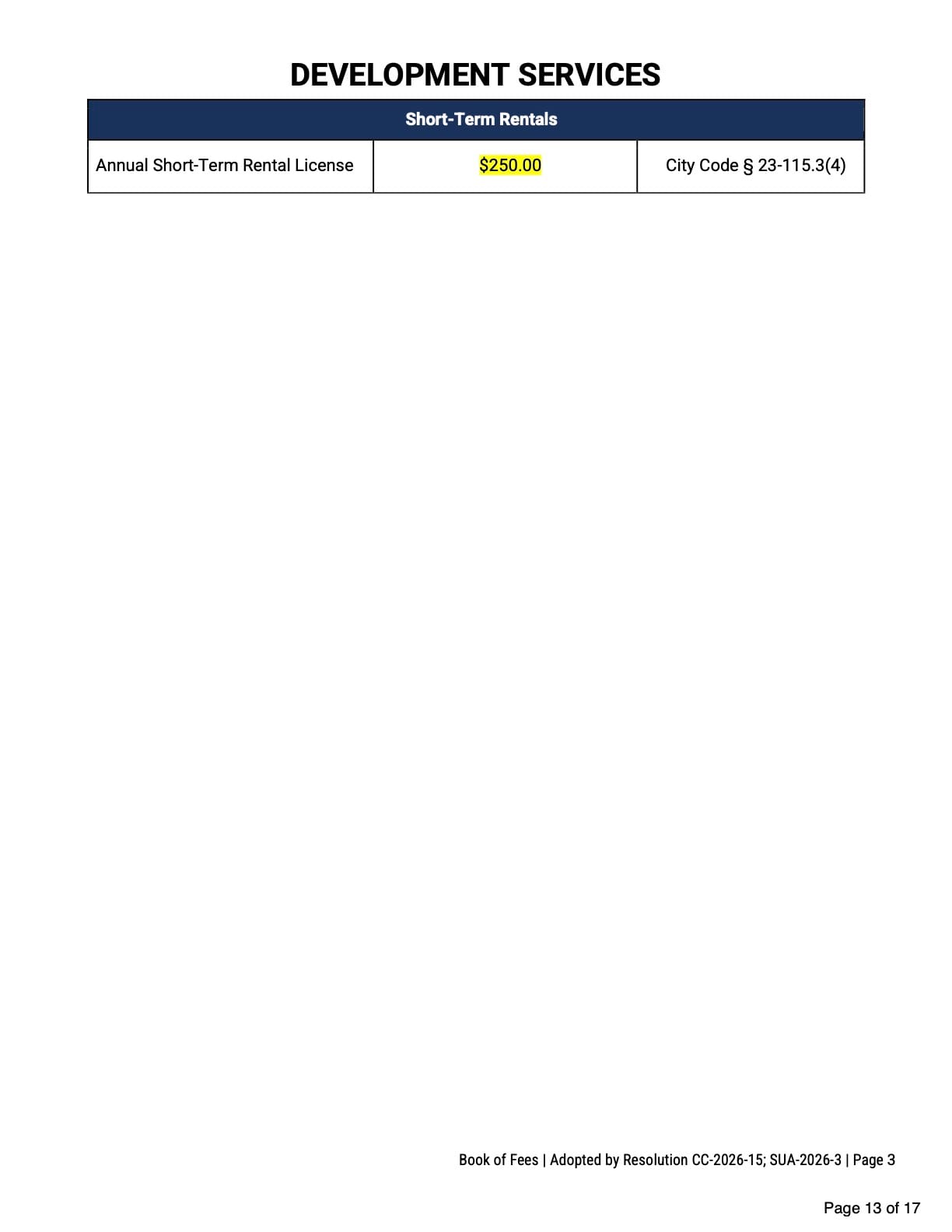
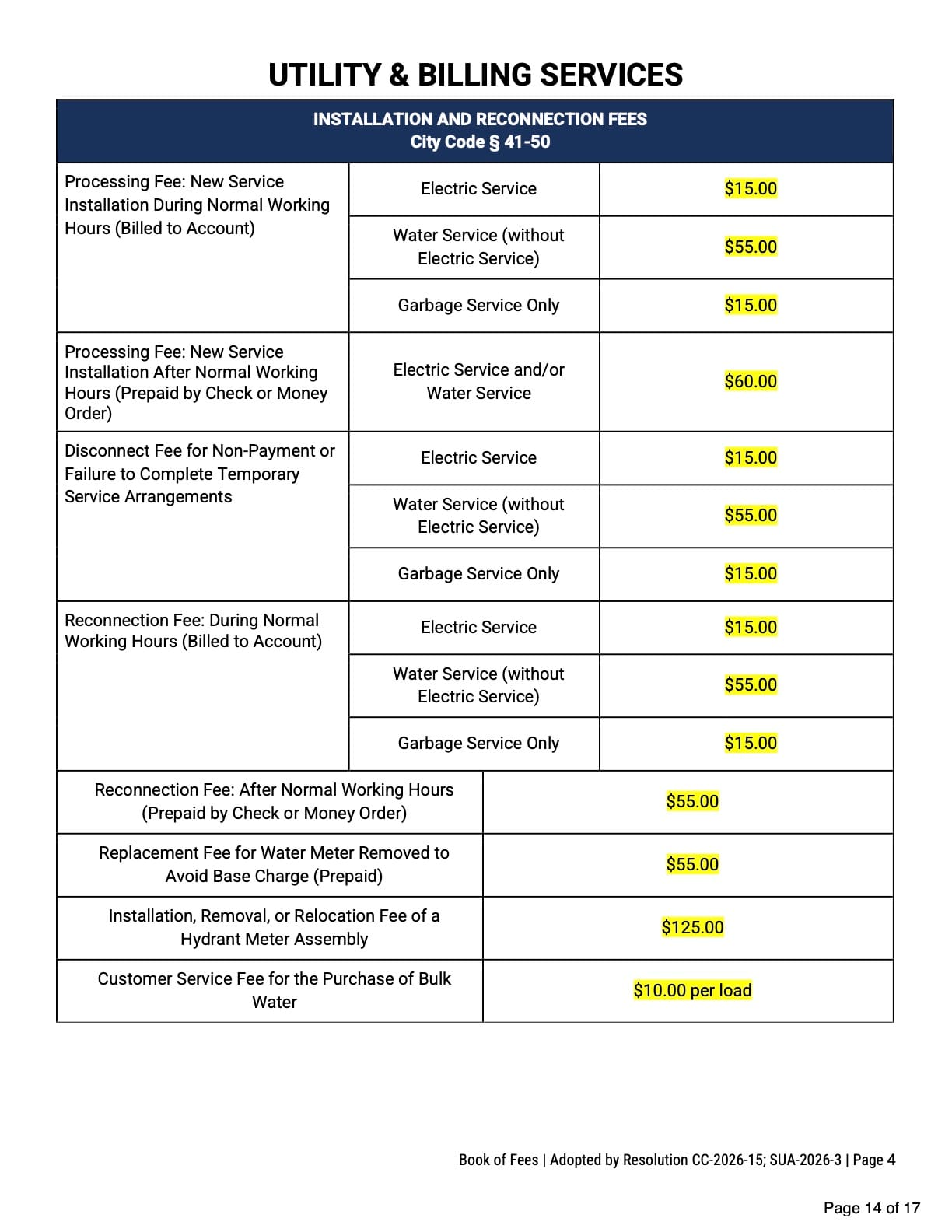
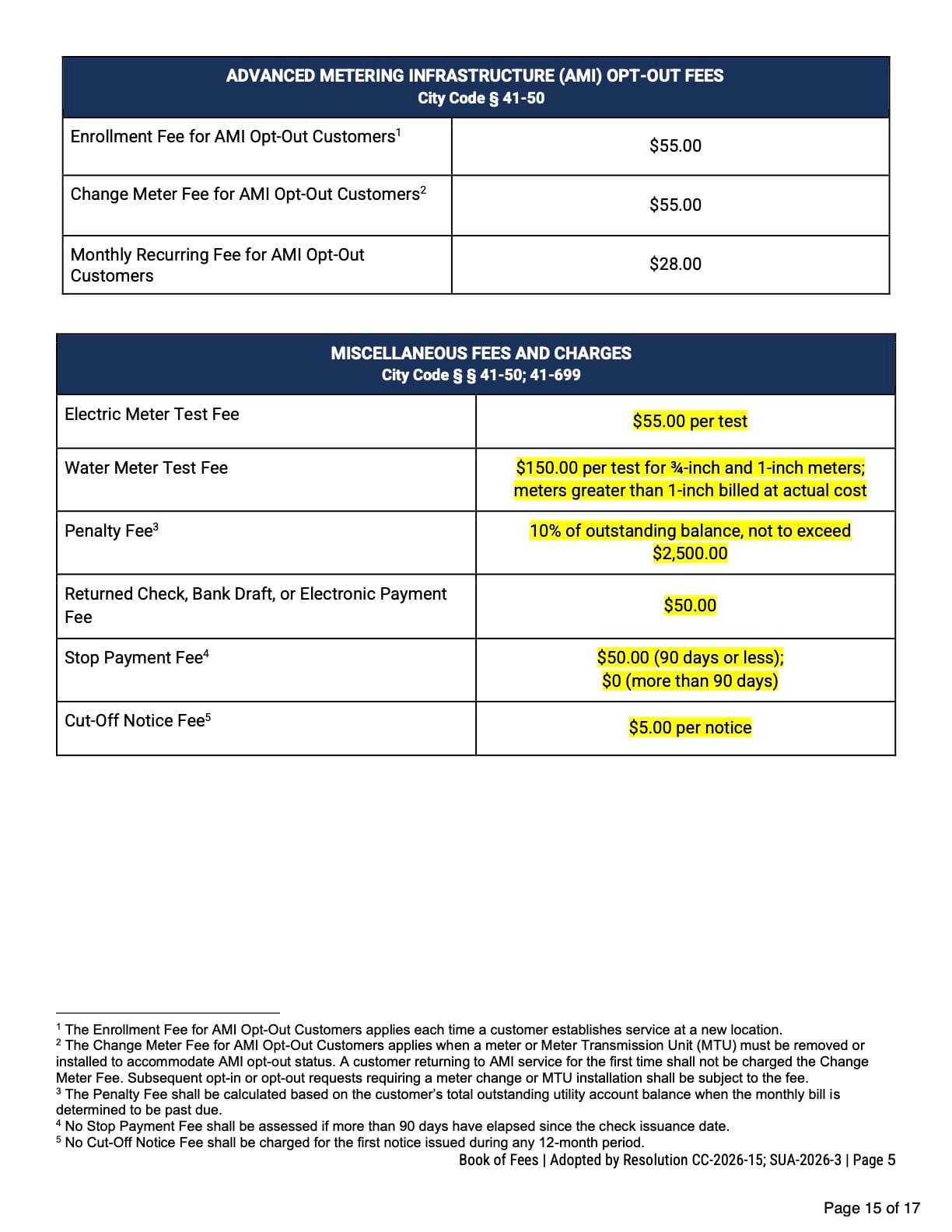
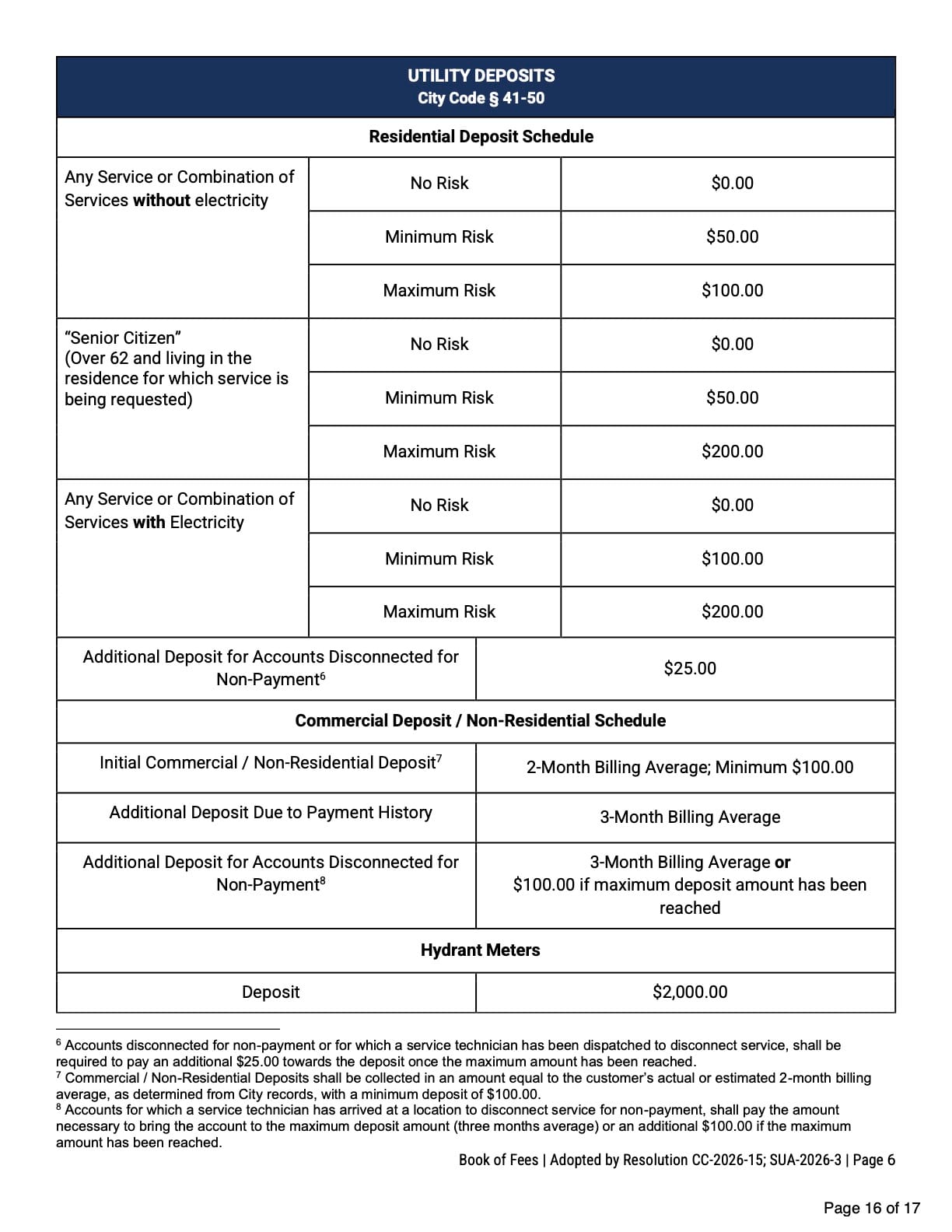
Pages from the City of Stillwater's draft Book of Fees, included in the June 15, 2026, city council agenda packet, show a proposed $250 annual short-term rental license fee and updated utility billing and service charges. The city council and Stillwater Utilities Authority both deferred the resolution adopting the Book of Fees at Monday's meeting. – Agenda Packet
The Book of Fees is intended to consolidate all city and Stillwater Utilities Authority rates, charges and fees into a single comprehensive document. In addition to the $250 short-term rental license fee, the resolution included updates to utility billing and service fees and a schedule of utility deposit requirements. According to the resolution language, all existing rates, charges and fees remain in full force and effect until incorporated into the Book of Fees by further resolution.
Because the new ordinance specifies that the annual license fee is to be set by council resolution, the $250 annual short-term rental license fee is not yet in effect. The city has not announced when the Book of Fees vote will be rescheduled.
📺 Watch the City Council Meeting