City Council advances overhaul of Stillwater's short-term rental rules
Proposed ordinance would require licenses in all zoning districts, replace public hearings with administrative review


Proposed ordinance would require licenses in all zoning districts, replace public hearings with administrative review
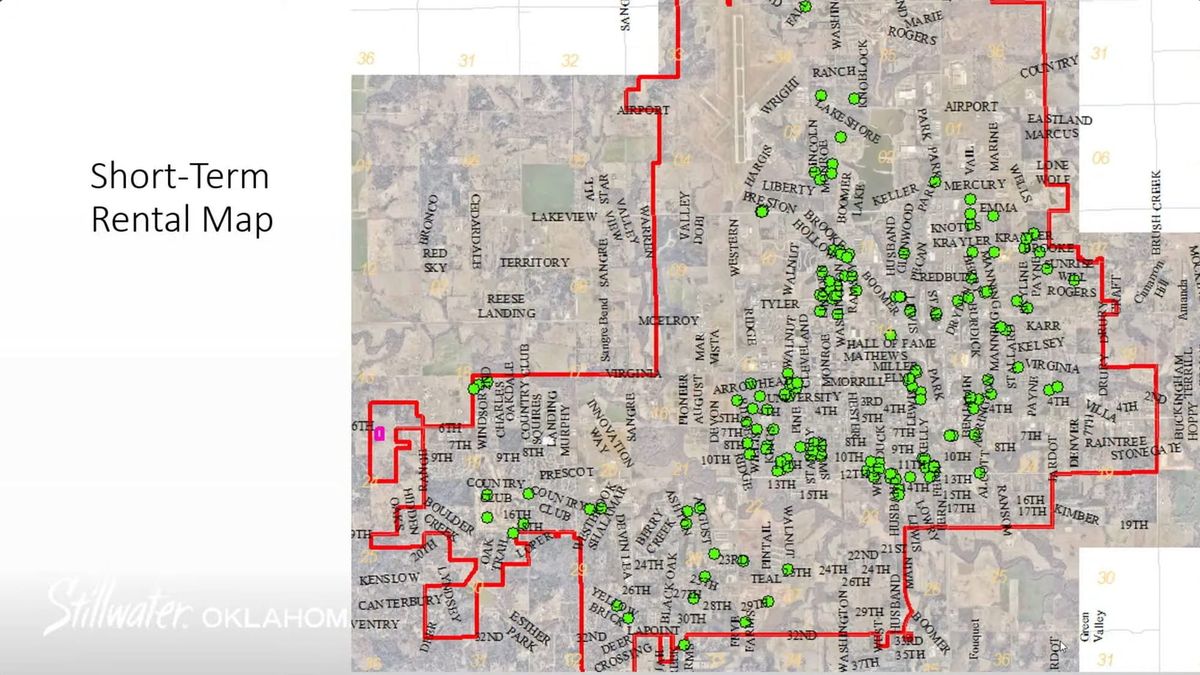
Stillwater City Council gave first-round approval May 4 to an ordinance that would replace the city's seven-year-old short-term rental licensing framework with a new system extending licensing requirements to all zoning districts, shifting the approval process away from Planning Commission hearings, and capping the concentration of short-term rentals in single-family neighborhoods to protect their character.
The council voted 4-0 to advance Ordinance No. 3604 to a second reading. Vice Mayor Amy Dzialowski was absent from the meeting.
The city has required short-term rental licenses since 2019, but only in three residential zoning districts — small lot single-family (RSS), large lot single-family (RSL), and two-family residential (RT). The city currently has 167 active licensed short-term rentals across those districts, according to David Barth, director of development services, who presented the item to council.
Under existing rules, any objection to a license application — filed by anyone regardless of where they live — automatically triggers a Planning Commission public hearing. Barth said that requirement has created situations in which hearings were convened over objections filed by people in other parts of Stillwater or from other cities altogether, many of whom did not attend.
"These objectors often do not attend the public hearings, which require significant staff time and expense," according to the city's report to council.
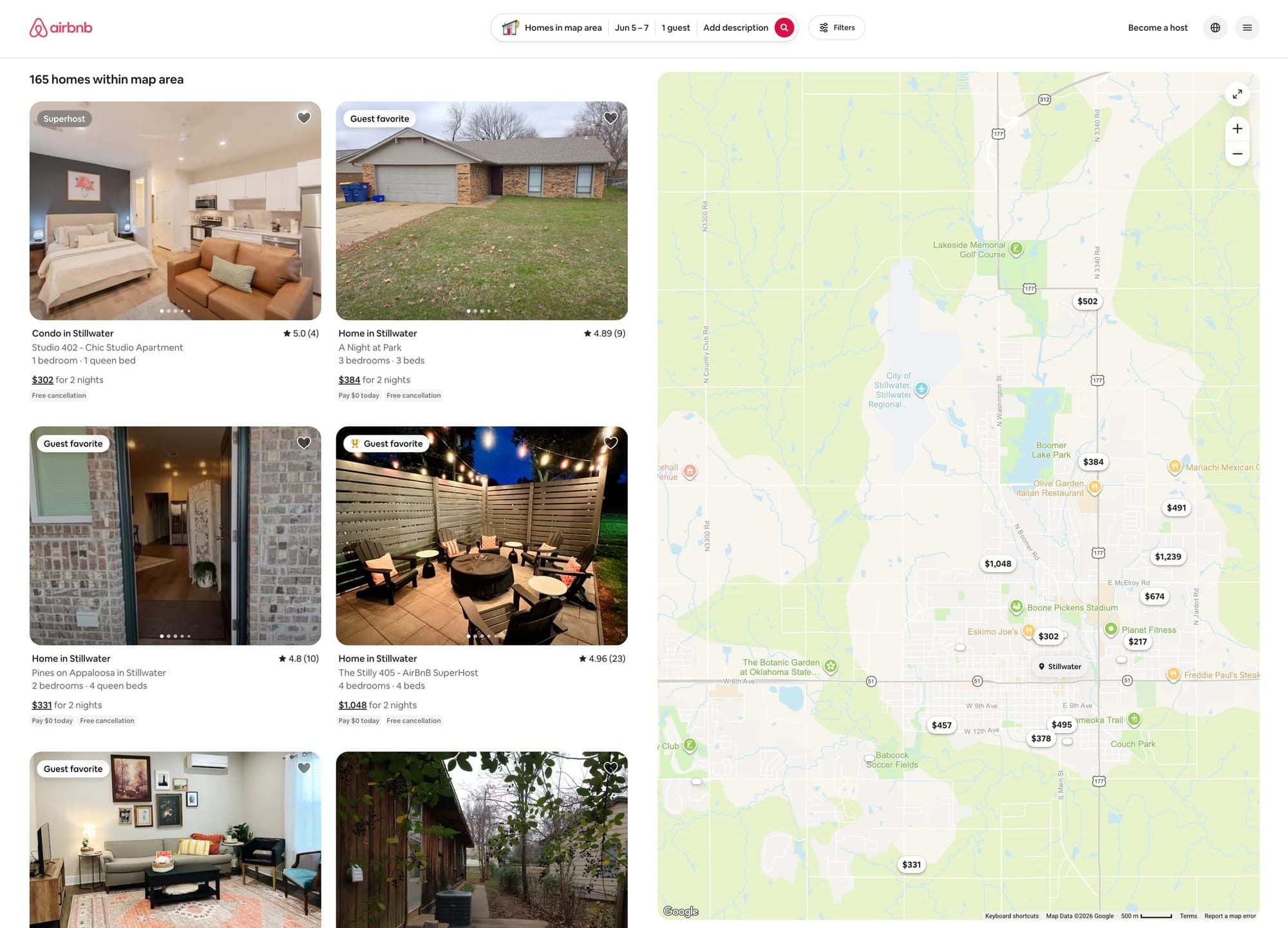
The proposed ordinance would require licenses in all zoning districts, not just residential ones. It would eliminate the 300-foot neighbor notification and objection process and replace public hearings with administrative review by Development Services. Applicants could still appeal a denial to the city manager, then to Planning Commission, and finally to City Council.
"Before you tonight is a text amendment that will replace our current short-term rental regulations with a new set of licensing requirements focusing on enforcement and compliance," Barth told council.
The new application would require property owners to submit occupancy limits, a copy of house rules, proof of liability insurance of at least $100,000, the number of available on-site parking spaces, a floor plan showing fire exits and escape routes, and verification of working smoke detectors and a carbon monoxide detector.

Two community gatherings, one powerful day of prayer. 🙏
Stillwater's 74th National Day of Prayer is Thursday, May 7 — and all are invited to take part in this year's theme: Glorify God Among the Nations, Seek Him in All Generations.
Noon Open-Air Gathering — Block 34 Simmons Bank Pavilion, 218 W. 9th Ave. Bring a lawn chair.
Evening Gathering, 7 p.m. — CREC Community Center, 3305 S. Boomer Rd.
Come together to pray for our community, county, state, and the world. Bring your family, friends, church, and neighbors. This is a public, community-wide gathering — everyone is welcome.
Applicants would also be required to designate a 24-hour contact who can be on-site within one hour of any issue or complaint. Councilor Kevin Clark asked whether the contact person would have to be available at all times or whether someone else could fill in. Barth said a backup contact can cover when the primary is unavailable. "If there's a water leak, you don't want to have to wait two hours to have somebody show up," Barth said.
Rentals within 500 feet of schools, day cares, playgrounds, or parks would face an additional requirement: screening prospective guests against the sex offender registry in accordance with Oklahoma state statutes.
Licenses would not be transferable and would expire upon a change of ownership, requiring the new owner to apply for a new license.
One of the more closely discussed provisions would cap short-term rental licenses in RSS and RSL zones at 20 percent of the total dwelling units within any given block — a measure Barth described as aimed at preserving neighborhood character.
"The idea is to protect the character of neighborhoods," Barth said. "If your neighborhood's predominantly short-term rentals, it's difficult to establish relationships, to have kids that play with your kids. We're just trying to balance that neighborhood character preservation along with allowing people to operate a business."
Barth also pointed to workforce housing as a concern. A house well-suited for a family relocating for a new job, he said, is sometimes taken off the market to operate as a short-term rental used only a handful of weekends a year.
The cap would not apply to RT, commercial, or form-based code zones. Long-term rentals would not count toward the 20 percent limit.
A message from Visit Stillwater
While you’re in town for Graduation, the Special Olympics Oklahoma Summer Games, or one of the many events at the Payne County Expo Center, be sure to explore Stillwater’s one-of-a-kind boutiques, local restaurants, and must-see attractions in America’s Friendliest College Town!
Barth said three blocks within the city currently exceed that threshold. Those properties would be grandfathered under existing licenses but could not be replaced if a license lapses, is revoked, or is surrendered — the count would need to fall below the cap before new licenses could be issued on those blocks.
Development Services would publish a map showing licensed properties and density by block to help prospective buyers gauge whether a given block has capacity. "If someone's going to buy a piece of property for the purpose of making it a short-term rental, they probably ought to call your office and make sure before they go spend the money," Clark said.
The land development code defines a block as a continuous group of lots separated by street rights-of-way or as identified by block numbers in a platted subdivision. Mayor Will Joyce raised questions about how the definition would apply in newer subdivisions with irregular street layouts. Barth said staff would interpret ambiguous cases, with an appeal process available to applicants who disagree.
How to check your block and zoning on the city's map
The City of Stillwater's online mapping tool can be used to determine how the new short-term rental density rules would apply to your property. To get started, open the map.
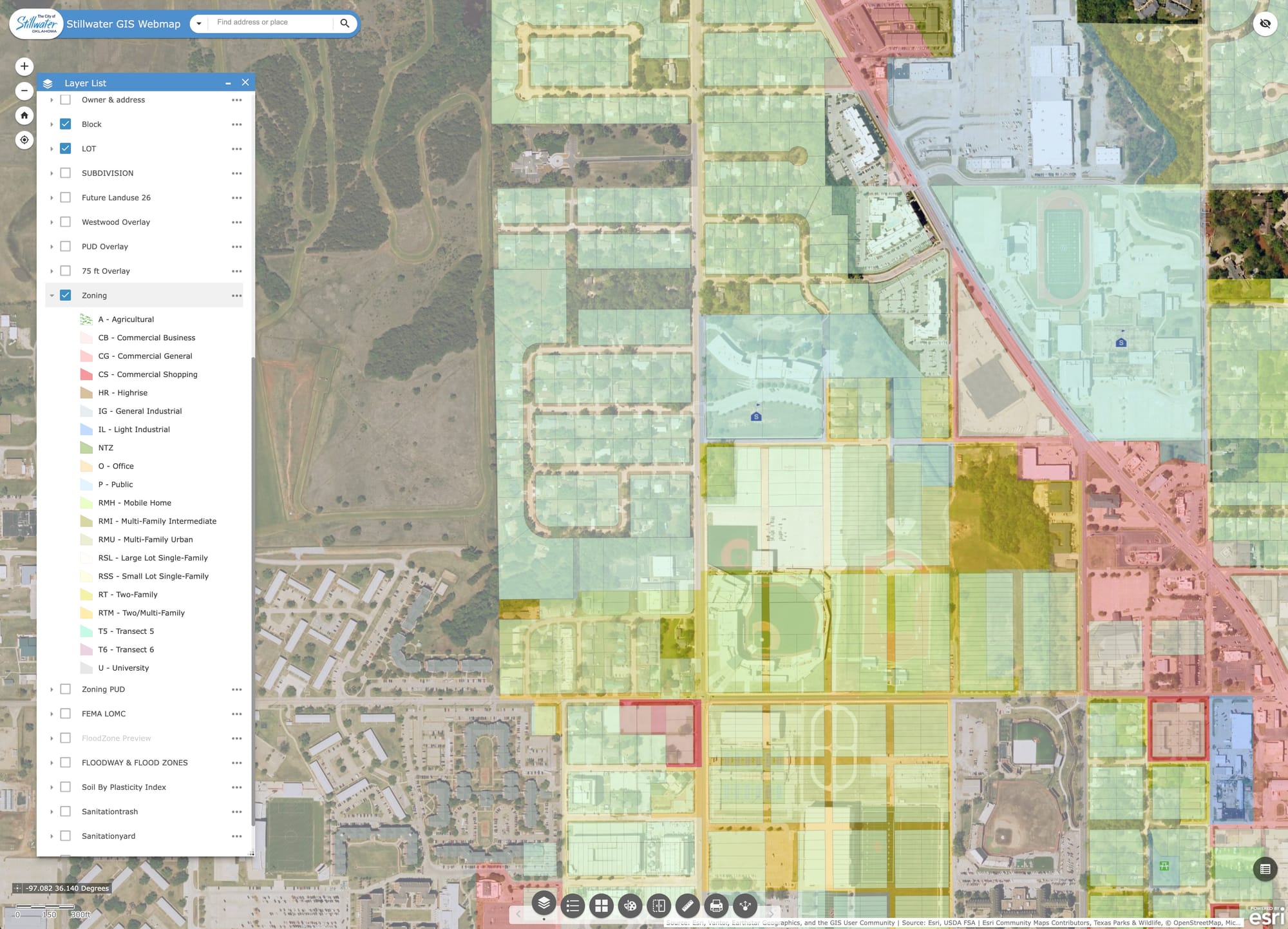
When the map loads, click the layer stack icon at the bottom center of the screen to open the Layer List panel. First, scroll down and check the box next to Zoning. This overlays color-coded zoning districts across the map.
To look up a specific address, use the Find address or place search bar at the top of the map. Type in the street address and press Enter. The map will zoom to that location.
Look at the color of your property's zone. The 20 percent density cap applies only to two zones: RSL (Large Lot Single-Family) and RSS (Small Lot Single-Family). Both appear as very light or nearly white on the map. If your property falls into one of those zones, the cap applies to your block.
To calculate how many homes are on your block, check the box next to Block in the layer list, then check the box next to Lot. The Block layer draws block boundaries, and the Lot layer shows individual parcels within each block. Count the residential lots within your block boundary to determine the total, then multiply by 20 percent to find the maximum number of STR licenses allowed on that block. Any fractional result rounds up to the nearest whole number.
Violations of the new ordinance would be classified as a Class C offense, carrying fines of up to $500 per day. Each day a short-term rental is operated without a valid license would constitute a separate offense.
Barth said the city is evaluating third-party software platforms to assist with identifying unlicensed operators. "There's no way that we have the staff to go out and figure out where all of the short-term rentals are that are currently unlicensed," Barth said. He said the city plans to work with property managers and owners to move toward compliance before enforcement ramps up.
Licensing fees will be set by City Council resolution rather than written into the ordinance, allowing the city to adjust them annually without amending the code. Barth said the fee amounts are still being evaluated and a resolution is not expected to be ready for the May 18 second reading.
The ordinance carries a 30-day implementation period after passage, meaning the new rules would not take effect until mid-June at the earliest. Barth said fees are intended to recover program costs, including staff time and third-party compliance software.
The ordinance traces to a joint study session held Oct. 28, 2024, in which City Council and Planning Commission met to discuss shortcomings in the existing framework. At that session, Councilor Tim Hardin raised a figure that shaped the conversation: the city had roughly 150 licensed STRs on record but estimated approximately 500 more were operating without licenses. The gap became a central argument for citywide licensing and third-party enforcement software.
Several provisions of the new ordinance were also suggested directly at that session. A licensed STR owner recommended requiring license numbers on public platform listings so code enforcement could identify unlicensed operators — a requirement now in the ordinance.
Planning Commission Chair Jana Phillips called for a neighborhood density map, which the city plans to publish. Commissioner Mark Prather suggested moving common public hearing questions onto the initial application, which is now the approach under the new framework.
The Planning Commission held a public hearing on the proposed text amendment April 21, 2026, and voted 5-0 to recommend City Council approve it with the density cap for RSS and RSL zones.
City Manager Brady Moore thanked the city attorney's office and Development Services for the work involved in crafting the revised code. "We think this really fits Stillwater as a host community," Moore said, adding that the city is also updating Chapter 23 of its land development code broadly and could make further adjustments to the STR rules during that process if needed.
Ordinance No. 3604 is scheduled for a second reading at the May 18, 2026 City Council meeting.
📺 Watch the presentation to City Council