USA Rare Earth secures $1.6 billion in federal funding for Stillwater magnet plant
Federal commitment follows $7 million local incentive as company abandons experimental mining technology for conventional methods


Federal commitment follows $7 million local incentive as company abandons experimental mining technology for conventional methods
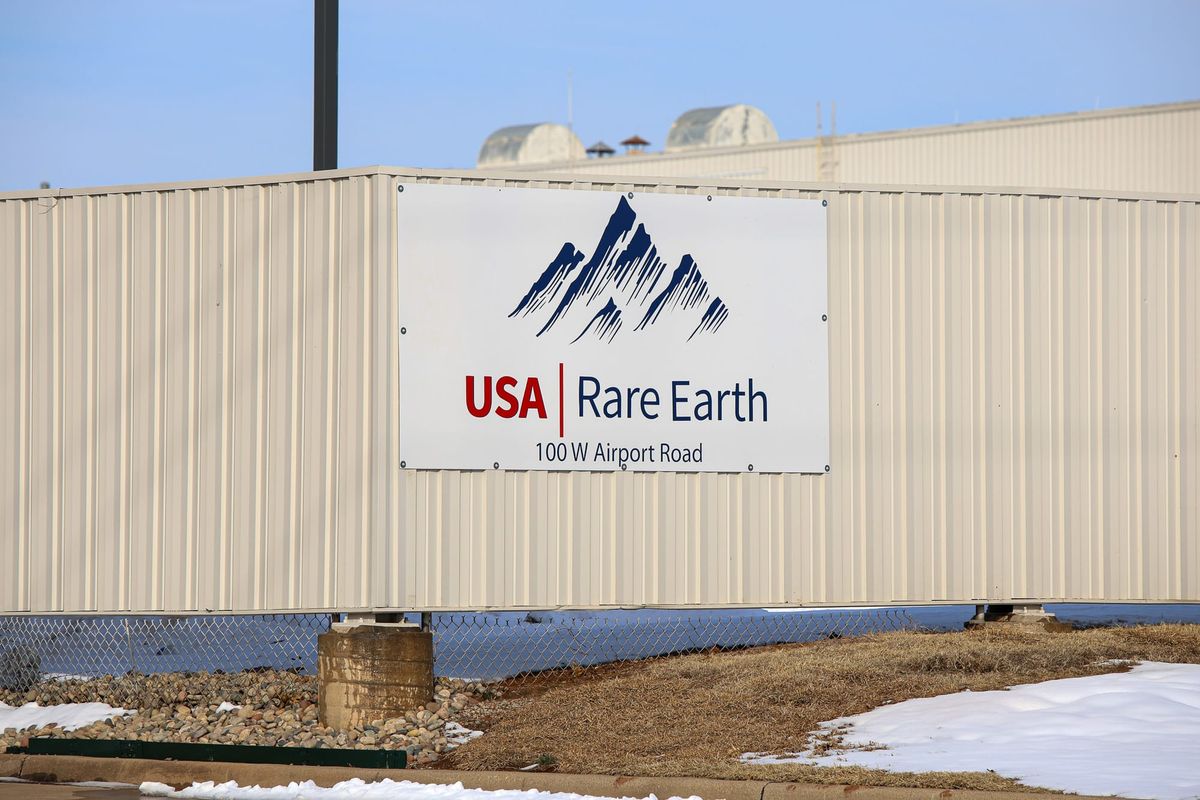
USA Rare Earth announced Monday it has secured a commitment for $1.6 billion in federal support to expand its Stillwater magnet manufacturing facility, one of the largest investments under the 2022 Creating Helpful Incentives to Produce Semiconductors and Science Act for critical mineral production.
The company also raised $1.5 billion from private investors, bringing total new capital to $3.1 billion for what officials say will become America's first fully domestic rare earth magnet production operation.
The federal package includes $277 million in direct funding and a $1.3 billion loan through the U.S. Department of Commerce's CHIPS Program. The private investment, led by Inflection Point and major mutual funds, is expected to close Tuesday.
"This landmark collaboration with the U.S. Government represents a transformative step in USAR's mission to secure and grow a resilient, independent domestic rare earth value chain," said Barbara Humpton, chief executive officer of USA Rare Earth.
Commerce Secretary Howard Lutnick called the project "essential to restoring U.S. critical mineral independence."
The announcement marks a major milestone for a project that began nearly four years ago when Stillwater city leaders approved a $7 million incentive package to help the company acquire and renovate the former Total Energy building at 100 West Airport Road.
In June 2022, the Stillwater City Council, acting as the Stillwater Economic Development Authority, approved $7 million to help USA Rare Earth buy and renovate the 310,000-square-foot facility. The company paid $9.9 million cash for the building, with the city holding a first lien position.
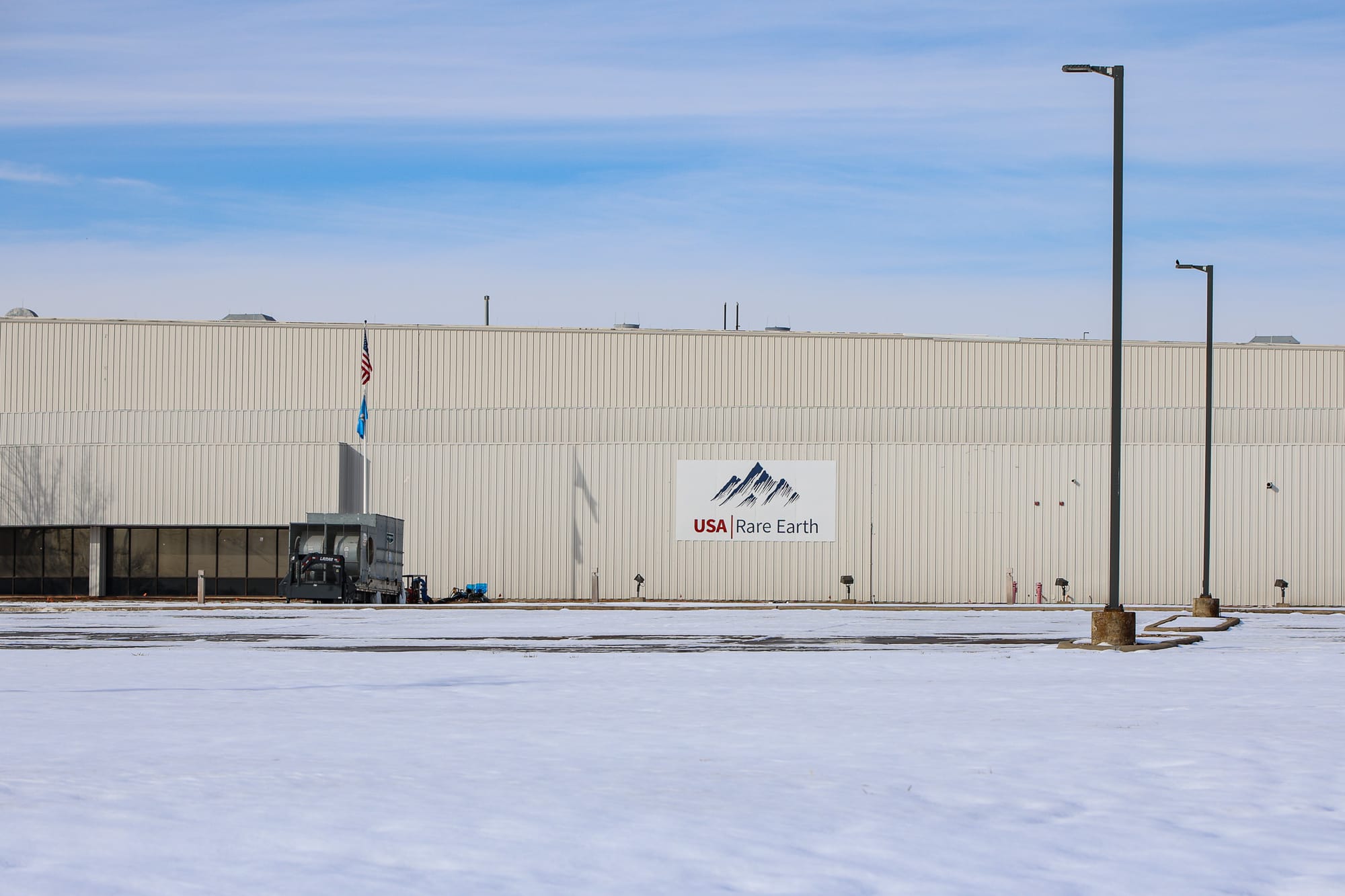
At the time, company officials promised at least 100 jobs with median wages around $60,000. Mayor Will Joyce characterized such projects as examples of how "a rising tide lifts all boats" for the community.
The federal commitment validates that initial local investment and signals significant expansion beyond the original plans.
USA Rare Earth plans to produce neodymium-iron-boron magnets, the strongest permanent magnets available. These magnets are essential components in smartphones, electric vehicles, wind turbines, medical equipment, and military hardware.
Nearly all of these magnets currently come from China, creating supply chain vulnerabilities for critical industries including semiconductors, defense, and renewable energy.
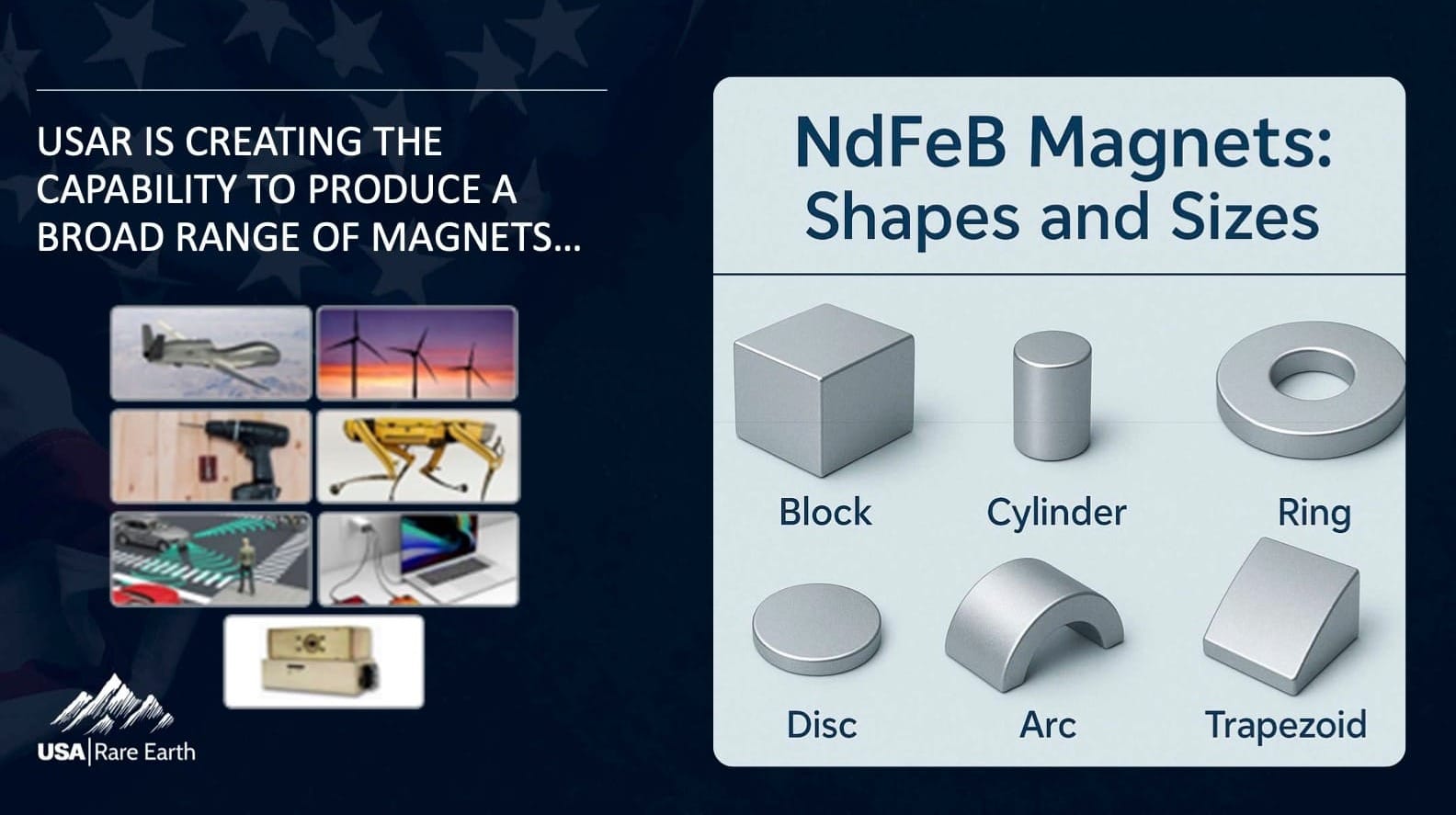
The company has not yet produced a commercial product. The Stillwater facility is planned to begin commissioning in the first quarter of 2026, with capacity to eventually produce 4,800 metric tons of magnets annually. With the new funding, the company plans to more than double that to 10,000 metric tons by June 2029.
The company also announced Monday it has accelerated plans to begin mining operations at its Round Top deposit in Sierra Blanca, Texas, by late 2028, two years ahead of schedule. That mine will supply raw materials including dysprosium, terbium, and other rare earth elements currently unavailable from domestic sources.
USA Rare Earth revealed a significant change in its extraction technology for the Round Top deposit, abandoning a proprietary approach in favor of proven conventional methods.
In an interview with CNBC's Brian Sullivan, Humpton said the company has shifted to solvent extraction after working for years on continuous ion exchange technology.
"Teams have been working on this for years to understand the right way to extract these minerals in an economically viable way," Humpton said. "Over the last year the team had a breakthrough. They have been working with continuous ion exchange but decided to go with the de-risk solvent extraction form in order to progress what's called the flow sheet."
The decision represents a major pivot in the company's technical approach.
Solvent extraction is the dominant commercial technology used in virtually all existing rare earth separation facilities worldwide, primarily in China. The process involves dissolving crushed ore in acid, then mixing the solution with organic solvents that selectively bind to certain rare earth elements. By repeating this process hundreds of times with different conditions, individual rare earth elements can be isolated.

A message from Visit Stillwater
Ring in 2026 with excitement in America’s Friendliest College Town! From live music at the Tumbleweed and thrilling OSU Athletics, to livestock shows, new museum exhibits, and more, there’s something for everyone to enjoy!
The technology has been proven at commercial scale for decades, but requires large volumes of organic solvents and acids, generates significant chemical waste streams, and requires capital-intensive facilities with large footprints.
Continuous ion exchange, which USA Rare Earth had been developing, passes dissolved rare earth solution through columns filled with resin beads that bind different elements with varying strength. The company claimed it would be more efficient and require less chemicals than conventional methods.
However, while ion exchange is used in some specialized applications, it hasn't been proven at commercial scale for primary rare earth separation from ore. USA Rare Earth's continuous ion exchange approach was largely proprietary and unproven at the scale needed for commercial production.
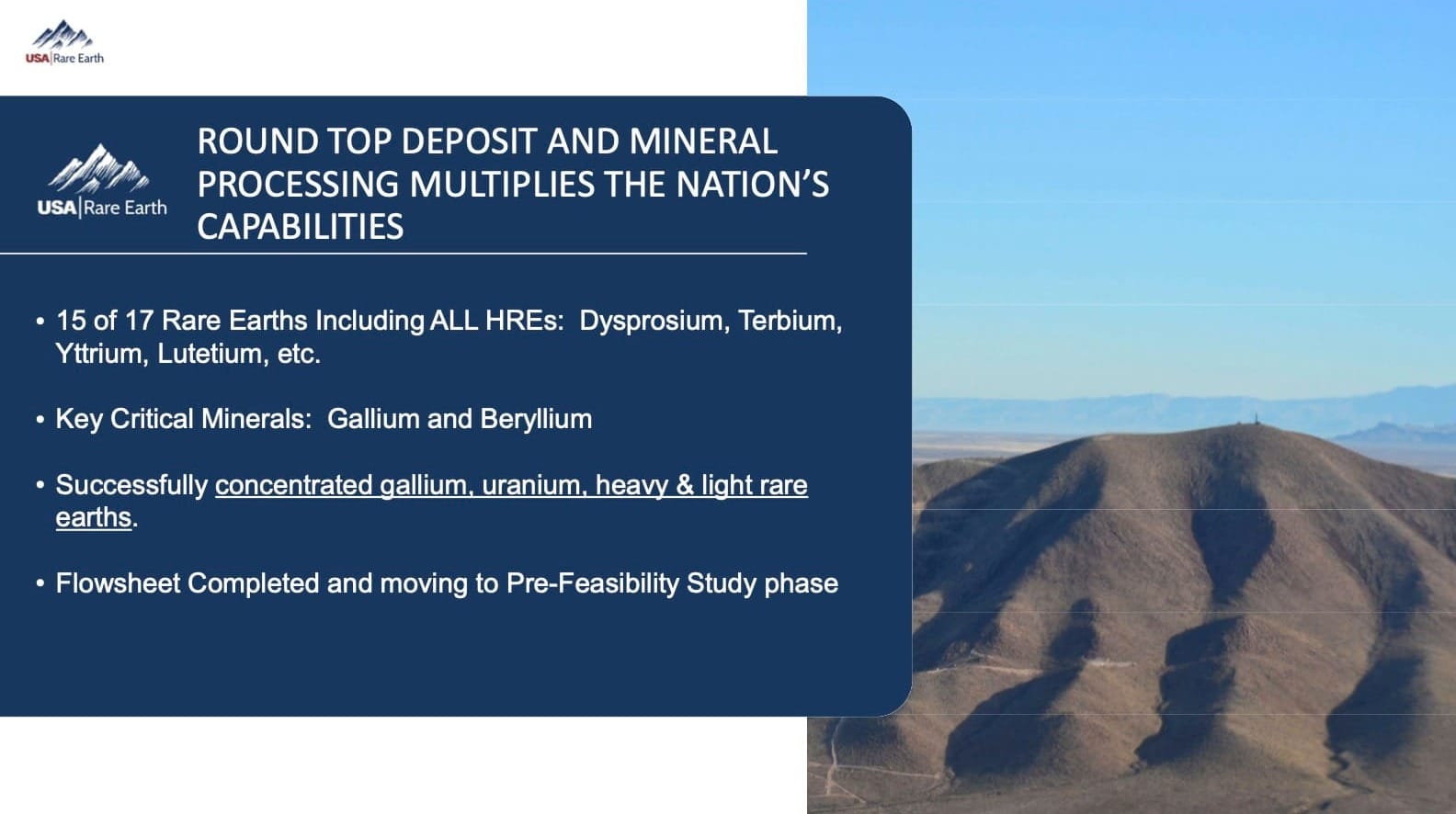
The Round Top deposit is notably low-grade compared to other rare earth sources. The economic viability of mining it depends heavily on having cost-effective extraction methods. The shift to conventional solvent extraction raises questions about whether the process economics that made Round Top attractive with continuous ion exchange will hold with traditional technology.
Making rare earth magnets at the Stillwater facility involves multiple industrial processes that create environmental and workplace safety challenges.
The process begins by melting rare earth metals in high-temperature furnaces, then crushing them into extremely fine powder. This powder is highly flammable and can ignite spontaneously when exposed to air, requiring special handling in controlled atmospheres.
The powder is then pressed into shapes, heated again to temperatures exceeding 1,000 degrees Celsius, machined to exact specifications, and coated to prevent corrosion.
Each step produces potential air emissions, wastewater containing heavy metals, and combustible dust hazards that require regulatory oversight.
Workers handling these materials face risks including lung disease from dust exposure, chemical burns from acids and solvents, and skin reactions from nickel used in coating operations. Reputable manufacturers address these risks through enclosed processing systems, ventilation, dust collection, and protective equipment.
The company will need to obtain multiple state and federal permits to operate, including air quality permits, wastewater permits, and hazardous waste handling permits from the Oklahoma Department of Environmental Quality, as well as meeting federal workplace safety requirements.
The federal funding comes with strings attached. USA Rare Earth must raise at least $500 million from non-federal sources, secure supply agreements through 2027, and achieve specific operational milestones.
The money will be released in phases as the company meets those milestones, with potential clawbacks if targets aren't met. The letter of intent remains non-binding and subject to finalization of definitive agreements, expected this quarter.
In addition to the Commerce Department package, USA Rare Earth announced a separate collaboration with the U.S. Department of Energy's National Energy Technology Laboratory to develop rare earth separation technologies.
Energy Secretary Chris Wright said the partnership reflects "ending America's reliance on foreign nations for the critical materials essential to our economy and national security."
USA Rare Earth reported several recent achievements beyond the federal announcement.
The company completed its acquisition of Less Common Metals Ltd., a U.K.-based rare earth metal manufacturer, in November 2025. It has announced plans to build an additional production facility in France and selected major engineering firms to develop the Texas mining operation.
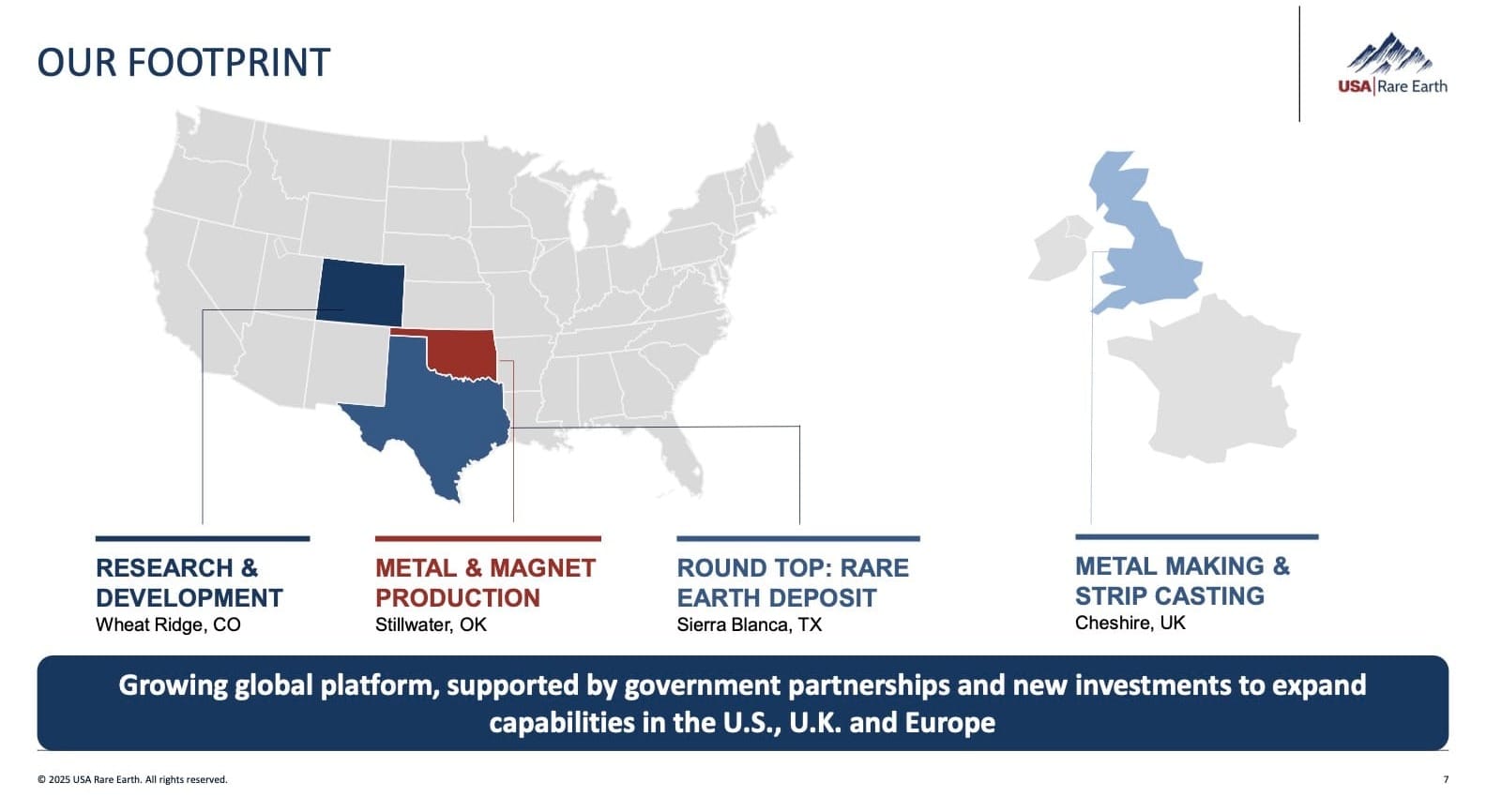
A 600-metric-ton production line at the Stillwater facility is in commissioning and expected to begin operations by the end of March.
The company reported preliminary 2025 financial results showing cash exceeding $350 million, operating expenses of $56 million to $62 million, and capital expenditures of $37 million to $43 million.
The massive federal and private investment positions Stillwater at the center of America's effort to rebuild domestic production of critical materials currently dominated by China.
For the local community, the expansion promises economic benefits through job creation and related business activity. The shift to conventional extraction technology at Round Top may affect the project's economics and environmental footprint, though the company maintains the approach will allow it to move forward with commercial production by late 2028.