Japanese Delegation Tours OAIRE as Oklahoma Courts Aerospace Investment
Eight Japanese aerospace companies explored unmanned aircraft systems and research partnerships at Oklahoma State facility


Eight Japanese aerospace companies explored unmanned aircraft systems and research partnerships at Oklahoma State facility
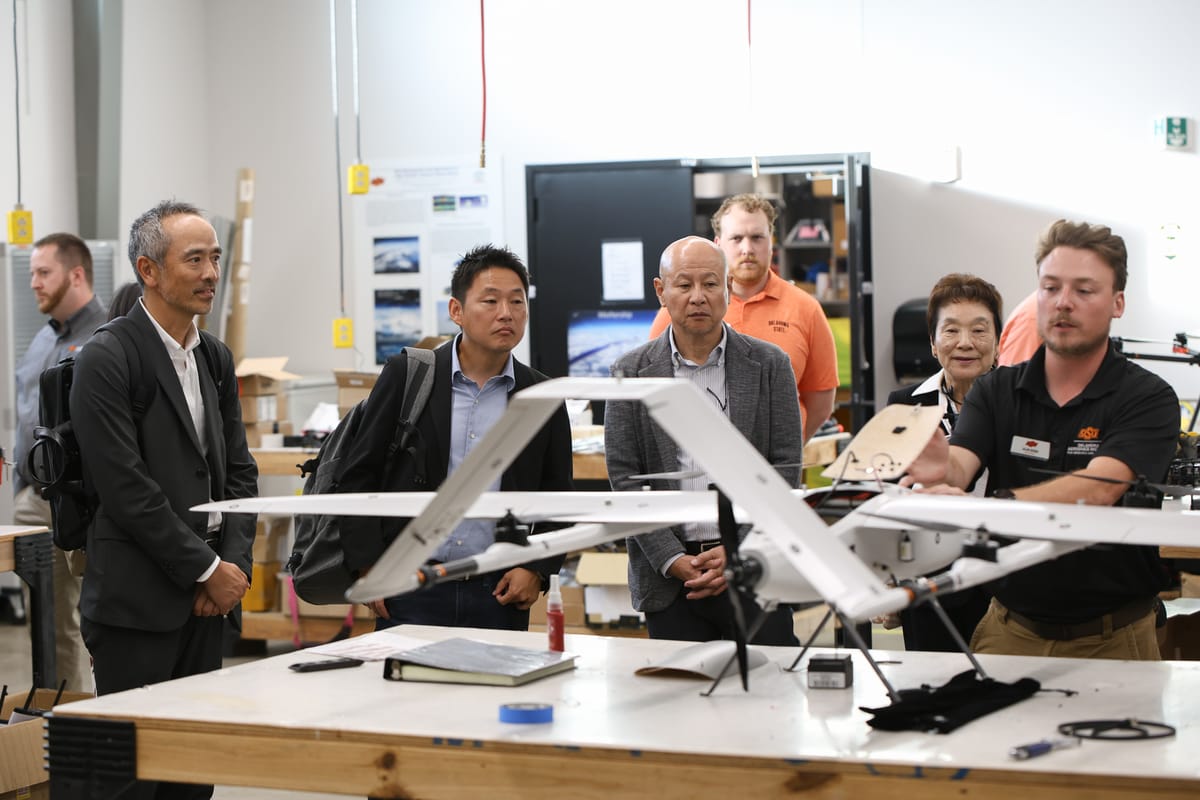
A Japanese trade delegation toured the Oklahoma Aerospace Institute for Research and Education Wednesday, exploring unmanned aircraft systems and advanced aerospace technology as the state works to attract international investment in its aviation sector.
The Oklahoma Department of Commerce hosted representatives from eight Japanese companies, including Mitsubishi Heavy Industries America, Mitsui Bussan Aerospace Corporation and Mizuho Bank, at the Oklahoma State University research facility.
"This is the world to Oklahoma part," said Mark Wells, director of global trade and investment at the Oklahoma Department of Commerce. "They have come here now because they decided they wanted to make Oklahoma a priority for one of their delegations."
The visit follows a pattern of international outreach by Oklahoma officials seeking to position the state as a hub for aerospace innovation, particularly in unmanned aircraft systems. Gov. Kevin Stitt has traveled to Japan as part of his "Oklahoma to the world and the world to Oklahoma" initiative, Wells said.
The delegation toured Oklahoma City aerospace companies and state agencies Wednesday morning before arriving in Stillwater. They planned to continue to Tulsa Wednesday evening and Thursday to visit the Skyway 36 drone range and Tulsa Innovation Labs.
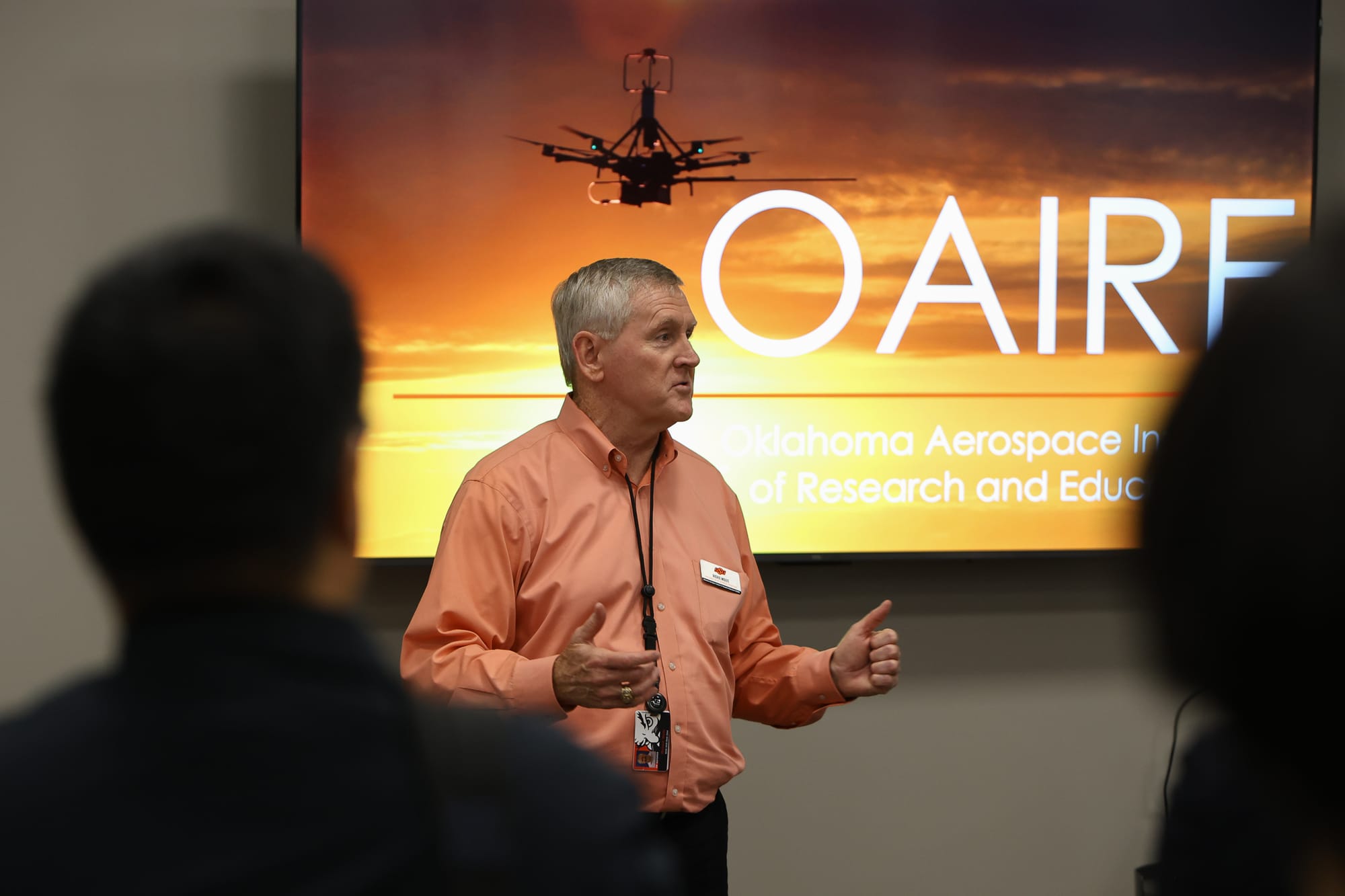
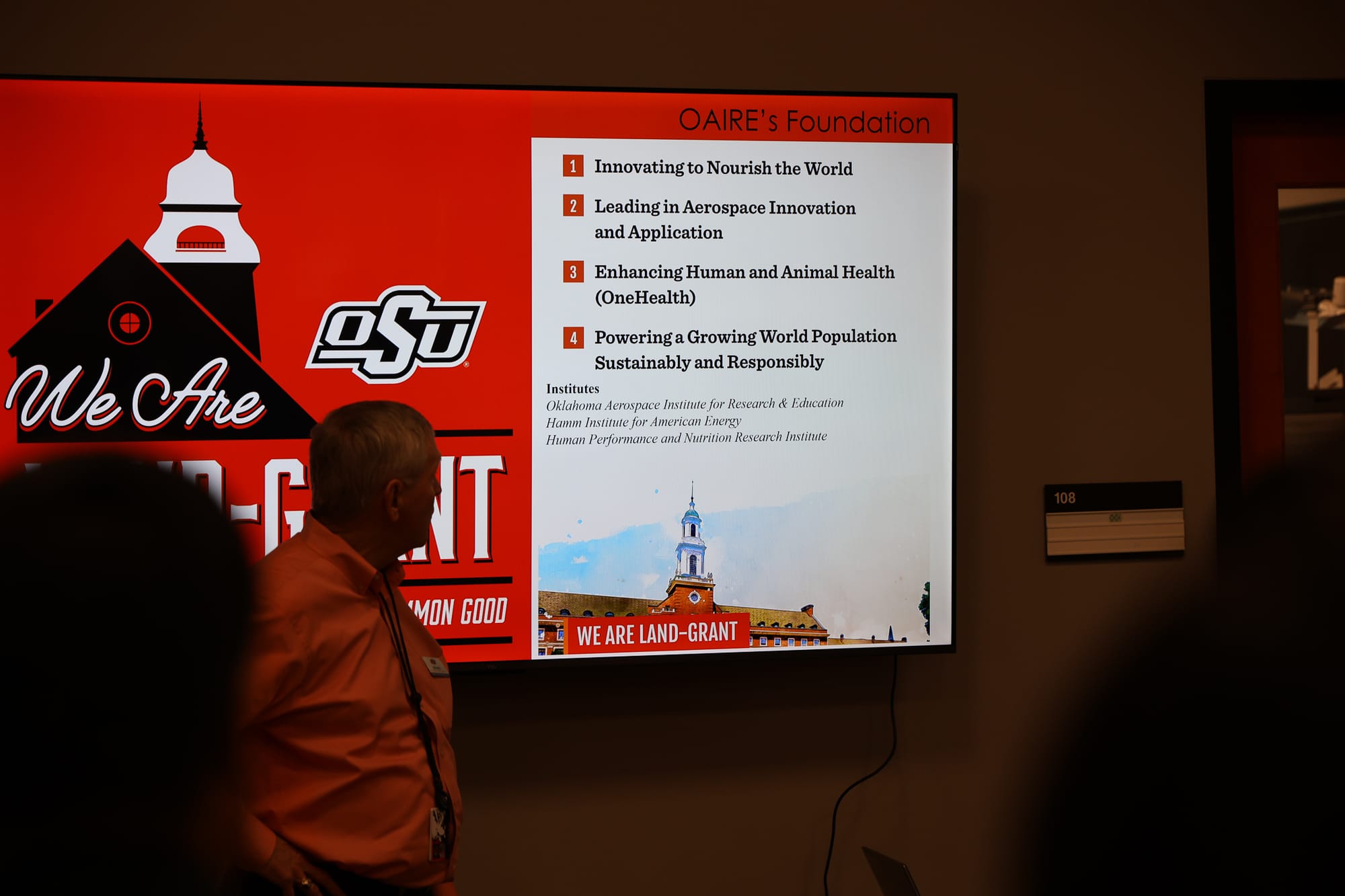
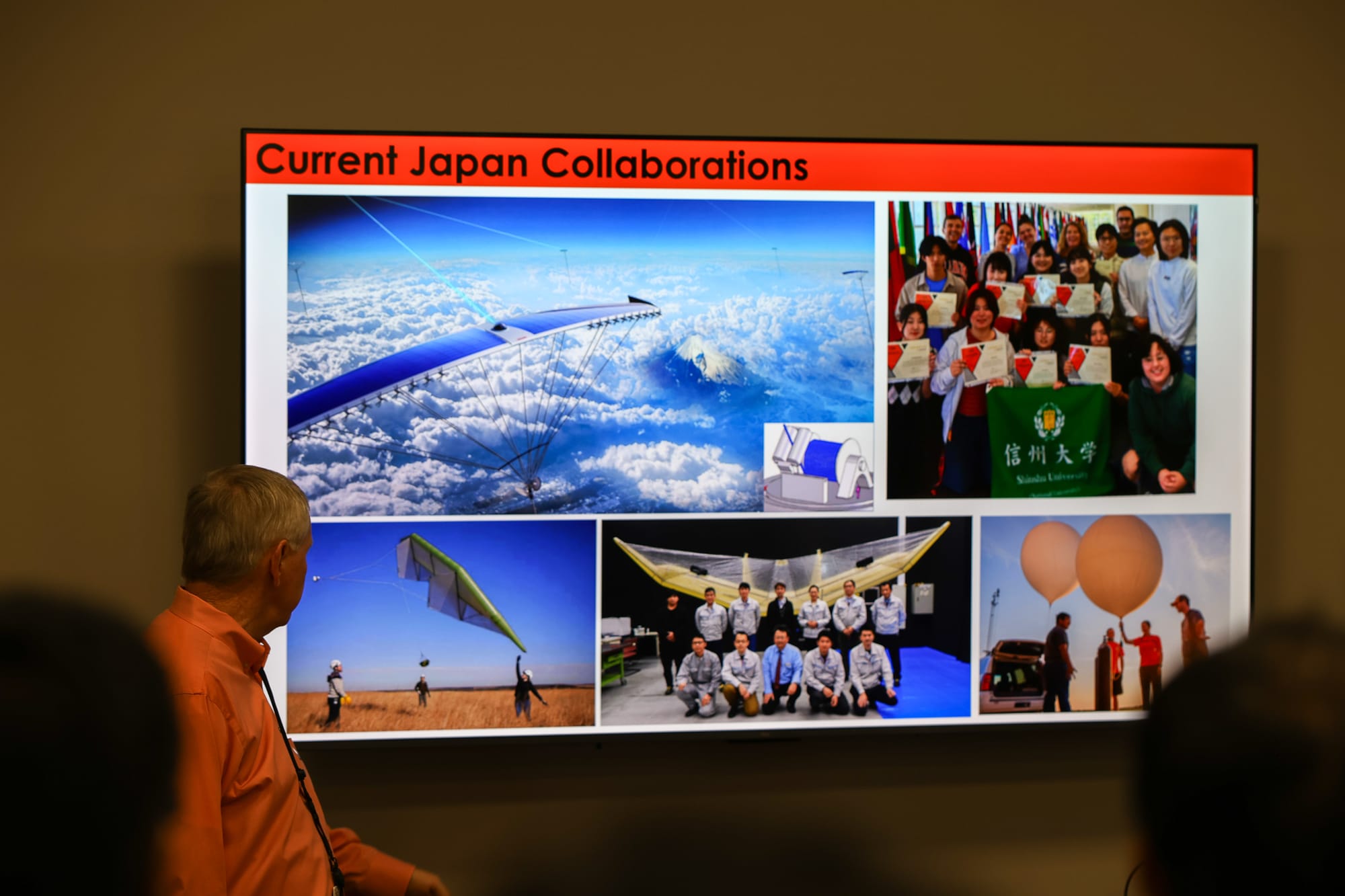
Richie Wolfe, assistant director for technical operations at OAIRE, welcomed the delegation and explained the institute's mission. – Photos by Chris Peters
"Our mission as a land-grant university is to develop and create opportunities for the state of Oklahoma and its residents," Wolfe said. "So we're always happy to help."
Wolfe said OAIRE has about 24 aerospace, mechanical and electrical engineers working on projects ranging from weather research to defense applications.
"It's a pretty big deal in the state of Oklahoma because our weather can be pretty crazy," Wolfe said. "We have lots of tornadoes and things like that, so we spend a lot of time studying weather."
At OAIRE, researchers demonstrated projects ranging from tornado research to wildfire detection to partnerships with major manufacturers.
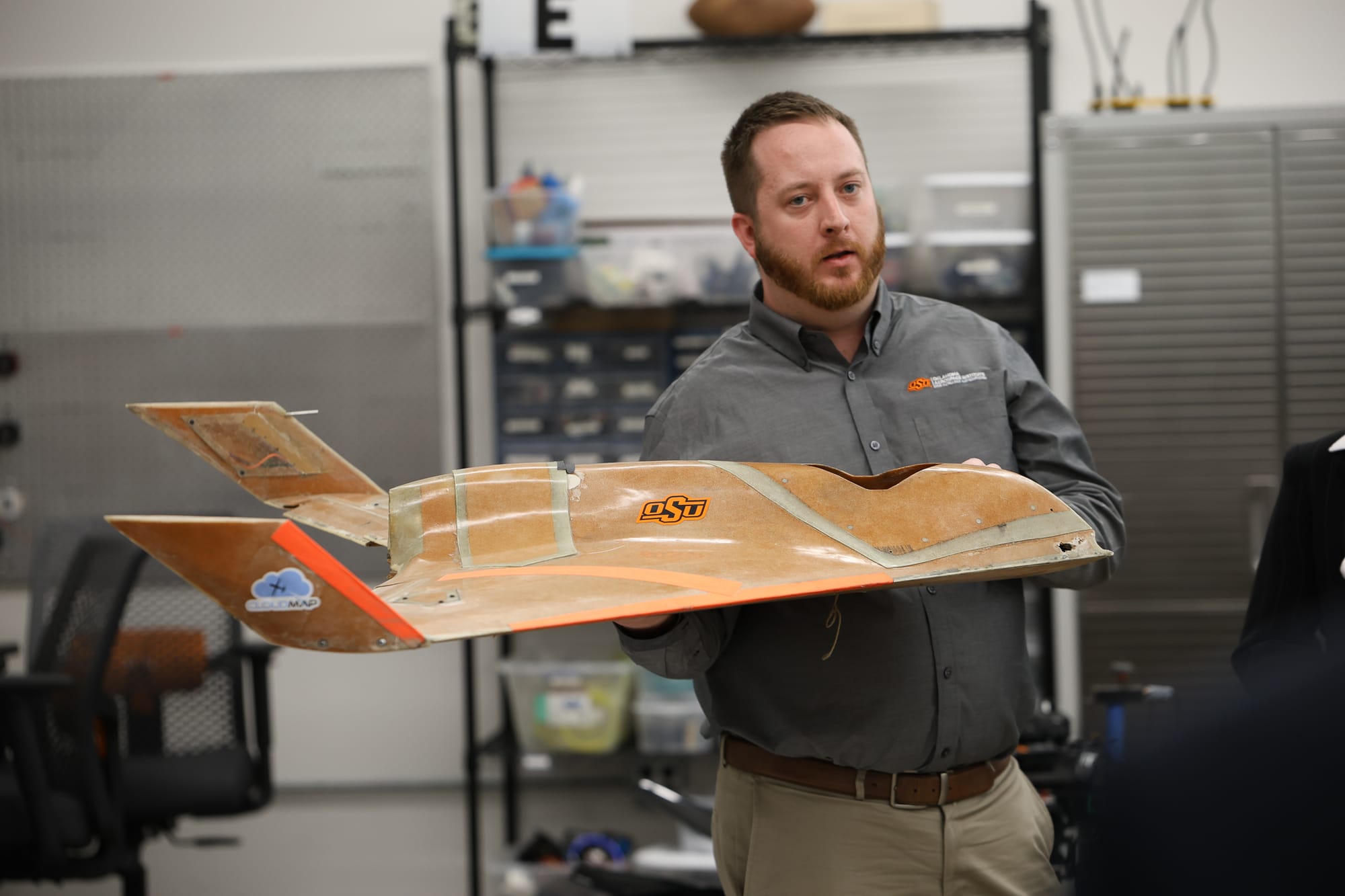
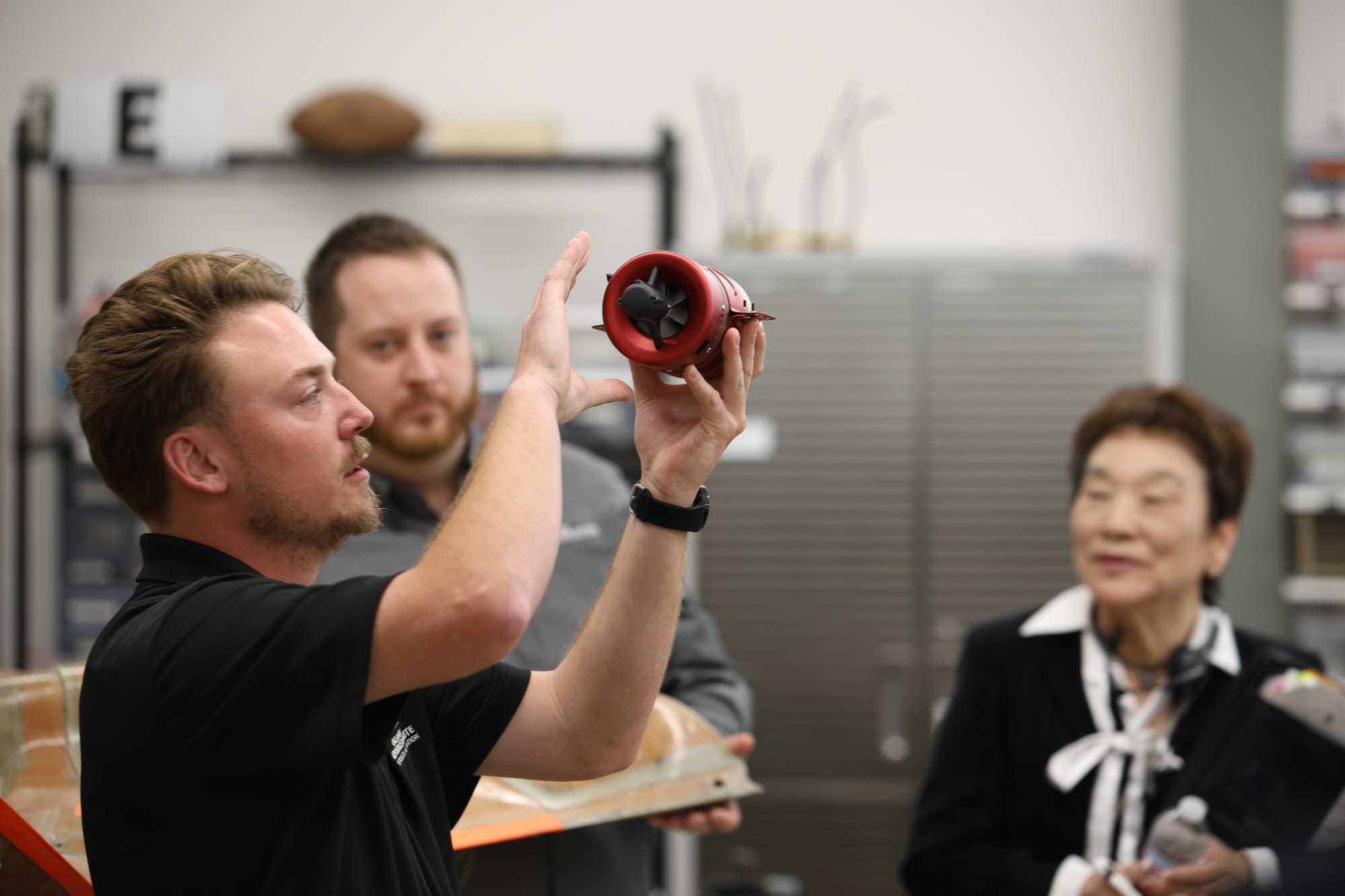
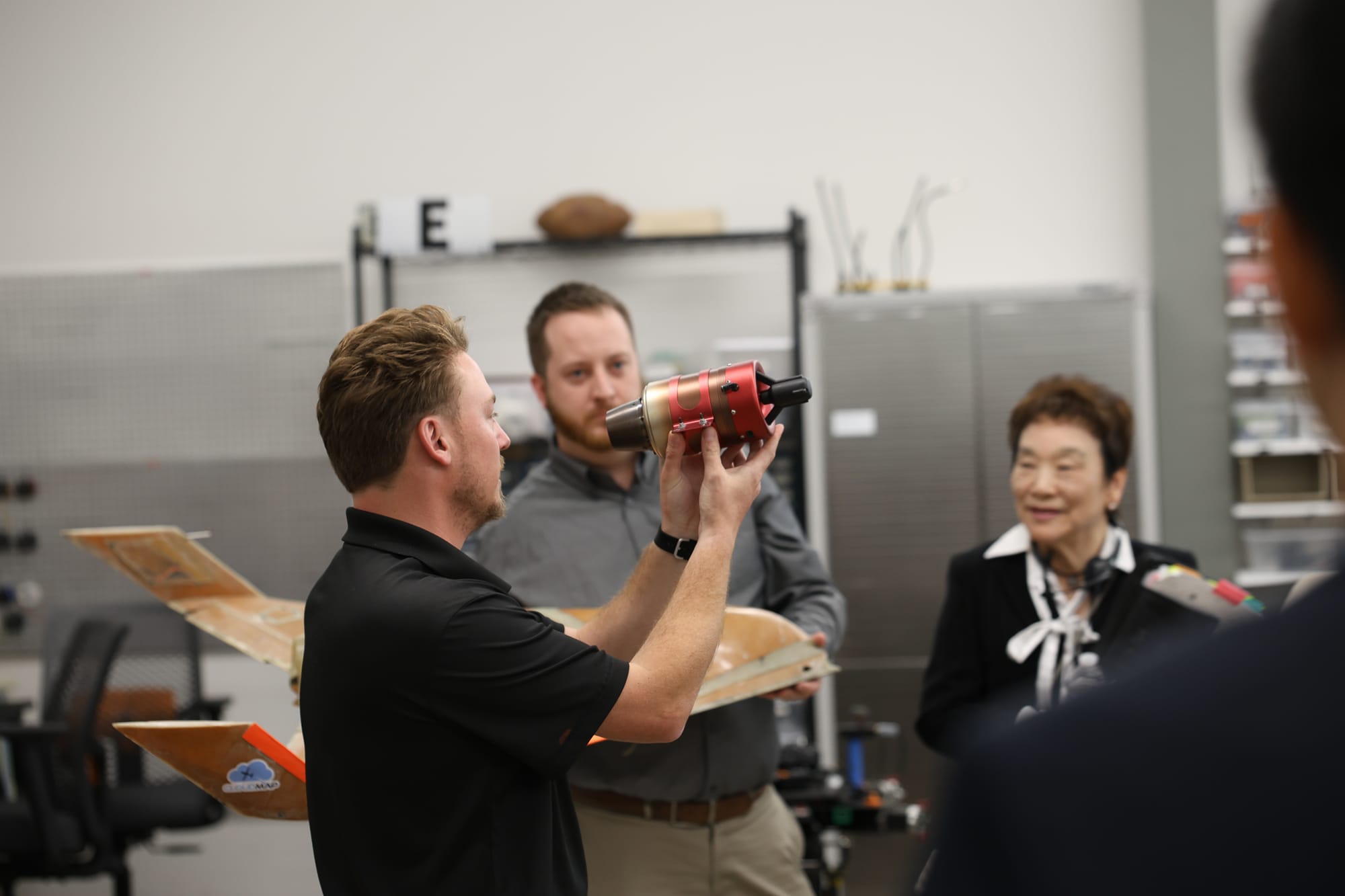
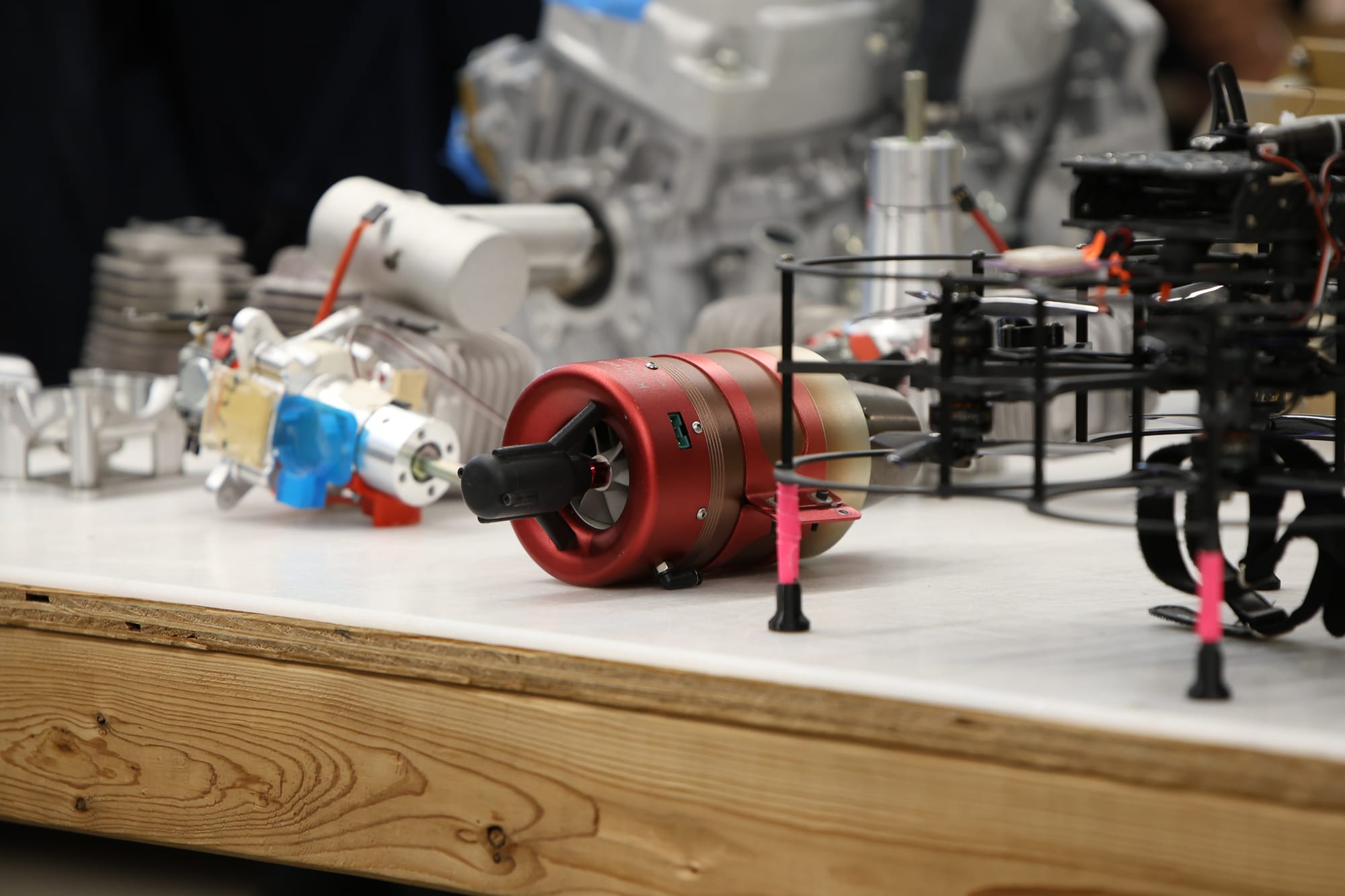
Andrew Walsh, R&D engineer III, left, and Allan Burba, right, show the Japanese trade delegation a student modified drone that uses a diesel powered jet turbine engine for propulsion. – Photos by Chris Peters
Andrew Walsh, R&D engineer III at OAIRE, showed the delegation a jet-powered drone designed by Oklahoma State students that was later adapted for severe weather research.
"This specific variant of the plane was actually adapted by a grad student we had, and he upgraded it to be able to intercept tornadoes," Walsh said. "And so it's designed to be able to fly into the storm to conduct weather research."
The drone can fly at approximately 150 miles an hour powered by a small diesel turbine, Walsh said.
OAIRE is also converting a manned helicopter into an unmanned system for firefighting and agricultural applications. The work builds on the institute's experience responding to wildfires that devastated Stillwater in March.
When wildfires destroyed 98 homes in Stillwater and more than 170,000 acres statewide in March, Dr. Jamey Jacob, OAIRE's executive director, and his team used drones equipped with infrared cameras to identify hot spots and guide firefighters, according to Oklahoma State University News.
"Using diverse sensors, including infrared heat vision, enables the identification of hot spots and fire lines, facilitating strategic deployment," Jacob told the university. "In addition, the imagery obtained through drone technology often surpasses the resolution of satellite imagery, enhancing overall effectiveness in disaster response and management."
The drones provided thermal imagery that pinpointed hotspots and mapped fire damage in real time, allowing crews to respond quickly to emerging threats, Jacob said.
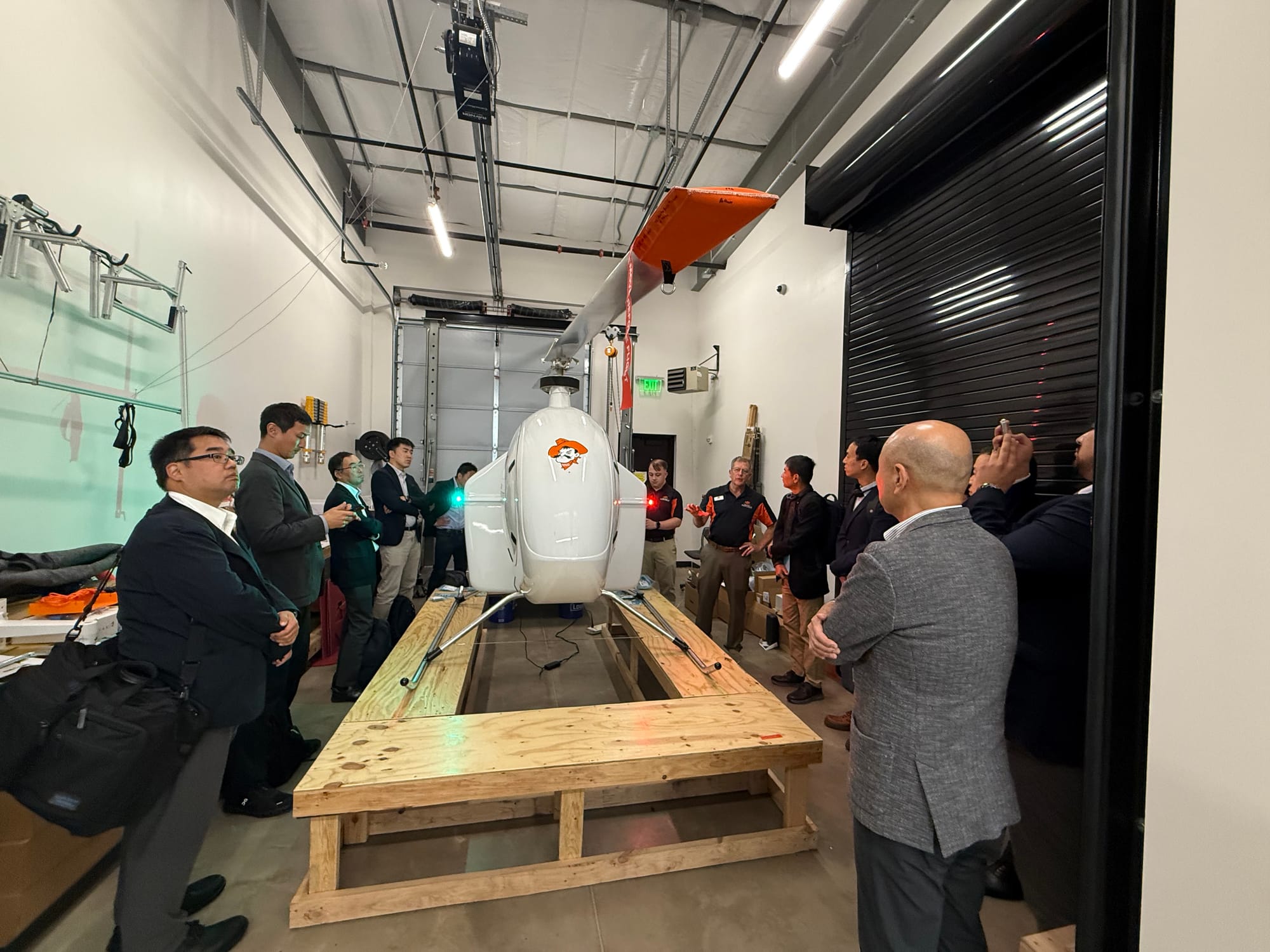
Woody Smith, engineering supervisor at OAIRE, showed the delegation the helicopter conversion project during the tour.
"There's also applications for similar kind of sized helicopters for fire suppression," Smith said. "So you could imagine being able to get something this size up in the air and fly a mission to be sort of a first responder to a small fire before you could get other personnel mobilized with larger equipment or an area that might be difficult to get people into."
The helicopter started as a human piloted vehicle weighing just under 400 pounds with a 400-pound payload capacity, Smith said. It is powered by a 95-horsepower gasoline engine.

The Holidays are here in America's Friendliest College Town!
And yes… they brought cookies. Probably.
Stillwater turns the festive dial all the way up this time of year — twinkling lights everywhere, parades that just keep getting better, shopping that feels like a treasure hunt, and cozy gatherings where everybody knows somebody who knows somebody.
If you’re looking for holiday magic, we basically have it stockpiled.
Antonio Valencia, a contract engineer with TMP Tech working on the project, said the aircraft will carry an infrared camera system to search for spot fires and will be dispatched remotely with assistance from a spotting aircraft orbiting overhead.
"This aircraft will actually have an infrared camera system," Valencia said. "They'll actually be able to search for spot fires ahead of it."
Valencia said the helicopter contains about 530 feet of electrical wiring and has a flight time of about 90 minutes with all electronics running. The aircraft will also carry pumps for firefighting uses, he said.
"With all of our electronics, we actually pull more power than what the engine alternator can provide," Valencia said. "So we actually get about an hour and a half flight time of this helicopter, with our electronics and everything, as we're limited by our batteries."
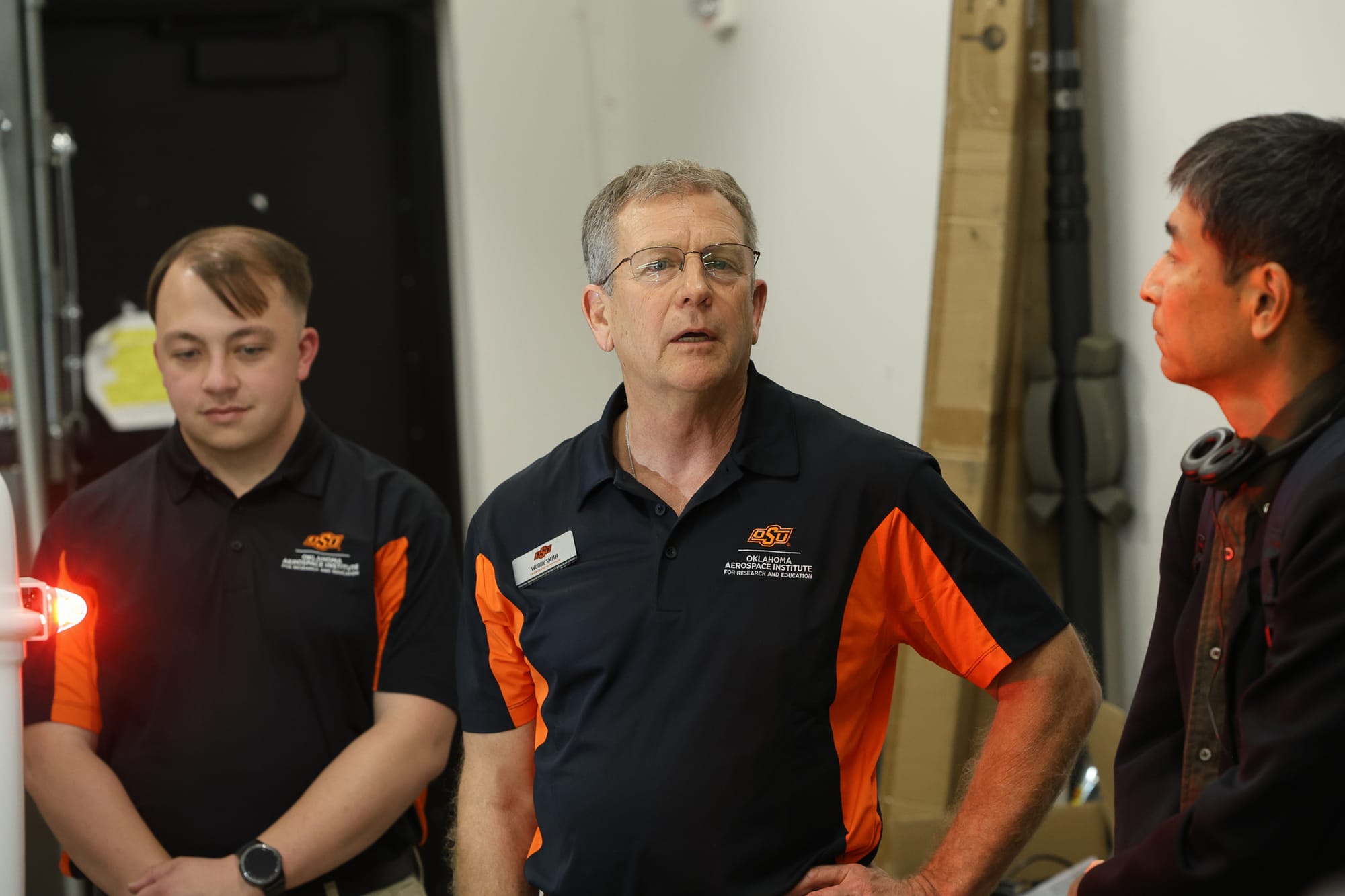
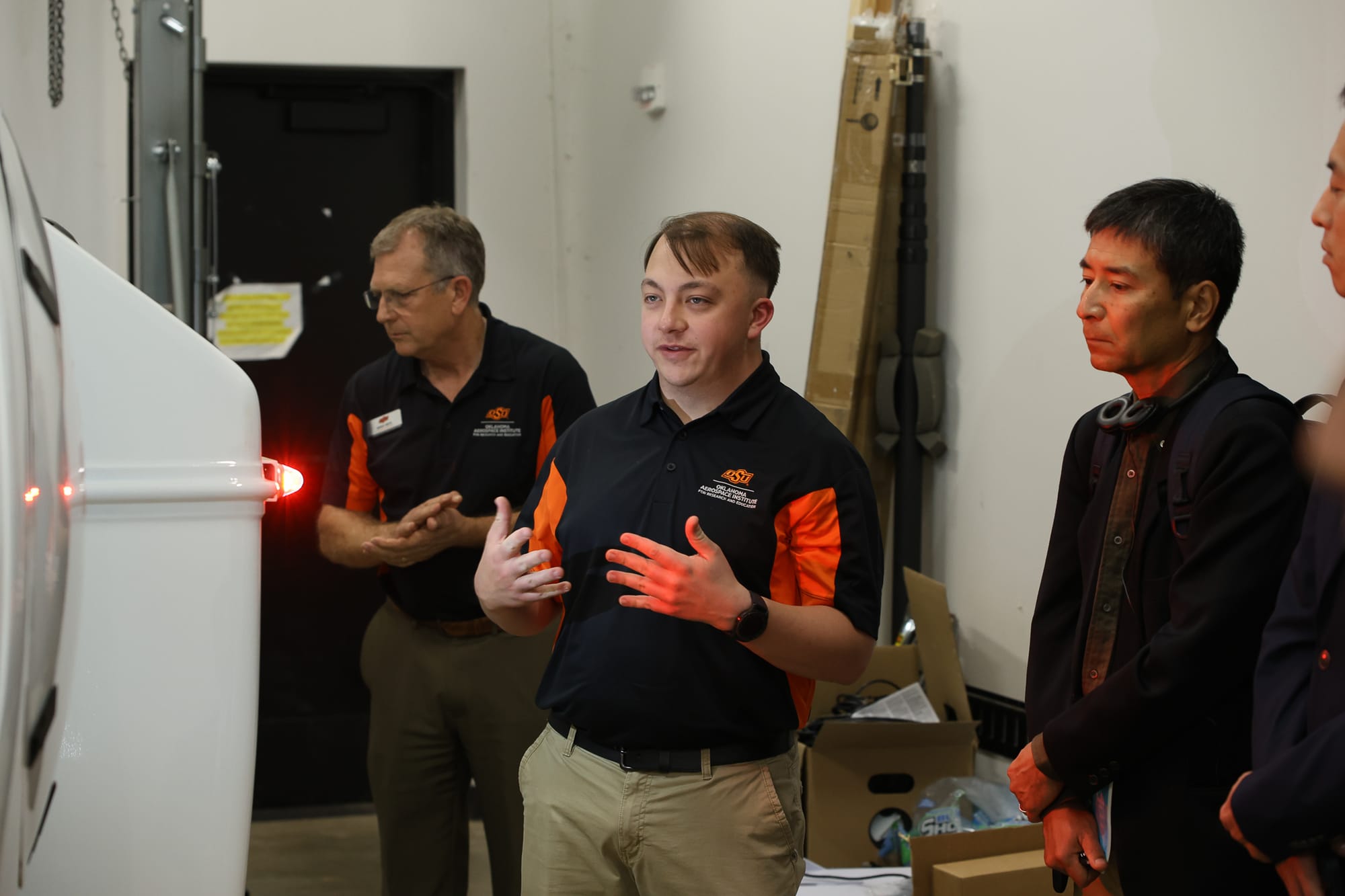
Woody Smith, engineering supervisor at the Oklahoma Aerospace Institute for Research and Education, and Antonio Valencia, a contract engineer/TMP Tech, explain an unmanned helicopter project to members of a Japanese trade delegation on Nov. 19 at OAIRE in Stillwater. – Photos by Chris Peters
Wolfe said the Toyota partnership represents OAIRE's most significant collaboration with a Japan-based company.
"Currently probably our most predominant collaboration effort that we've had with a company based in Japan is through Toyota, where we've done a lot of these kite flights with them," Wolfe said.
Kathleen McNamara, R&D engineer II at OAIRE, explained the institute's work on a five-year partnership with Toyota Motor Corporation developing high-altitude tethered kite systems for communication and surveillance applications.
"After the inflatable structures project where we worked on drag reduction of motor vehicles with Toyota, he transitioned into working on high-altitude kite systems with Toyota," McNamara said, referring to OAIRE director Dr. Jamey Jacob. "Toyota is very interested in energy generation, so they have multiple projects that are ongoing over the last nine or 10 years."
McNamara said Toyota has a futuristic concept for a 100-meter wingspan high-altitude kite that would fly in the jet stream 10,000 meters above ground level with solar panels, wind turbines and optical communications.
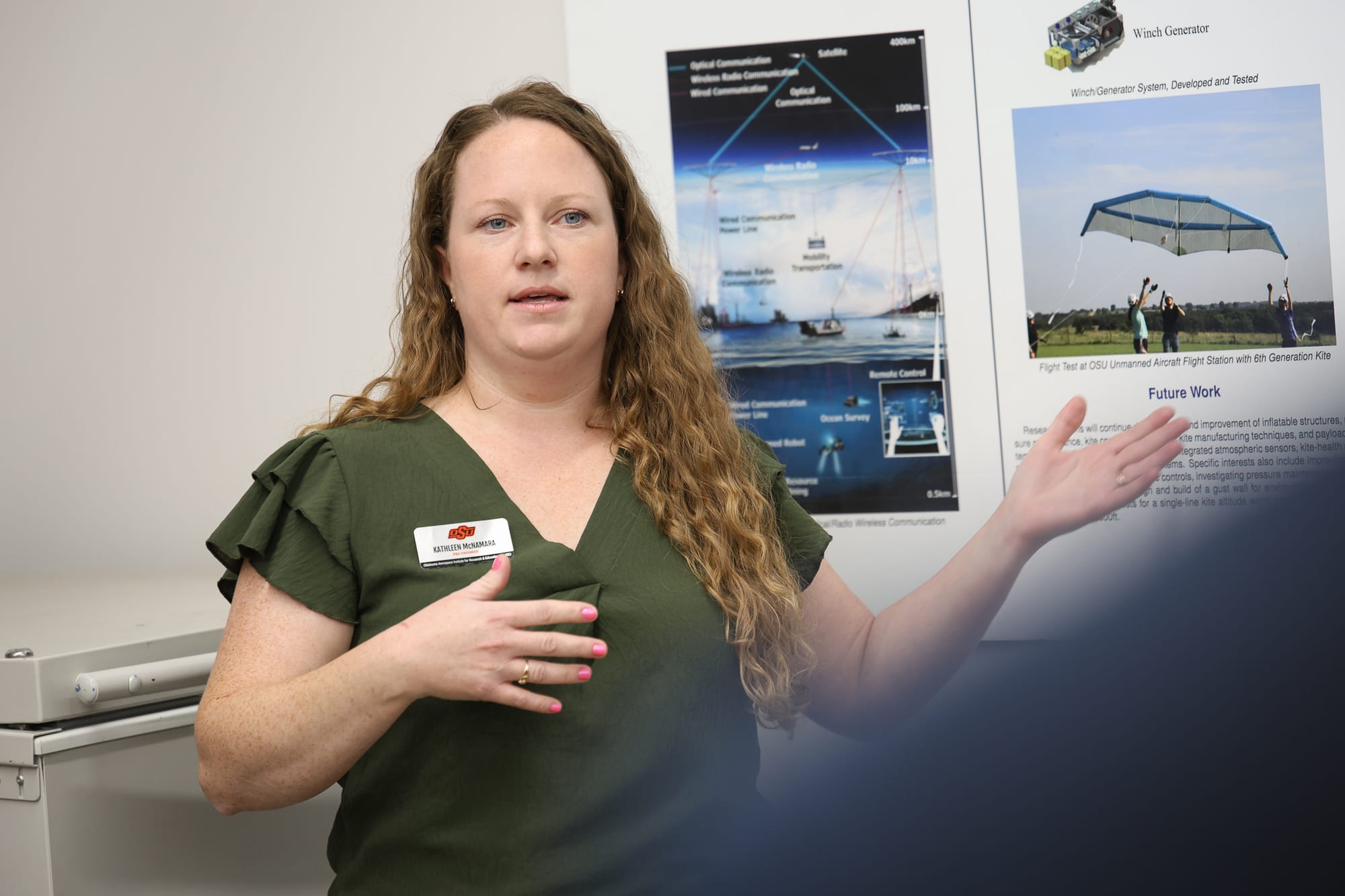
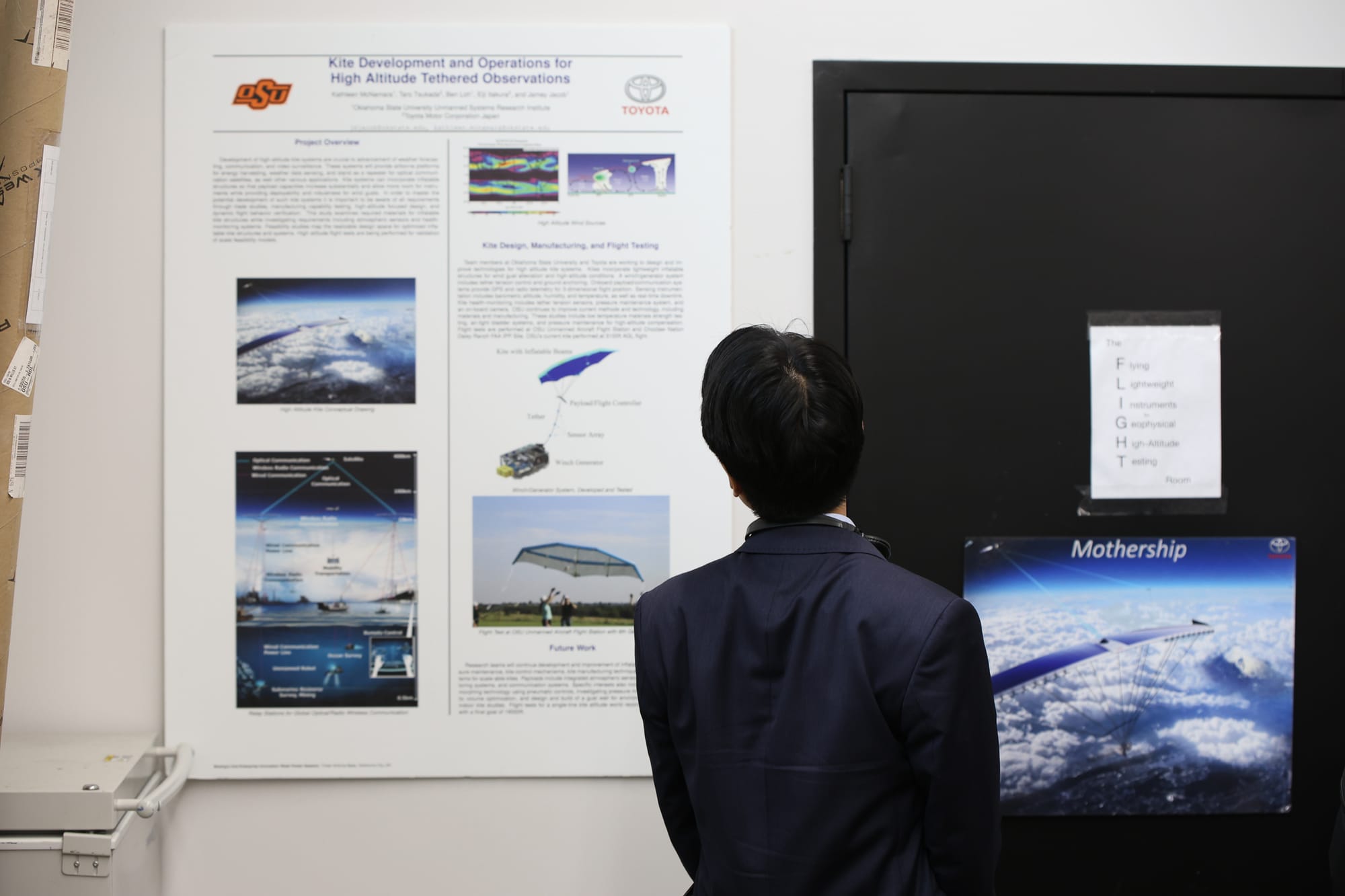
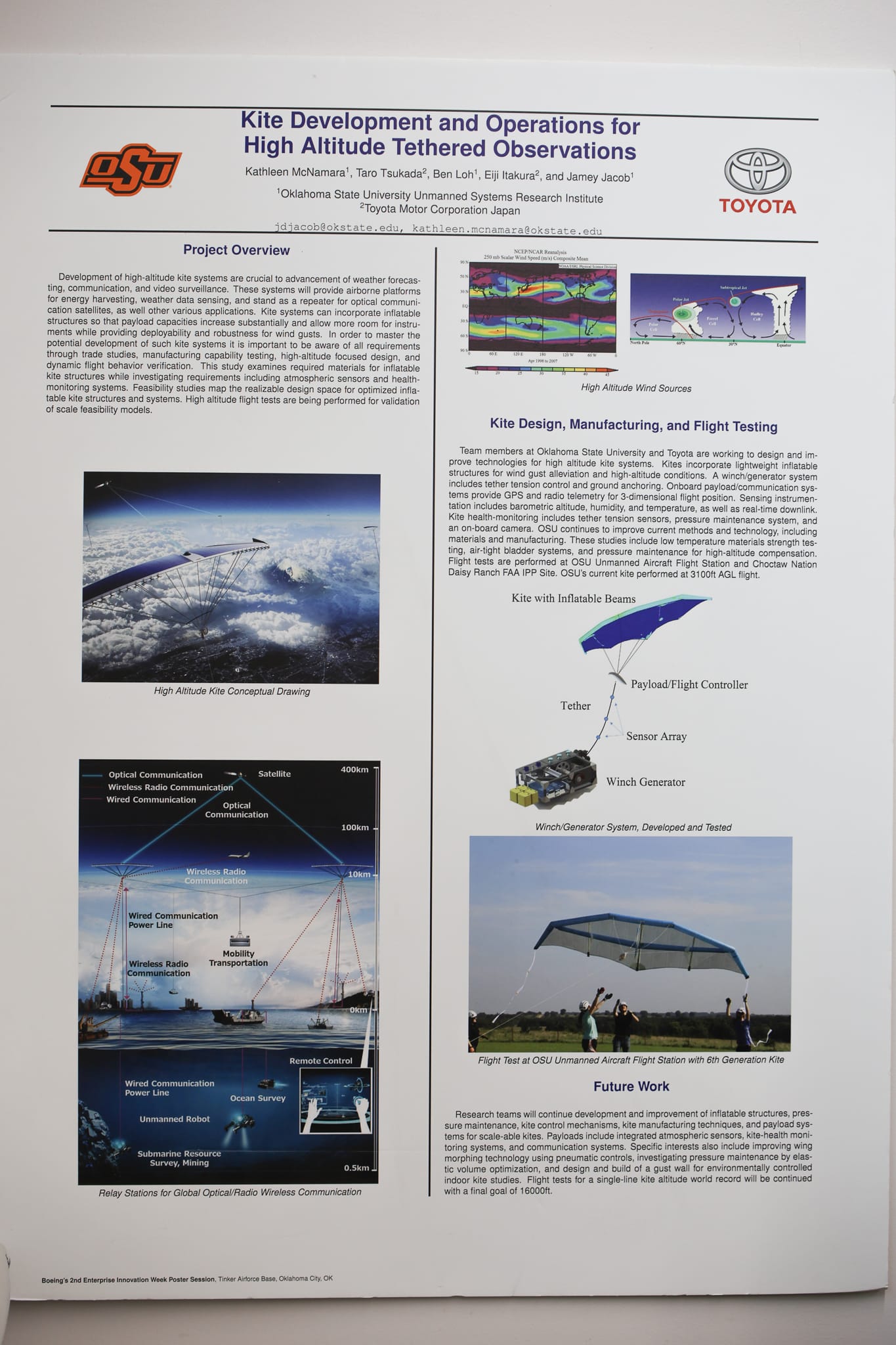
Kathleen McNamara, R&D engineer II, left, at the Oklahoma Aerospace Institute for Research and Education, explains OAIRE's five-year partnership with Toyota Motor Corporation to members of a Japanese trade delegation on Nov. 19 at OAIRE in Stillwater. – Photos by Chris Peters
"This is something that would fly in the air all year and would remain in the air at all times," McNamara said. "So we had the opportunity to help them with this project."
OAIRE worked with Toyota for about five years on the winch generator system and the inflatable structure kite, McNamara said. The team had to address challenges including low temperatures at high altitude and pressure differentials.
"Since this kite was designed to fly more than 5,000 meters above ground level, we have to watch for things like low temperatures," McNamara said. "So we did a lot of investigation over other materials, really low temperatures and the stresses that we expected them to be in."
Tulsa World
The team designed and fabricated the kite at OSU and developed a pressure maintenance system that could relieve pressure as the kite ascended and pump air back in as it descended.
"Overall, they have a lot of futuristic concepts that they're still working on," McNamara said. "And we helped develop the system that would fly for the first 15,000 feet above ground level."
Allan Burba, R&D engineer at OAIRE, demonstrated a long-range drone designed for beyond visual line of sight operations. The aircraft is projected to fly for about 90 minutes and travel about 60 miles, with OAIRE currently testing the vehicle to help the Federal Aviation Administration develop regulations for autonomous drone operations.
"We're doing this to help the FAA understand more about what 108 is going to look like in the future," Burba said, referring to proposed Part 108 regulations. "How are they going to avoid each other? How are they going to detect each other? What is a landing zone going to look like?"
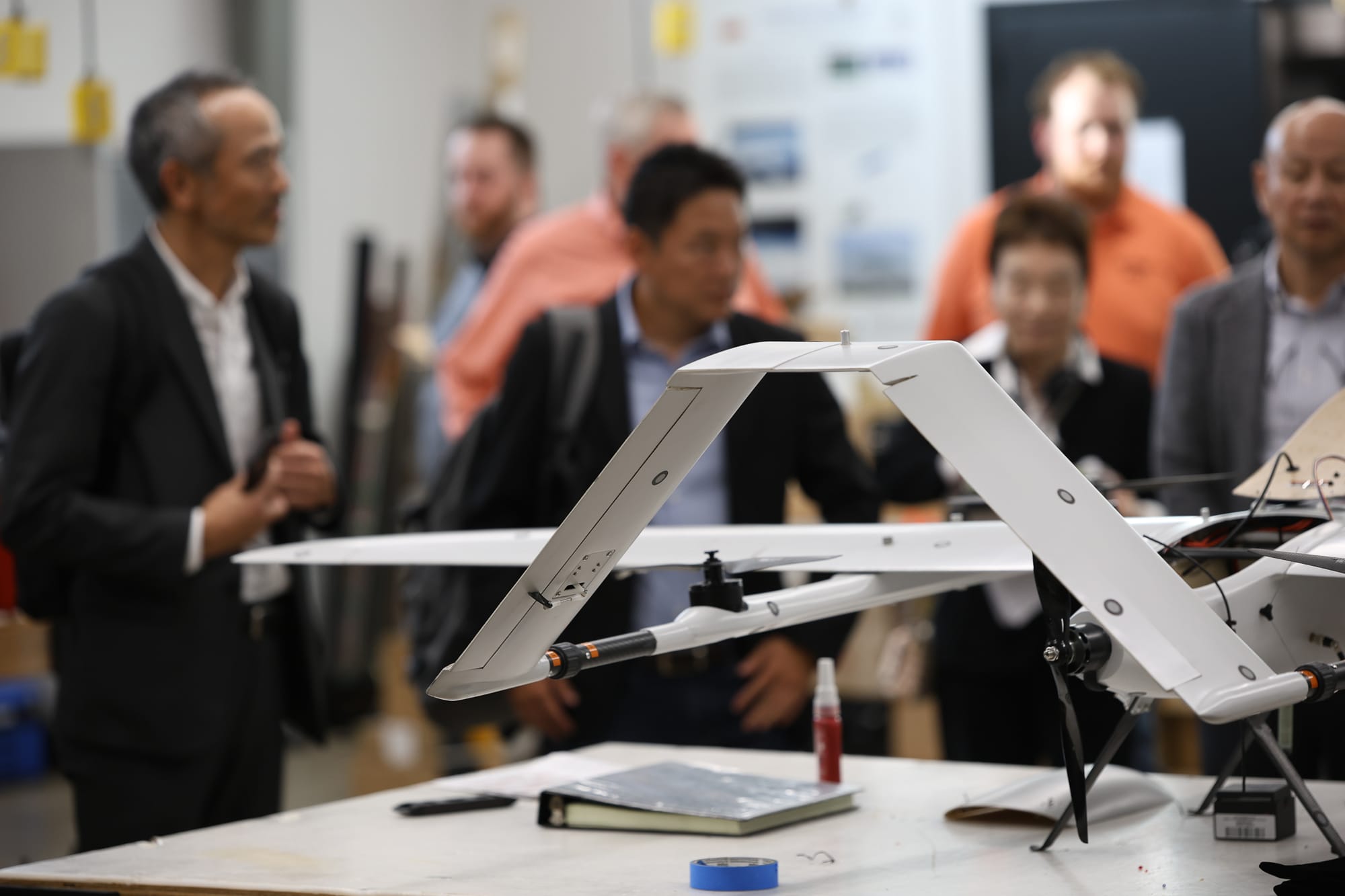
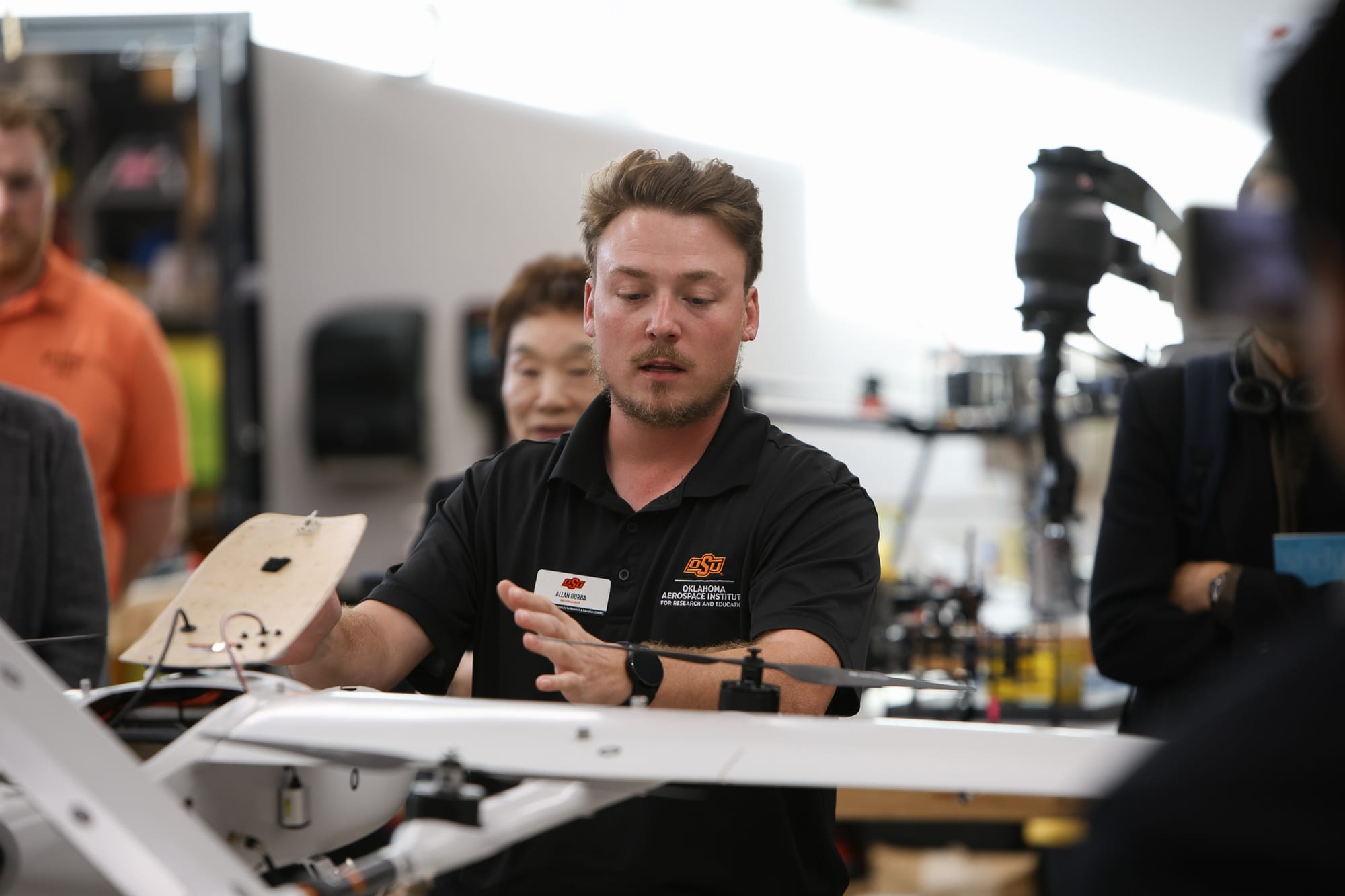
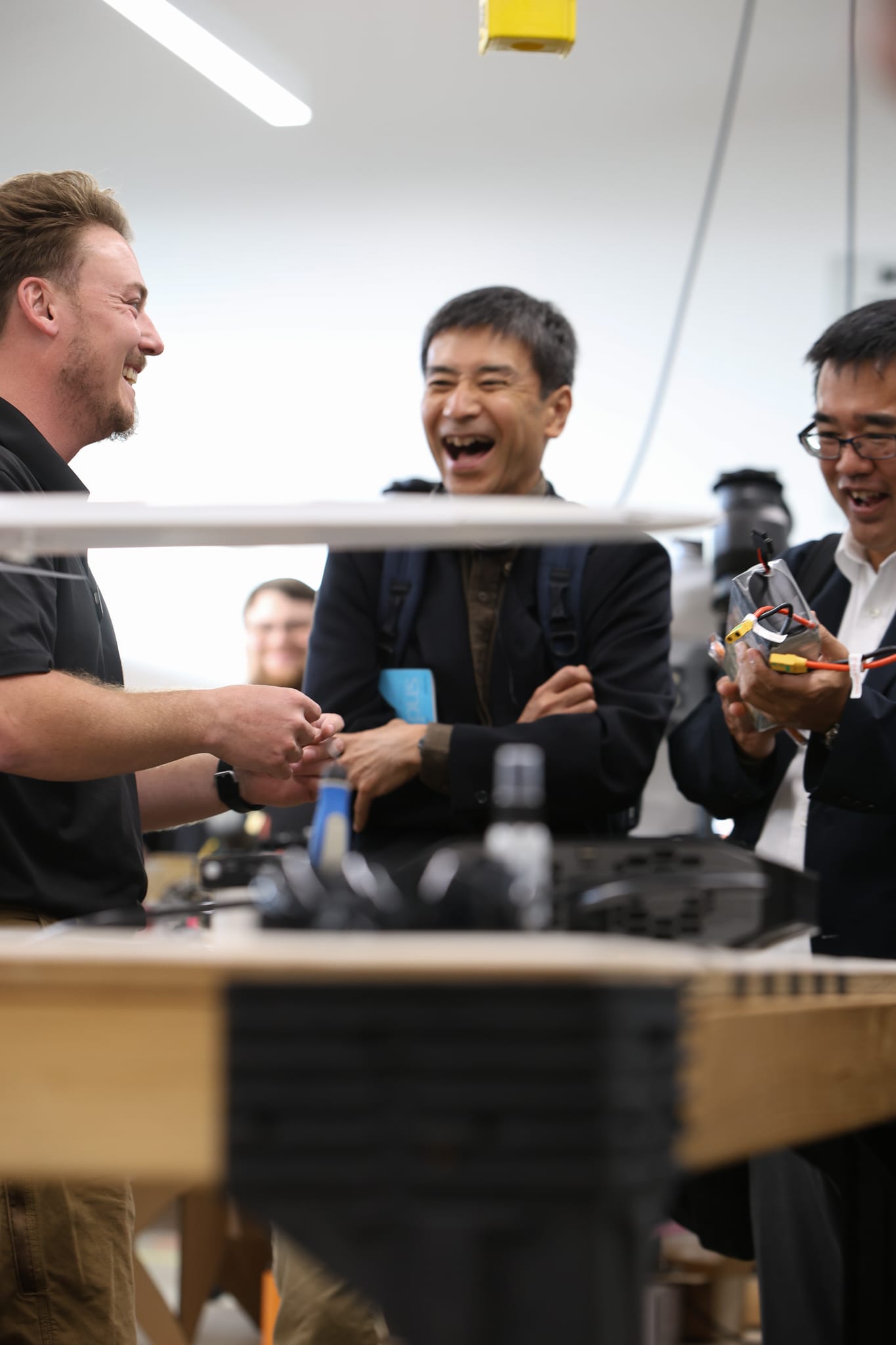
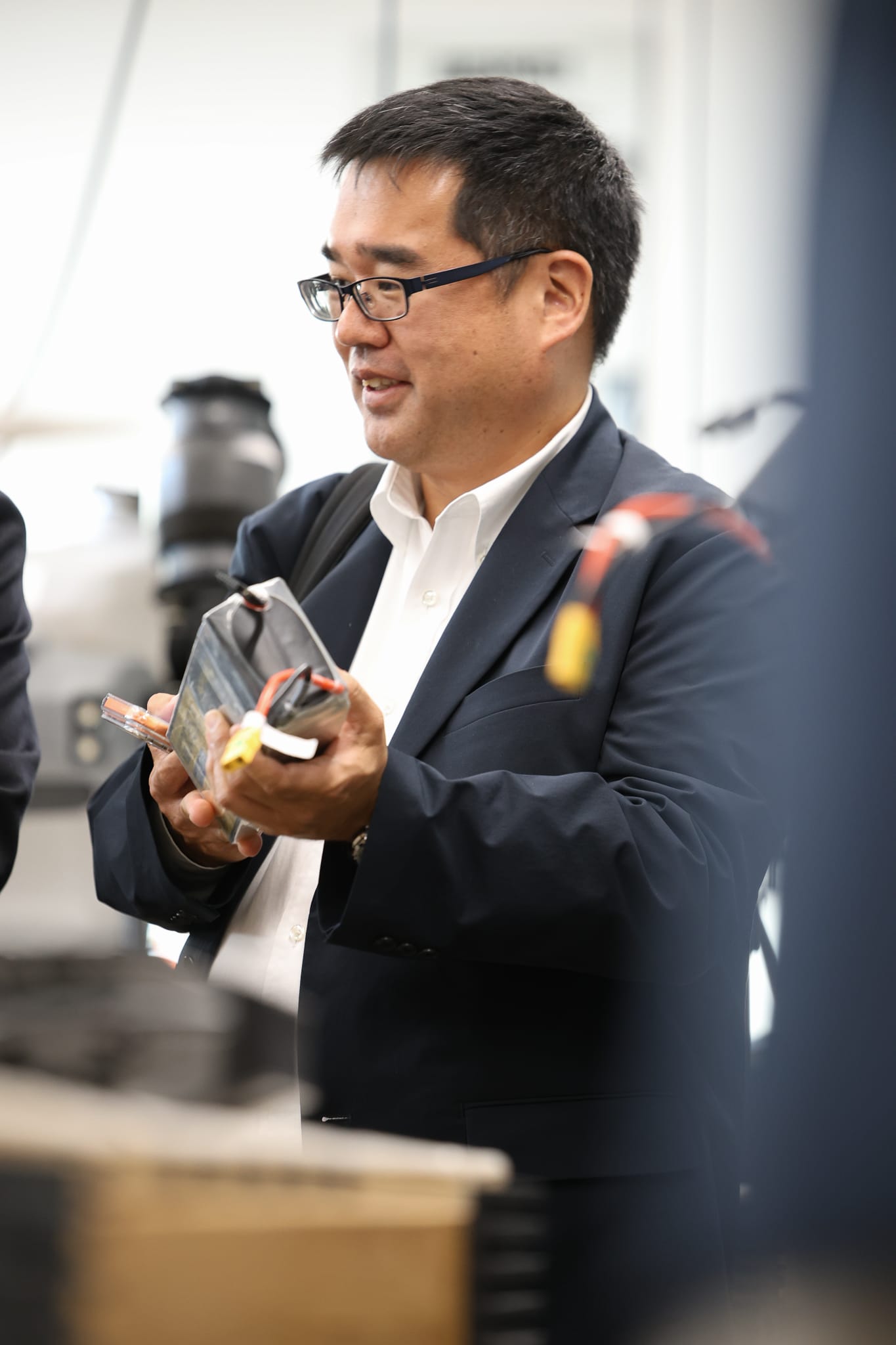
Allan Burba, R&D engineer at the Oklahoma Aerospace Institute for Research and Education, demonstrates a long-range drone designed for beyond visual line of sight operations to members of a Japanese trade delegation on Nov. 19 at OAIRE in Stillwater. Burba explained the aircraft is projected to fly for about 90 minutes and travel about 60 miles on a single battery. – Photos by Chris Peters
For the Japanese visitors, Oklahoma's appeal extends beyond its research capabilities to its regulatory environment and geography.
Wolfe explained that current Federal Aviation Administration regulations require drones to operate below 400 feet in altitude and within visual line of sight under Part 107 rules. The FAA is developing Part 108 regulations that would allow drones to fly beyond visual line of sight, he said.
OAIRE's work testing long-range drones helps the FAA understand how to develop those regulations, researchers said.
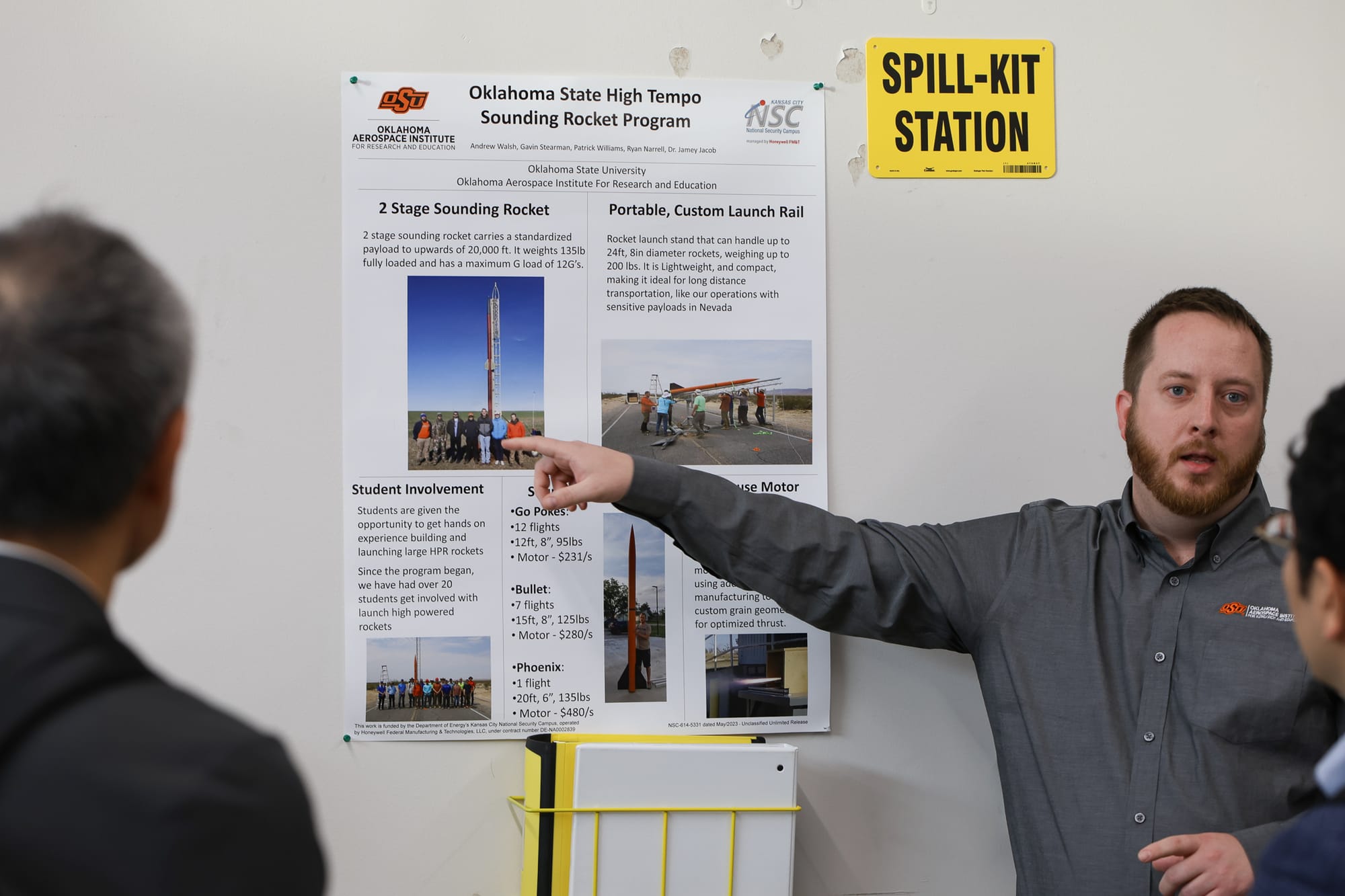
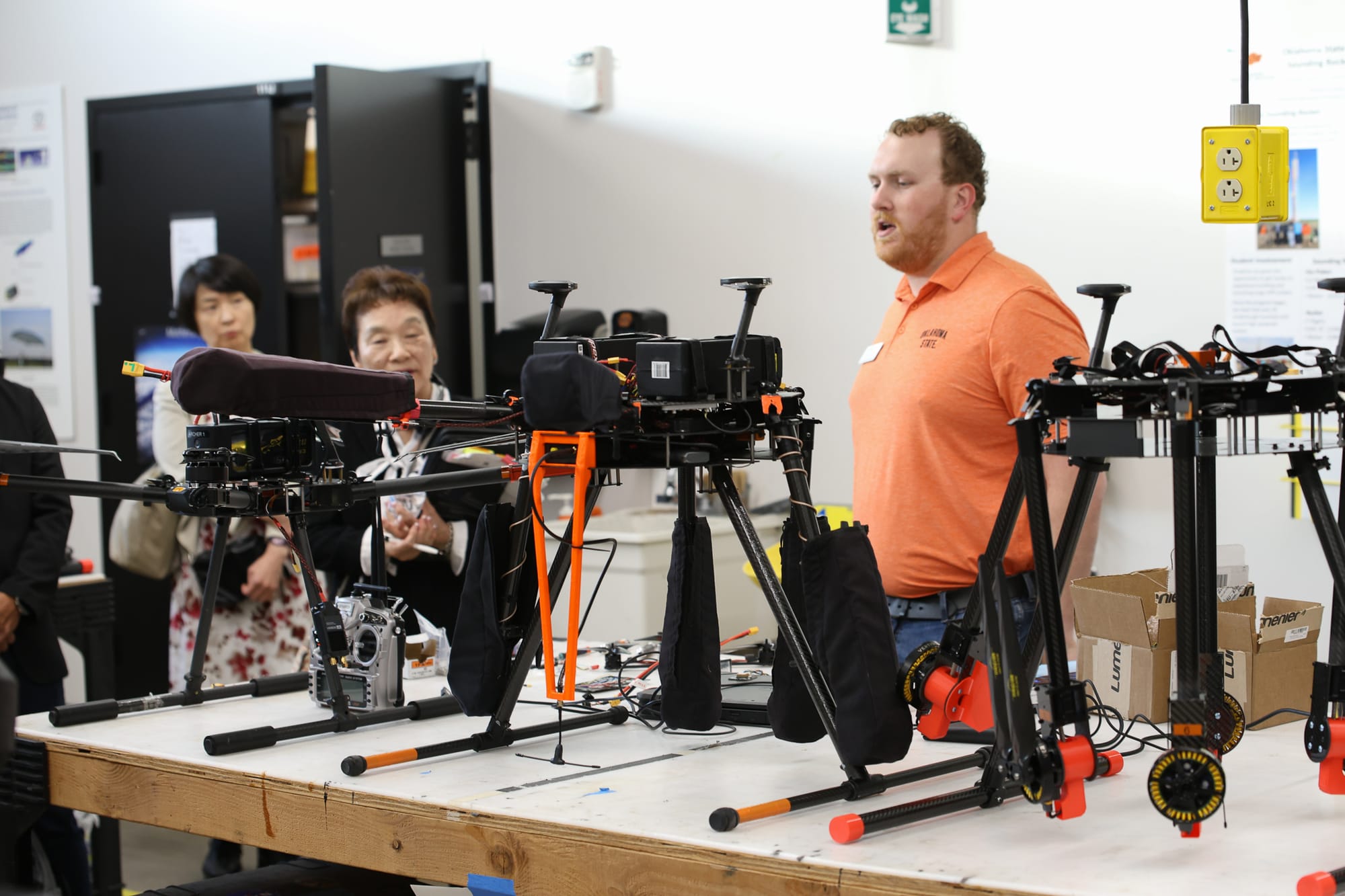
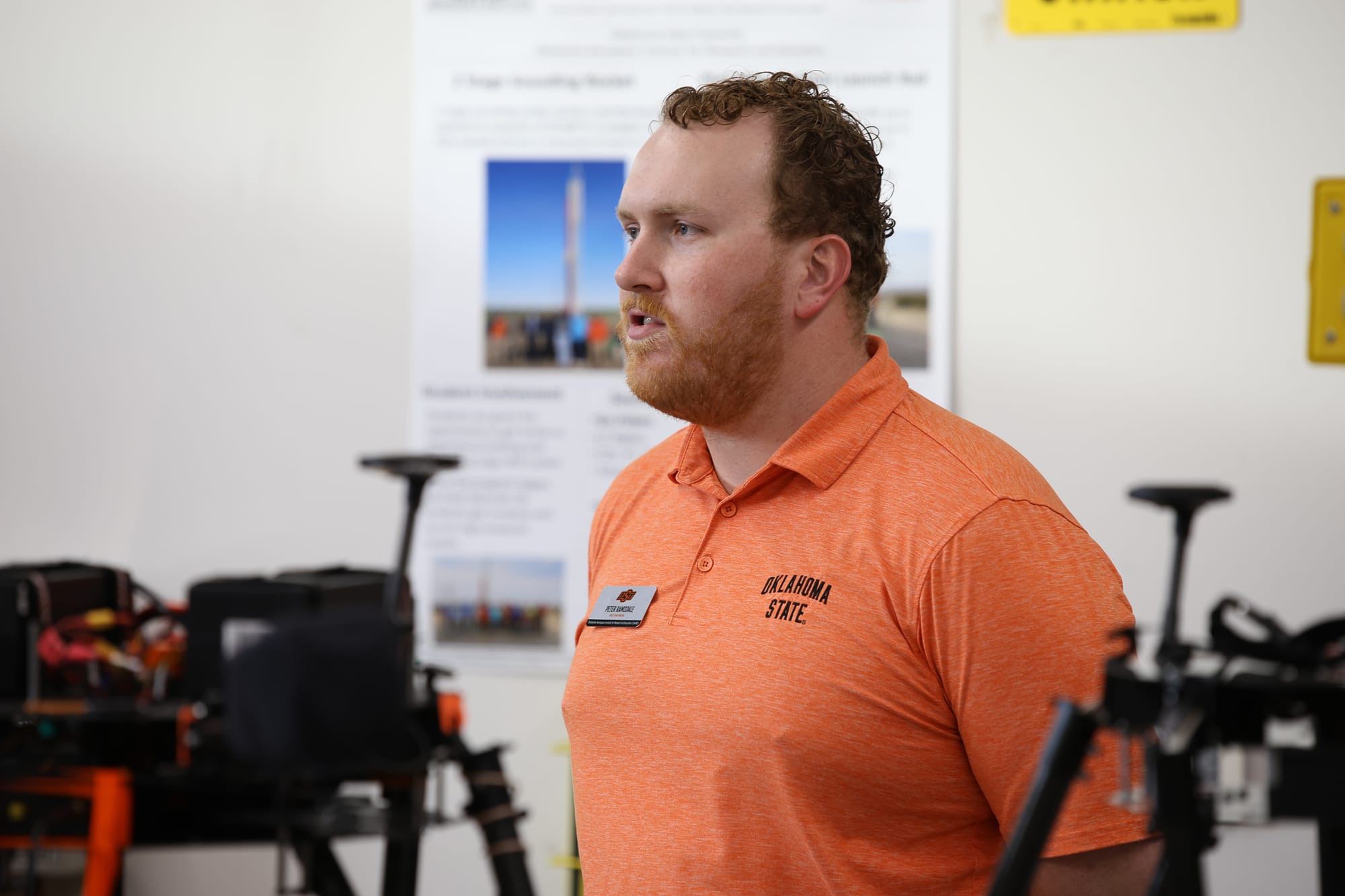
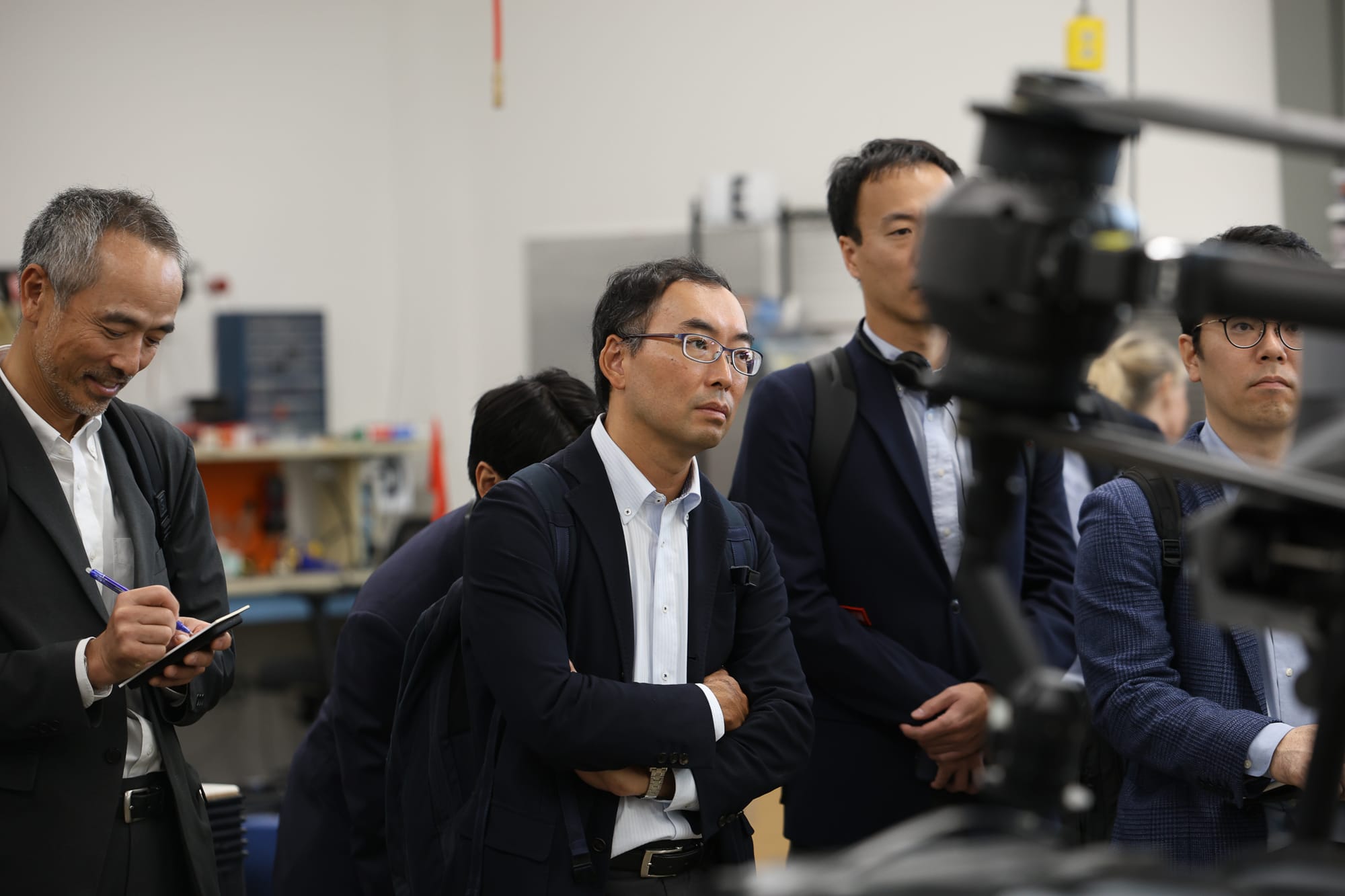
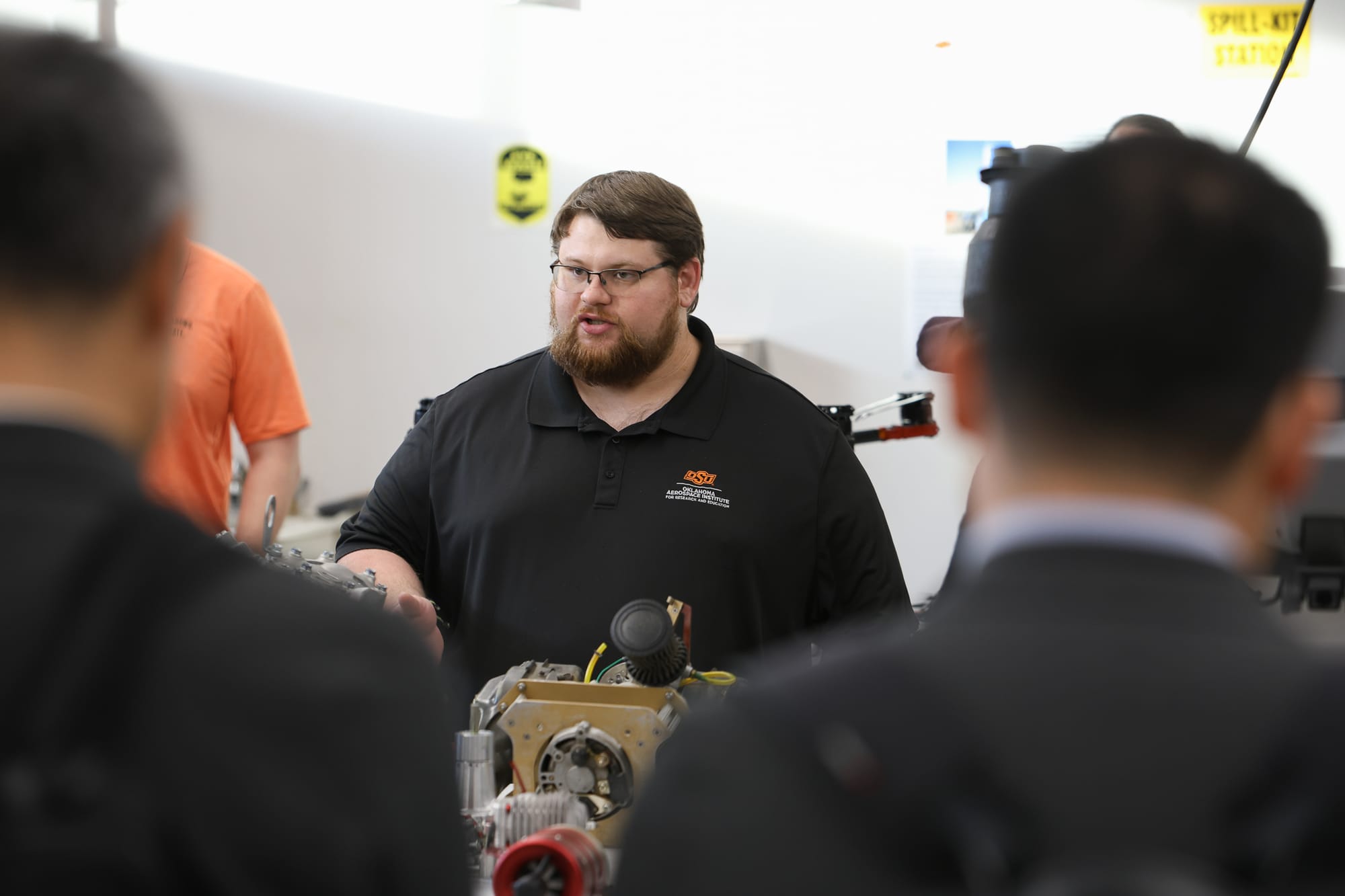
OAIRE engineers Andrew Walsh, Peter Ramsdale and Josh Melvin demonstrate various aerospace technologies to members of a Japanese trade delegation on Nov. 19 at the Oklahoma Aerospace Institute for Research and Education in Stillwater. Walsh, an R&D engineer III, explained OAIRE's high tempo sounding rocket program, which launches customer payloads to test new technologies. Ramsdale, an R&D engineer focused on systems integration and vehicle design, discussed drone development and testing. Melvin, a propulsion engineer, explained gas turbines, electric motors and power systems used in unmanned aircraft. – Photos by Chris Peters
"Japan doesn't have any of the testing sites or the space for any of drone testing," said Thomas, a representative from Mitsui Bussan Aerospace Corporation who didn't share his last name. "So if we can collaborate in a way that more Japanese companies could come and possibly test their drones capability or anything like that in Oklahoma, I think those are kind of enticing."
Sam, another Mitsui representative who also didn't provide a last name, said the company works with U.S. defense contractors including Raytheon and is seeking new technologies to introduce to Japanese industry.
"We have to find the new technology, which we like to introduce for our Japanese industry, especially for this working space, defense space," Sam said.
Oklahoma offers advantages that competing states cannot match, according to Wells and the visiting executives. The state offers what aviation officials call low air density traffic, meaning vast open spaces for testing unmanned aircraft beyond visual line of sight.
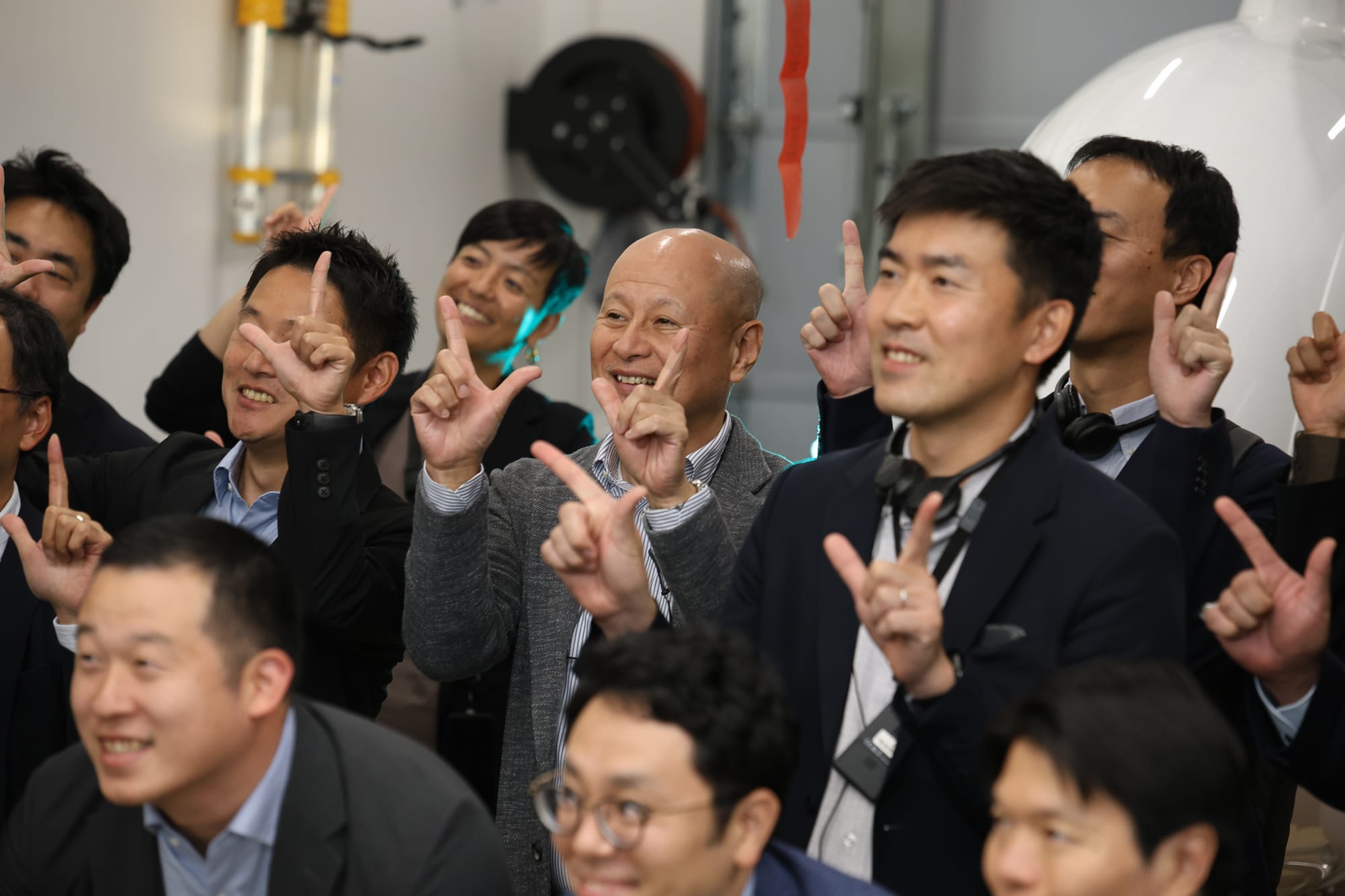
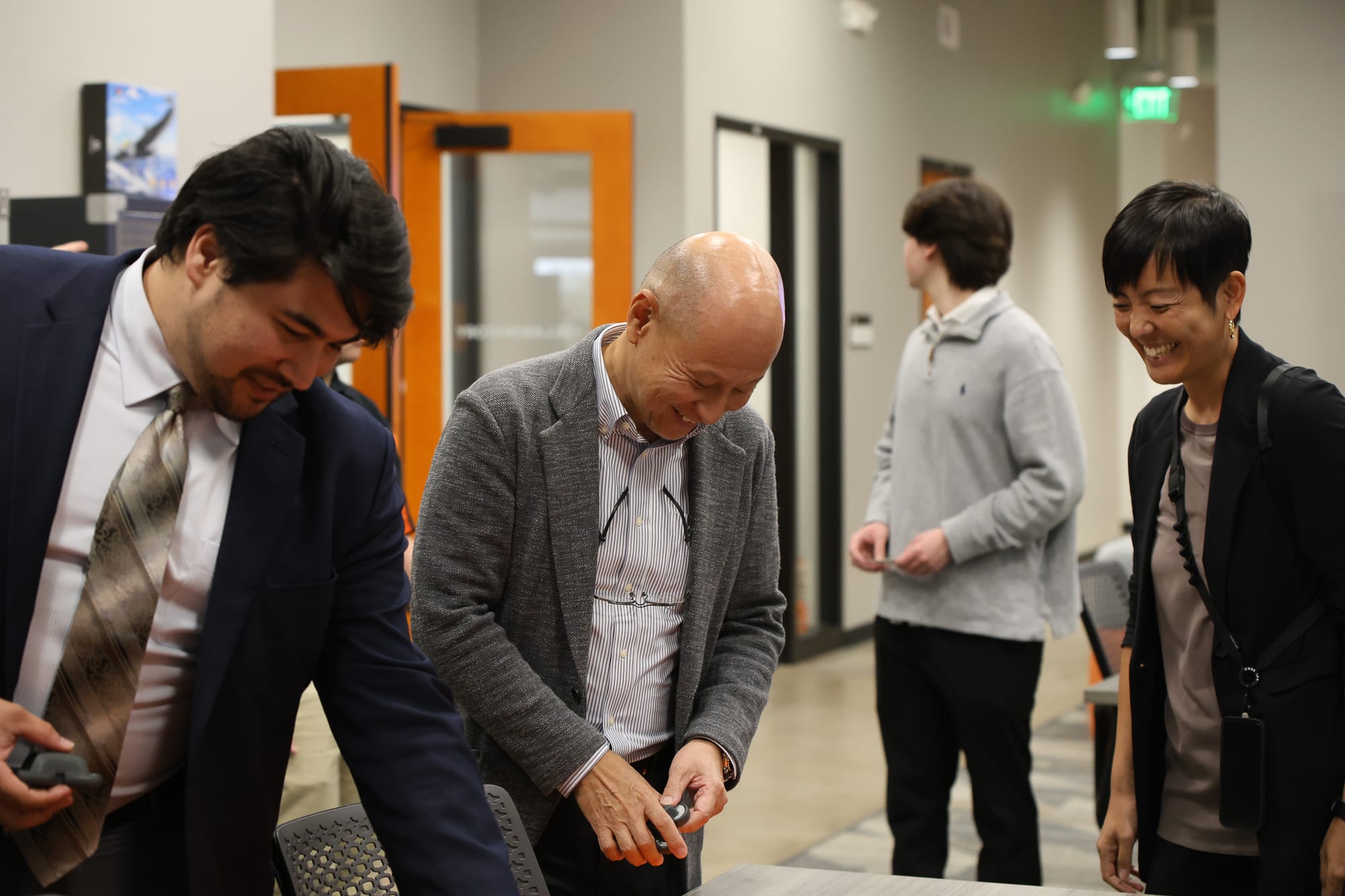
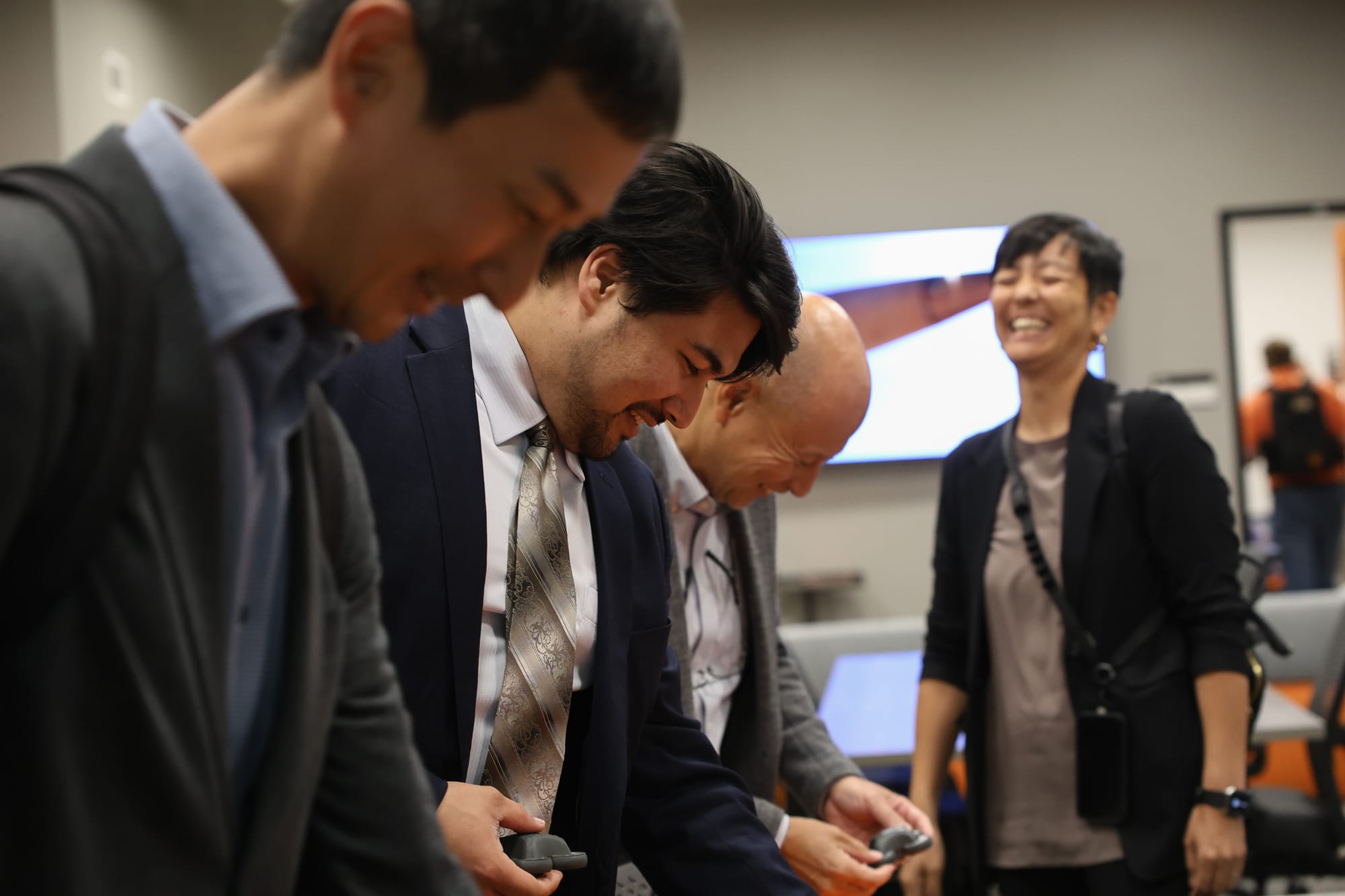
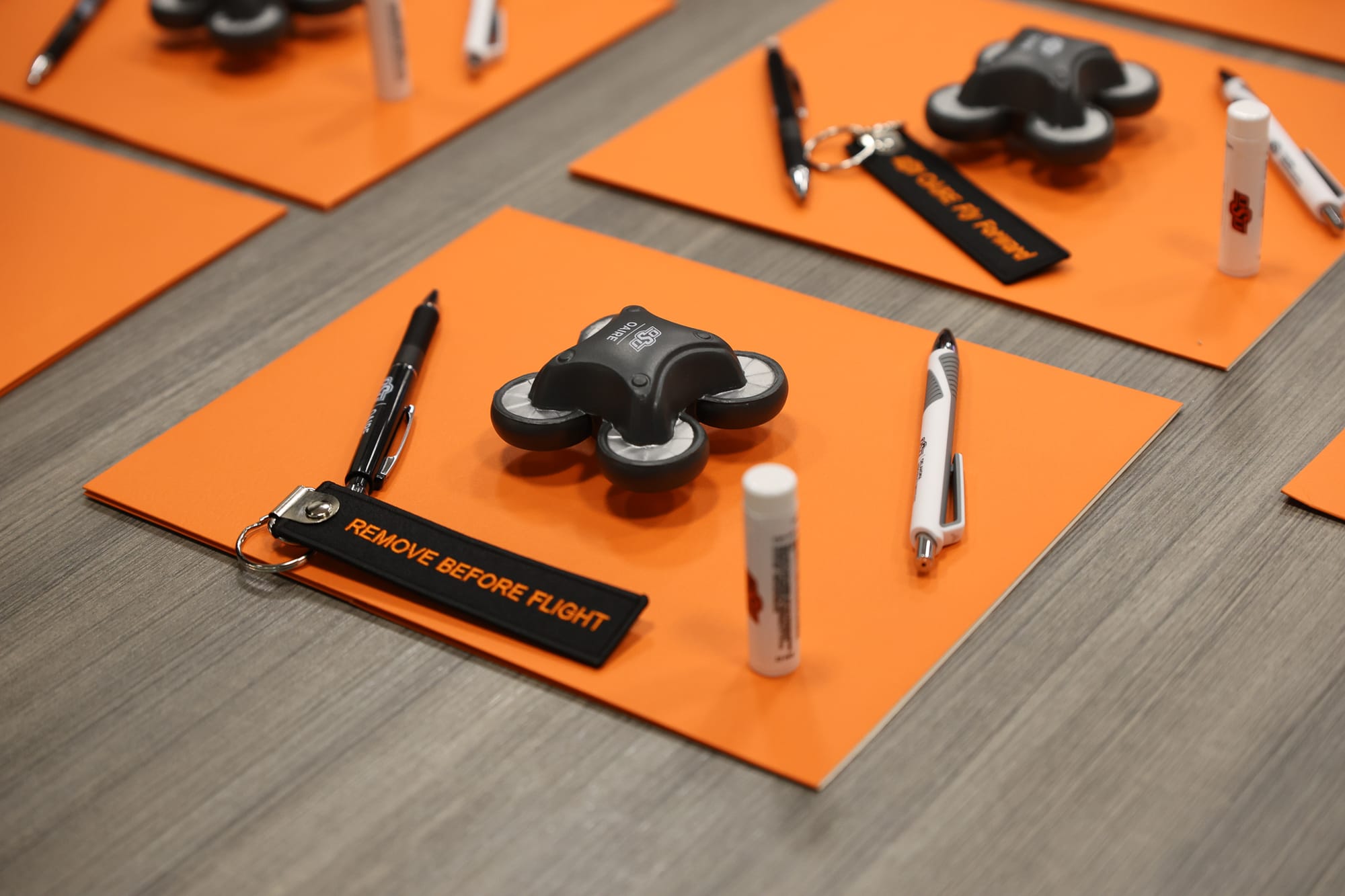
Members of a Japanese trade delegation pose with Oklahoma State University's "Pistol Pete" hand gesture and receive gifts from the Oklahoma Aerospace Institute for Research and Education on Nov. 19 at OAIRE in Stillwater. The delegation included representatives Thomas and Sam from Mitsui Bussan Aerospace Corporation, along with representatives from Mitsubishi Heavy Industries America, Mizuho Bank and five other Japanese companies. – Photos by Chris Peters
"You have a lot of open space," Wells said. "And so we've been working with the authorities, the federal and state authorities, to develop a lot of places where we can develop this beyond the visual line of sight operations."
Sam said his company is evaluating what distinguishes Oklahoma from other states with similar attributes.
"Texas also is very similar," he said. "And also they are more focused and very kind for the industry. So I want to know what the differentiation between Oklahoma from to another state like Texas."
Wells said state laws and policies make Oklahoma particularly friendly to aerospace innovation.
"They're attracted to our friendly business climate. We're the number one state right now for business climate," Wells said. "They like the business incentives that Oklahoma offers."
The delegation also included representatives from Chemican Corp., Chiyoda Corp., Cinter Technology Services, JPEX America and Toray International America. The visit was coordinated by the Japanese Trade Assistance Office, which helps Japanese companies explore international opportunities.
The tour follows a similar visit earlier this month when Oklahoma Commerce hosted a South Korean delegation focused on unmanned aircraft systems companies. That visit came after three separate trade missions the Oklahoma Department of Commerce made to South Korea in the past 14 months.
Oklahoma officials view such visits as critical to building relationships that can lead to investment and partnerships, according to Wells.
"They often start with activities like this," Wells said. "In fact, this is probably a chain from even when the governor has been to Japan."