Stillwater Public Library Trust to Transition Into Independent Nonprofit
Change will alleviate rigid state investment restrictions for $1 million endowment


Change will alleviate rigid state investment restrictions for $1 million endowment
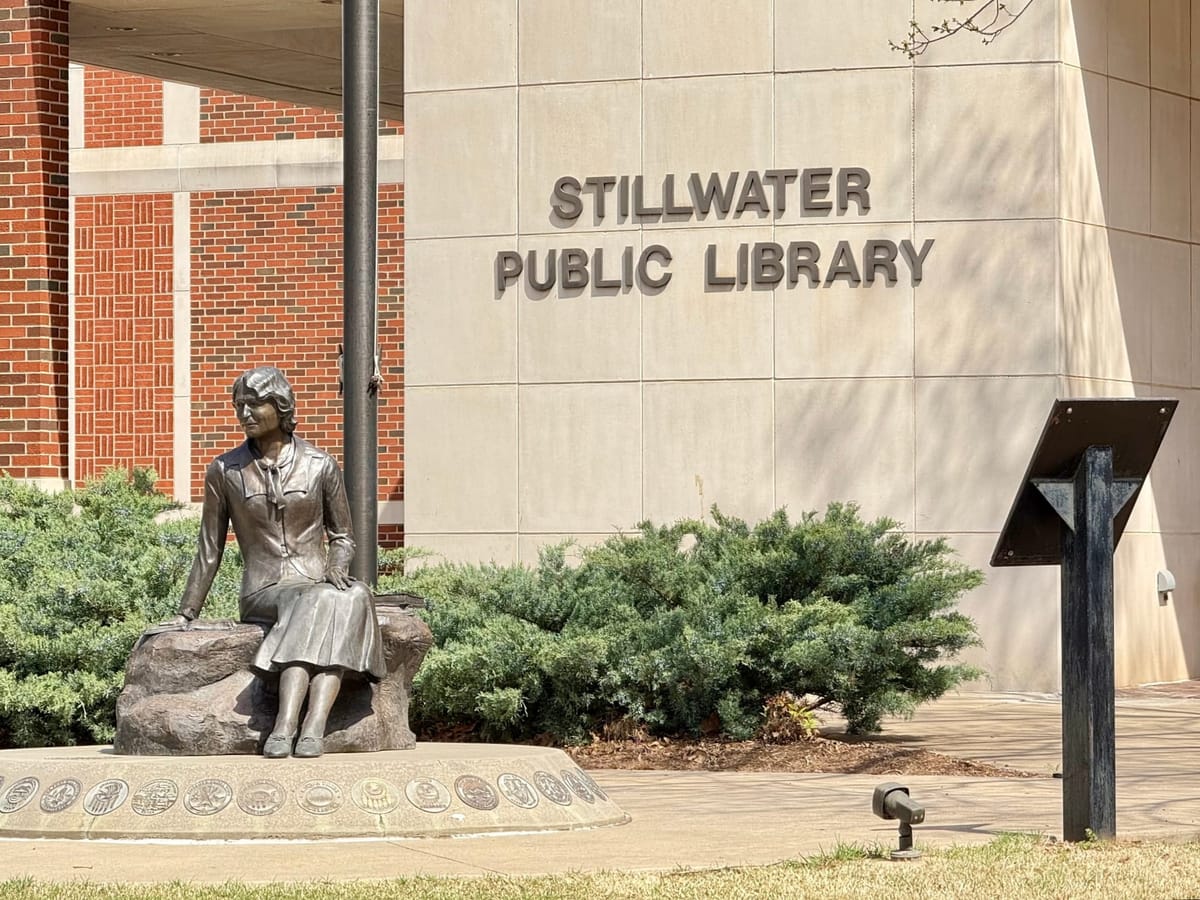
The Stillwater City Council voted unanimously Monday to authorize the conversion of the Stillwater Public Library Trust into a 501(c)(3) nonprofit organization, marking a significant structural change for a foundation that has supported library services for over four decades.
Resolution CC-2025-27, approved during the Oct. 20 council meeting, paves the way for approximately $1 million in investment funds currently held by the Trust to transfer to the newly formed nonprofit entity. The existing Trust will be terminated once the nonprofit's governing documents receive final city approval.
"This represents a modernization of how we manage philanthropic support for our library," according to the resolution's findings. The move will establish the nonprofit as a "discreetly presented component unit" of the city while maintaining private donation funding as the source of assets.
The Stillwater Public Library Trust was established Feb. 20, 1984, to receive and manage private donations for the library system. Over the past four decades, it has accumulated significant assets through donor contributions, creating an endowment that supports library programs, collections, and services beyond what municipal budgets can provide.
The Trust underwent amendments in 1996, 1998, and 2009. According to its governing documents, Trust funds could be used for any lawful purpose conferring direct benefit to the library, though the funds cannot be used to replace government appropriations.
A message from Visit Stillwater
Celebrate autumn in America’s Friendliest College Town with one-of-a-kind events, attractions, and traditions.
As of October 2025, the Trust holds approximately $1,029,940 in total assets distributed across several investment vehicles:
The Trust also manages an annual spending limit of $31,881.02, calculated as the lesser of four percent of a rolling three-year average balance or six percent of current balance, according to spending guidelines reviewed in October.
The transition hinges on a significant difference in investment flexibility between the two structures.
During council deliberations, Councilor Christie Hawkins raised the fundamental question: "So, the benefit for the library to do this is they get to, is it flexibility in how they invest the money, their funds?"

City Attorney Kimberly Carnley confirmed the core benefit: "That's my understanding, that the primary benefit is it would alleviate them from some of the rigid state law investment requirements."
City Attorney Carnley, Finance Director Christy Cluck, and the city's external auditor consulted on the transition strategy. The resolution notes they determined the structural change "are for a public purpose and in the best interests of the City of Stillwater."
Currently, the Stillwater Public Library Trust operates under Oklahoma's public trust statutes with investment restrictions befitting a public entity. All trust funds must first be deposited with the City's Department of Finance. Trustees then direct the Finance Director on how to invest those funds. Investments are limited to U.S. government obligations, government-guaranteed obligations, municipal bonds, or instruments permitted under the Oklahoma Trust Act.
By contrast, a 501(c)(3) Type I supporting organization faces different obligations under federal law. Its board must follow the Uniform Prudent Management of Institutional Funds Act (UPMIFA), which requires acting in good faith, prudently balancing risk and return, and diversifying investments unless special circumstances justify otherwise. This means a supporting organization could invest in a much broader set of assets, including equities, mutual funds, and alternative investments, as long as they are managed prudently.
The key difference is that the Trust's investments are treated like public funds, with an emphasis on safety and liquidity, while a supporting organization follows nonprofit fiduciary standards that allow greater flexibility but require diversification and prudence.
How the Stillwater Public Library Trust compares to a 501(c)(3) Type I supporting organization
| Feature | Stillwater Public Library Trust | 501(c)(3) Type I Supporting Organization |
|---|---|---|
| Beneficiary | City of Stillwater | Parent/supported organization (e.g., library foundation) |
| Custody | Deposited with City Finance Department; trustees direct investments | Independent bank or investment custodian |
| Authorized Investments | U.S. government/agency obligations, municipal bonds, Oklahoma Trust Act instruments | Any prudent asset class under UPMIFA (equities, funds, alternatives, real estate, etc.) |
| Diversification | Not required; trustees may retain contributed assets | Diversify unless special circumstances justify otherwise |
| Audit & Reporting | Annual report to City, Library Board, Friends; independent audit (often within City audit) | Form 990 annually; independent audit if required by policy/funders/state |
| Regulatory Standard | Oklahoma Trust Act + public trust framework; safety & liquidity emphasis | UPMIFA + federal nonprofit law; prudence & total-return emphasis |
Sources: Stillwater Public Library Trust charter/bylaws; Oklahoma Trust Act; UPMIFA.
Sources: Stillwater Public Library Trust charter/bylaws; Oklahoma Trust Act; UPMIFA.
The conversion process is being guided by Nonprofit Solutions Law, with attorney Jeri Holmes leading the planning efforts. During an Aug. 13 Library Trust Board meeting, DeLano reported that Holmes had shared the proposed transition plan with the city attorney's office, and preliminary discussions indicated the City of Stillwater was prepared to move forward.
The nonprofit's articles of incorporation, bylaws, and a formal agreement between the city and the new organization must be approved by the City Council before the Trust can be terminated and funds transferred. The new nonprofit will file for federal tax-exempt status as a Type 1 Supporting Organization.
"The Bylaws, Articles of Incorporation and Agreement will provide a limitation on the use of funds for public purposes as provided in the Trust specifically conveying a direct benefit to the Stillwater Public Library," the resolution states. These documents will ensure donor intent restrictions are maintained and that Trust funds continue supporting library services rather than replacing city appropriations.
The Library Trust Board, currently chaired by Cynthia Francisco, met in October to discuss the transition. Board members confirmed they had approached city officials about the possibility of forming the separate nonprofit entity.
City Manager Brady Moore is authorized to negotiate the final agreement between the city and the new nonprofit, which will set forth terms for oversight and public purpose requirements.
For residents and donors, the transition should be largely transparent. Private donations to support the library will continue through the new nonprofit structure. The change primarily affects the legal entity holding and managing philanthropic funds while maintaining the same charitable purpose.
The library's operating budget – funded through city tax revenues and other municipal sources – will remain separate from the newly structured nonprofit funds, which will continue to supplement library programs and collections.
📺 Watch the City Council Meeting