Dillin, Brubaker answer questions on Google money, AI, teacher retention ahead of April 7 school board vote
Both candidates answered questions on the district's biggest financial and policy decisions. Here's what they said.


Both candidates answered questions on the district's biggest financial and policy decisions. Here's what they said.

The Stillwegian submitted written questions to both candidates covering Google's data center tax agreement, teacher retention, early literacy legislation, the district's artificial intelligence policy, facilities planning, and other issues. Both candidates also participated in a forum hosted March 19 by the Stillwater Frontier Rotary. Their written answers, lightly edited for length and clarity, appear below, supplemented where noted with statements from the forum.
Under the tax incentive agreement the Stillwater Board of Education approved for the Google data center campus, Stillwater Public Schools agreed to waive full ad valorem property taxes in exchange for structured payments in lieu of taxes, known as PILOT payments. SPS is set to receive 71.93 percent of those payments — starting at $624,023 per year for Phase 1 and growing 1 percent annually, for a total of roughly $17.6 million over 25 years. Phase 2 adds another estimated $18.7 million if completed. All six phases combined could bring SPS more than $100 million, but phases three through six are not yet approved and would require the city to make major water infrastructure investments first.
Rachel Dillin: The most important thing to recognize about PILOT revenue is that it is not guaranteed for the long term, especially beyond the first two phases. Because of that, the board should treat it as strategic, one-time, or flexible funding rather than a source of ongoing operating expenses.
The priority should be to use those funds to strengthen the district in the long term without creating future budget gaps. That includes investments like capital improvements, technology infrastructure, safety upgrades, and targeted program enhancements that can be sustained without relying on continued PILOT growth.
At the same time, the board must maintain a conservative financial approach, with planning based on confirmed revenue rather than projected future phases that depend on external factors like city infrastructure. We should treat this as a chance to strengthen the district, not as a reason to take on long-term risk.

Big-box stores can't custom-fit a door to your opening. Stillwater Building Center's in-house door shop can — and their window prices undercut national companies by half or more.
Nathan Brubaker: Google PILOT payments represent a significant opportunity for Stillwater Public Schools — but they should be treated with both strategic optimism and long-term caution, given that the full revenue stream depends on future phases that are not yet guaranteed.
Brubaker said at the Rotary forum that his cautious approach is rooted in his experience working in Oklahoma City Public Schools during the oil price crash of the 1980s, when the district went roughly seven years without reliable state revenue. "We didn't get checks, we got warrants," he said, "and the warrants were only covered if they had money."
The board, he said, should base long-term financial decisions only on confirmed, contracted revenue — not projections from potential future phases. That means treating Phase 1 and Phase 2 payments as the reliable baseline, avoiding commitments to ongoing expenses that depend on uncertain future revenue, and building flexibility into the budget so the district is not overextended if additional phases do not materialize.
One-time investments should take priority: capital improvements, facility upgrades, technology, safety, and learning environments. Using PILOT funds for recurring expenses like permanent staffing should be approached cautiously unless the revenue stream is fully stable. He would advocate directing those dollars toward facilities maintenance and modernization while supporting the deferred maintenance plan to protect existing assets.
Because of the scale and public interest in the agreement, the board should also clearly communicate how funds are being used through regular reports on revenue versus expenditures.
Both candidates have cited the teacher shortage as a pressing concern for the district. Beyond competitive pay, what specific strategies would you advocate for to recruit and keep teachers in Stillwater?
Nathan Brubaker: Competitive pay is important, but it's only one part of the equation. If we want to recruit and retain great teachers in Stillwater, we need to focus on creating an environment where teachers feel supported, respected, and able to succeed long term.
Teachers stay where they can be effective. That means manageable class sizes and workloads, support with instructional aides when appropriate, clear behavior expectations and consistent discipline policies across schools, and reducing unnecessary administrative burden so teachers can focus on instruction.
Teachers are more likely to stay when they see a future in the district. That requires high-quality, ongoing professional development that is relevant and practical; mentorship programs for new teachers to reduce early-career attrition; and opportunities for leadership roles or instructional coaching. Strong, supportive building-level leadership and a culture where teachers' voices are valued in decision-making also matter significantly.
New teachers are most likely to leave early in their careers, so structured onboarding and mentoring programs — along with reduced loads or additional support for first- and second-year teachers — can make a meaningful difference. One low-cost idea he would advocate for is an on-site teacher daycare. Stillwater is uniquely positioned to make that work, and it could also serve as a work-based learning opportunity for students.

Re-elect Rachel Dillin for Stillwater School Board.
A proven leader protecting classrooms and planning for what’s next. From a new high school to stronger financial footing, real progress is happening.
Keep moving forward. Vote April 7.
Rachel Dillin: Salary matters, and Oklahoma's teachers are paid less than many in the region. However, it's not the only reason teachers choose to stay in a district.
From a board perspective, we must ensure that teachers feel supported, respected, and set up to succeed in their classrooms. That includes making sure we have strong school leadership, ensuring access to classroom resources, and supporting systems like instructional coaching, which we have in our schools. Mentorship and career development opportunities are also critical. Creating a culture where teachers can continue developing their skills and are appreciated for their work significantly improves retention.
One thing that stood out to me recently at our years-of-service celebration was the number of teachers who have dedicated 25, 30, or more years to Stillwater Public Schools. That kind of longevity shows a strong district culture, and our goal should be to continue building a culture where great teachers want to come and want to stay.
House Bill 4420, amending the Strong Readers Act, passed the Oklahoma House 86-6 on March 26 and now moves to the Senate. Stillwater Public Schools already has a board policy under the existing law, but HB 4420 would layer on significant new requirements — chief among them mandatory third-grade retention starting in 2027-28 for students who cannot demonstrate sufficient reading skills. The bill would also add statewide reading screenings, mandatory summer tutoring, expanded teacher training, a revised funding formula, and new board reporting requirements. House Speaker Kyle Hilbert, R-Bristow, the bill's author, cited Spring 2025 testing showing just 27 percent of Oklahoma third graders reading at or above grade level.
At the Rotary forum, both candidates said they oppose mandatory third-grade retention tied to a high-stakes test. However, Stillwater Public Schools already has a separate board policy requiring third-grade retention for students who score unsatisfactory on the reading criterion-referenced test.
Rachel Dillin: "I oppose that. I think third grade is too late," Dillin said at the Rotary forum. She added that she has spoken with her mother, a reading specialist, who agrees: early reading skills are developed in pre-K through first grade, and third grade is too late to intervene through retention.
She also pointed to the district's academic performance as evidence that Stillwater's existing approach is working. According to the 2025 Oklahoma School Report Cards, Sangre Ridge, Westwood, and Richmond elementaries ranked first, second, and third statewide, respectively, among 693 Oklahoma elementary schools on the state's overall composite score. Richmond is a Title I school, meaning it serves a higher proportion of students from low-income families.
In her written response, Dillin said she does not support mandatory retention tied to a single high-stakes test, arguing that decisions affecting a child's educational track should consider multiple measures, teacher feedback, and individual circumstances.
If HB 4420 passes, the board's role will be to ensure the district is prepared to meet the new requirements in a way that effectively supports students. That includes reviewing current literacy interventions, ensuring capacity to provide required tutoring, and making sure communication with families is clear and timely. She said the priority should remain on early support and focused interventions rather than relying on retention as the primary solution.
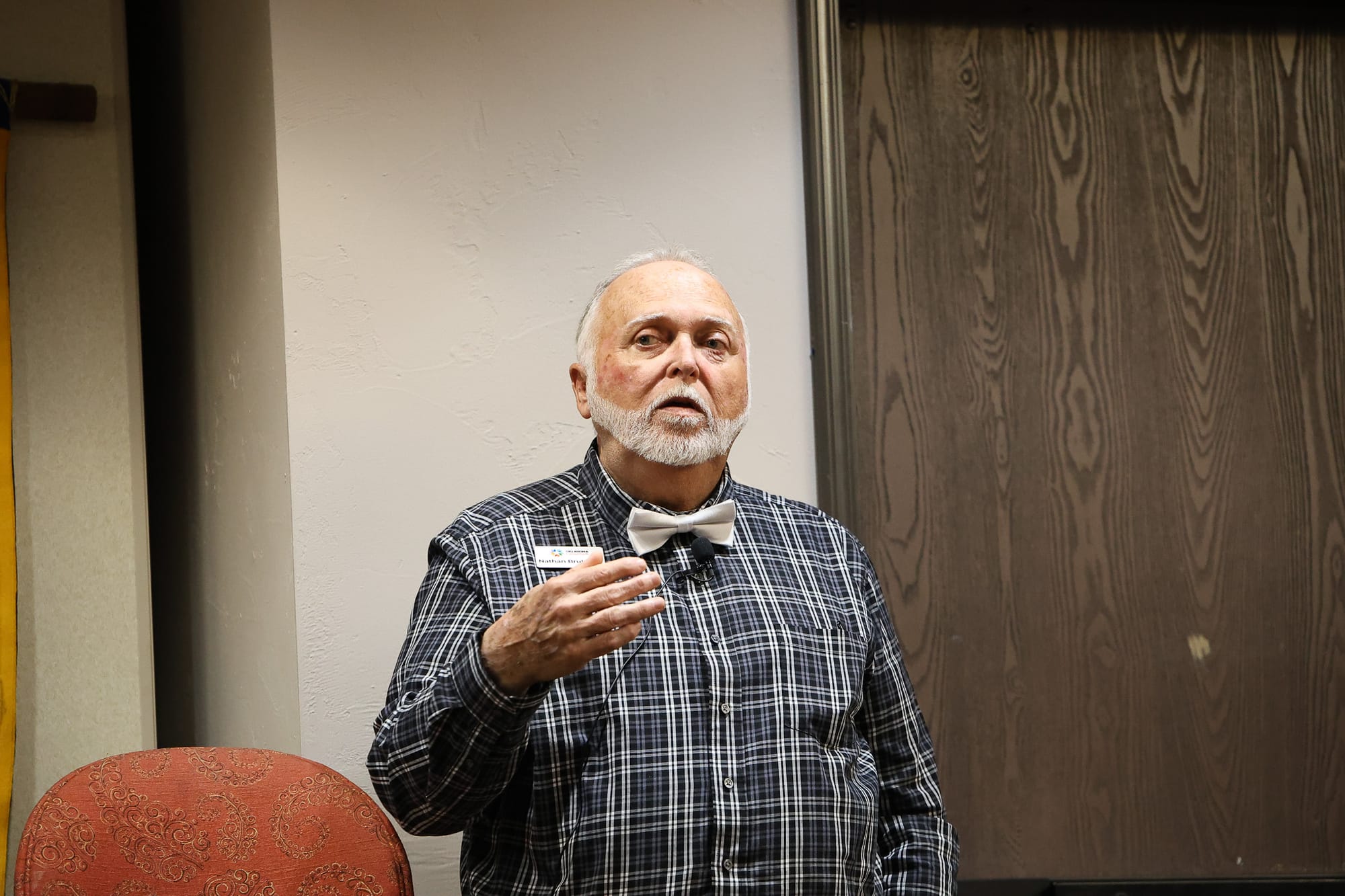
Nathan Brubaker: Early literacy is one of the most important responsibilities a district has, because reading proficiency by third grade is strongly tied to long-term academic success. Any policy in this area should be approached with both urgency and care for students.
On HB 4420's mandatory retention provision: Brubaker does not support a rigid, one-size-fits-all retention requirement tied solely to a high-stakes test. Accountability matters, he said, but retention decisions should take a holistic view of the child — considering multiple measures of progress, interventions provided, teacher input, and family context. Retention can be appropriate in some cases, but should remain a carefully considered intervention, not an automatic outcome of a single measure.
"I don't really support it," Brubaker said at the Rotary forum. "But at some point you really do need to draw a line and move on." He said the more important question is whether intervention is happening throughout pre-K through third grade, not just at the third-grade threshold. "They have to be able to read. And it's better if through pre-K through third grade, if we can teach them how to not just read but feel confident in what they're reading."
If HB 4420 were to pass, the district should be proactive in preparing well before implementation deadlines. The board should focus on strengthening early intervention systems in grades K-3, preparing for expanded summer programming, reviewing compliance timelines — particularly the bill's shorter 21-day window for intervention plans — enhancing data systems and reporting, supporting teachers with training and resources, and communicating clearly with families.
Stillwater Public Schools adopted a board-level AI policy in June 2024 and has since operationalized it — approving Google's Gemini and NotebookLM for all staff and students in grades 6-12 through district-issued Chromebooks and Google Workspace accounts. Generative AI elements within other approved curriculum tools such as Adobe, Canvas, and Google Classroom are also permitted.
The district already follows the state's AI Acceptable Use Rating Scale for disclosure requirements and has provided teacher training through Google, Oklahoma State Department of Education partnerships, and in-person professional development days.
General-purpose AI tools are not currently approved for kindergarten through fifth-grade students outside of curriculum tools already evaluated by the district. Oklahoma's state guidance, updated in July 2025, recommends additional framework elements the district has not yet formally adopted, including an AI governance committee and structured community engagement.
Nathan Brubaker: The district should be recognized for taking early, proactive steps. Adopting a board-level AI policy, limiting access to vetted platforms, and investing in teacher training shows a commitment to both innovation and student safety. That's a strong foundation — but not a finished product. As AI evolves and state guidance matures, the district should treat this as a living framework that is regularly reviewed and strengthened.
He would support formally updating the governance structure, including consideration of an AI governance committee, to ensure decisions are consistent, transparent, and not left to ad hoc interpretation. Structured community engagement should also be strengthened. Ongoing review and accountability should be built into the policy itself, with regular reports to the board on implementation and outcomes and adjustments based on classroom experience, student performance, and emerging risks.
Rachel Dillin: Stillwater Public Schools has taken a thoughtful, measured approach to AI implementation, particularly regarding student data privacy, teacher training, and the controlled use of approved platforms. The current policy provides a strong foundation, but this area is evolving rapidly. There is room to strengthen the framework over time, specifically in areas such as formal governance structures and community participation, as recommended by updated state guidance.
At the same time, the board's role is not to manage day-to-day classroom decisions. Its responsibility is to set clear guardrails — especially around privacy, safety, and appropriate use — while trusting teachers to implement these tools effectively within those boundaries. This should remain an ongoing evaluation process, not a one-time policy decision.
Stillwater Public Schools has approved Google's Gemini and NotebookLM for staff and students in grades 6-12. Both are classified as Google Core Services, meaning student data, chats, and files are never shared outside the district or used to train AI models, and schools — not Google — own the data. The district also evaluates generative AI elements within other curriculum tools before approving them, and bars staff from using or having students sign up for unapproved platforms. The district does not use AI detection software, citing concerns about inaccuracy and bias against English language learners. It also uses Amira Learning, an AI-powered reading tool for early grades that was highlighted during a February visit to Sangre Ridge Elementary by U.S. Assistant Secretary for Education Kirsten Baesler.
Rachel Dillin: When evaluating AI tools, the board should focus on two primary areas: effectiveness in supporting student learning and preserving student data.
Tools should demonstrate that they provide meaningful educational value, whether that's improving outcomes, supporting teachers, or providing focused interventions. At the same time, strong data protections must be non-negotiable. Stillwater has taken a careful approach by approving tools that meet strong data privacy standards and limiting the use of unapproved platforms.
If a tool doesn't improve learning and properly shield student data, it shouldn't be in our classrooms.
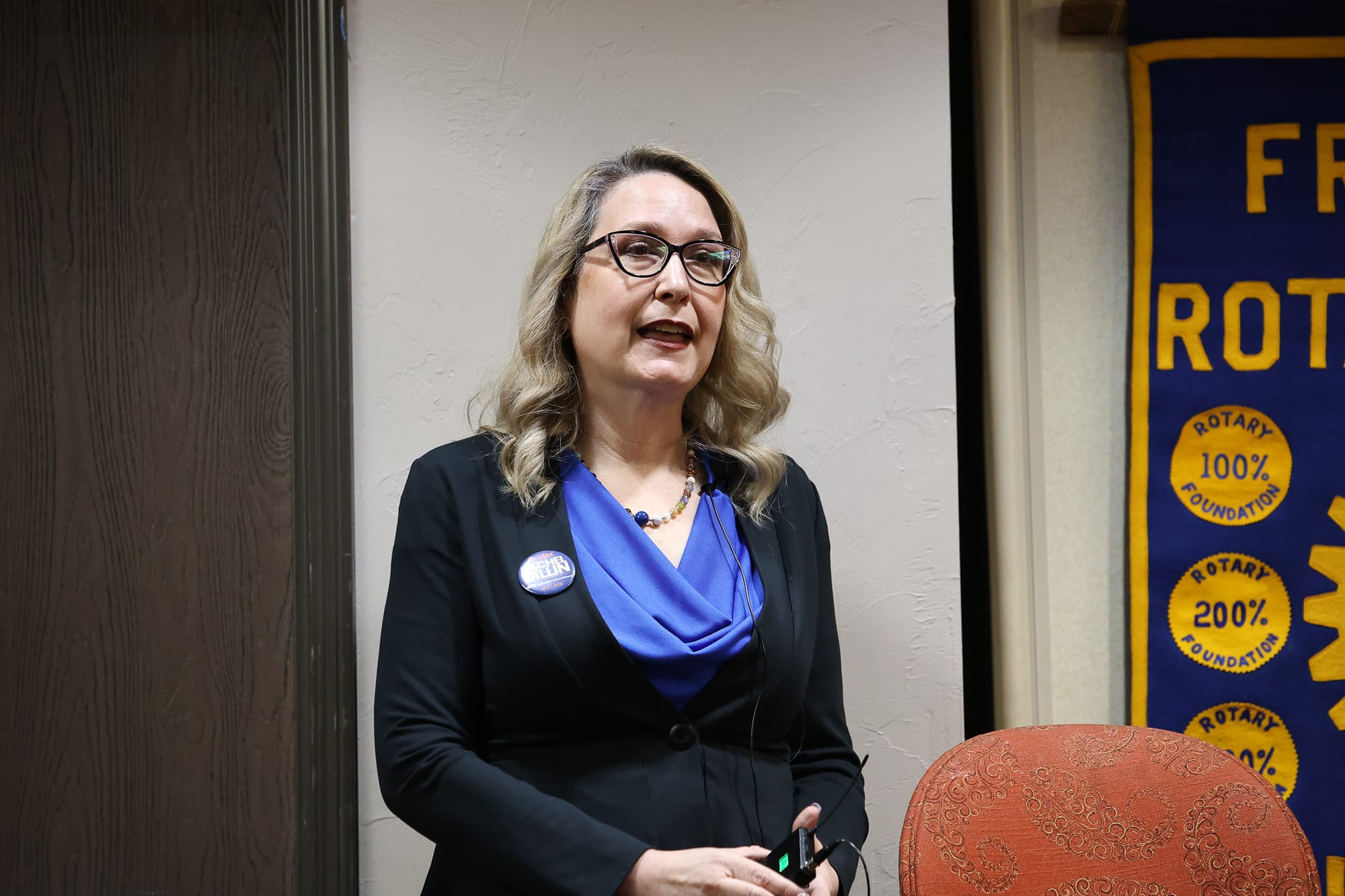
Nathan Brubaker: When evaluating AI-powered tools, the board should focus on three core areas: student impact, data protection, and instructional alignment.
Before adopting or expanding any AI tool, the board should be asking: Does this measurably improve student learning outcomes? Is there evidence — through pilot programs, research, or district data — that it works? Does it support teachers, or create more distraction and dependency?
He would also advocate for AI tools to function as closed systems where only data relevant to courses and subjects is used, and where the system is explicitly configured to function appropriately with students and faculty. Equally important, tools should align with curriculum standards and ICAP goals, be age-appropriate, and integrate into the classroom in a way that enhances — not replaces — good teaching.
Stillwater Public Schools is opening a new high school in fall 2026 and breaking ground on new athletic facilities next year. The district has a deferred maintenance plan built into the current bond program covering repairs and upgrades at existing buildings.
Nathan Brubaker: As the district grows, the challenge isn't just building new facilities — it's sustaining everything it owns at a high level over time. That requires discipline, long-term planning, and clear expectations from the board.
Every building — new and existing — should be part of a multi-year maintenance and replacement schedule, not addressed reactively. He would support setting aside a consistent percentage of the district's asset value annually for maintenance, with industry best practices typically suggesting a range of two to four percent, along with maintaining a dedicated fund for ongoing repairs and avoiding the cycle of deferring maintenance to solve short-term budget pressures. "Deferred maintenance doesn't save money — it multiplies costs later," he said.
As the district opens the new high school and expands facilities, the board should be asking whether it can afford to maintain those buildings 10 to 20 years from now, whether it's using durable, efficient materials, and whether it's designing with operational efficiency in mind. Growth should never outpace the ability to maintain quality.
Rachel Dillin: As the district expands its facilities, it's important to take a long-term, sustainable approach to maintenance and planning.
The district is adding significant capacity with the new high school and athletic facilities. However, according to current data, student enrollment is expected to level off and potentially decline in the coming years due to wider demographic trends. Because of that, the board should focus on maintaining what it has and protecting its investment rather than planning for rapid expansion. That includes maintaining a solid deferred maintenance plan, determining clear financial benchmarks for ongoing maintenance, and ensuring new facilities are supported without straining future budgets.
Dillin noted at the Rotary forum that the district's existing deferred maintenance plan is already built into the current bonds and updated on a monthly basis. "It's not exciting, but it's new ACs, new heating, new roofs. We have that going on throughout the district most of the year," she said.

The following questions were submitted to one candidate but not the other, based on topics each raised during the Rotary forum.
At the Rotary forum, Brubaker said he would need to be in the role before deciding how much change the district needs.
In his first 90 days, Brubaker said his priority would be to listen, learn, and verify before making major decisions — but that doesn't mean starting without direction. He would focus on four areas:
Student outcomes and readiness — graduation rates, postsecondary enrollment, career readiness indicators through ICAP, and workforce alignment.
Teacher and staff support — retention and turnover trends, morale, workplace challenges, and access to professional development.
District resources and physical assets — the condition of school buildings, deferred maintenance needs, and whether resources are directed to areas of greatest need.
School culture and community trust — seeking feedback from parents, students, community partners, and local employers.
At the end of 90 days, his goal would be clarity on what's working, what needs improvement, and where to focus as a board member moving forward.
At the Rotary forum, Dillin identified moving the "middle tier" of students from proficient to advanced as a key school board priority.
Moving students from proficient to advanced requires a focus on instructional quality, data use, and focused support — and there are important board-level actions that can support that work.
Data-driven instruction — ensure the district has the resources and systems in place to help teachers identify where students are and how to move them forward.
Professional development — support training focused on advanced instructional strategies and differentiation, helping teachers challenge students who are ready to move beyond proficiency.
Extended learning opportunities — continue to prioritize advanced coursework and enrichment programs, and expand them as more students are ready.
Meeting the standard shouldn't be the finish line; it should be the starting point.
Stillwater Public Schools has a 25-year financial relationship with Google through the data center PILOT agreement, and separately relies on Google's Gemini and NotebookLM as its primary district-approved AI tools for students and staff.
It's important for the board to be thoughtful about vendor relationships, particularly when they span both financial agreements and instructional tools.
In the case of Google, the district has agreements that include strong data protections, and the tools the district has approved meet those standards. At the same time, the board should always remain mindful of vendor concentration risk — continuing to evaluate tools carefully, ensuring interoperability where possible, and avoiding unnecessary dependence on a single provider when viable alternatives exist.
The goal is not to avoid partnerships, but to ensure that those partnerships are in students' best interests, financially responsible, and flexible enough to shift over time.
Brubaker's work as a regional career development coordinator includes implementing the Individual Career and Academic Plan, or ICAP, which shapes how students plan for life after graduation.
The key distinction, Brubaker said, is that using technology does not equal being AI-ready. True readiness means students can understand how AI works — including its basics, limits, and potential for bias — use AI tools productively rather than as shortcuts, and critically evaluate AI outputs.
Most districts, including strong ones, are typically in early- to mid-stage adoption. Schools are introducing AI policies, allowing limited classroom use in areas like writing and research support, and offering some teacher professional development. These are necessary first steps, but research and frameworks consistently show the same gaps: AI is treated as a tool rather than a skill set; students may use AI but don't understand when not to trust it; and teacher readiness remains the biggest constraint.
If Stillwater is following state guidance, integrating ICAP, and allowing some AI use, it is on the right track — but students are not yet fully prepared for AI-native workplaces if AI literacy is not embedded in a K-12 progression supported by consistent teacher training. Brubaker said the board should consider moving from "AI access" to "AI literacy," treating AI competency the way it treats reading, writing, or digital literacy — as a foundational skill expected of every graduate.
The April 7 election covers Seat 1 on the Stillwater Board of Education. Early voting is April 2-3 from 8 a.m. to 6 p.m. Polls are open election day from 7 a.m. to 7 p.m. Candidates must reside within Ward 1 boundaries, but all voters within the Stillwater Public Schools district are eligible to vote.