Rhonda Markum
Payne County Commissioner, District 3. Won the June 16 Republican primary by 223 votes, the closest race on the ballot. Commissioner since 2022.


Payne County Commissioner, District 3. Won the June 16 Republican primary by 223 votes, the closest race on the ballot. Commissioner since 2022.
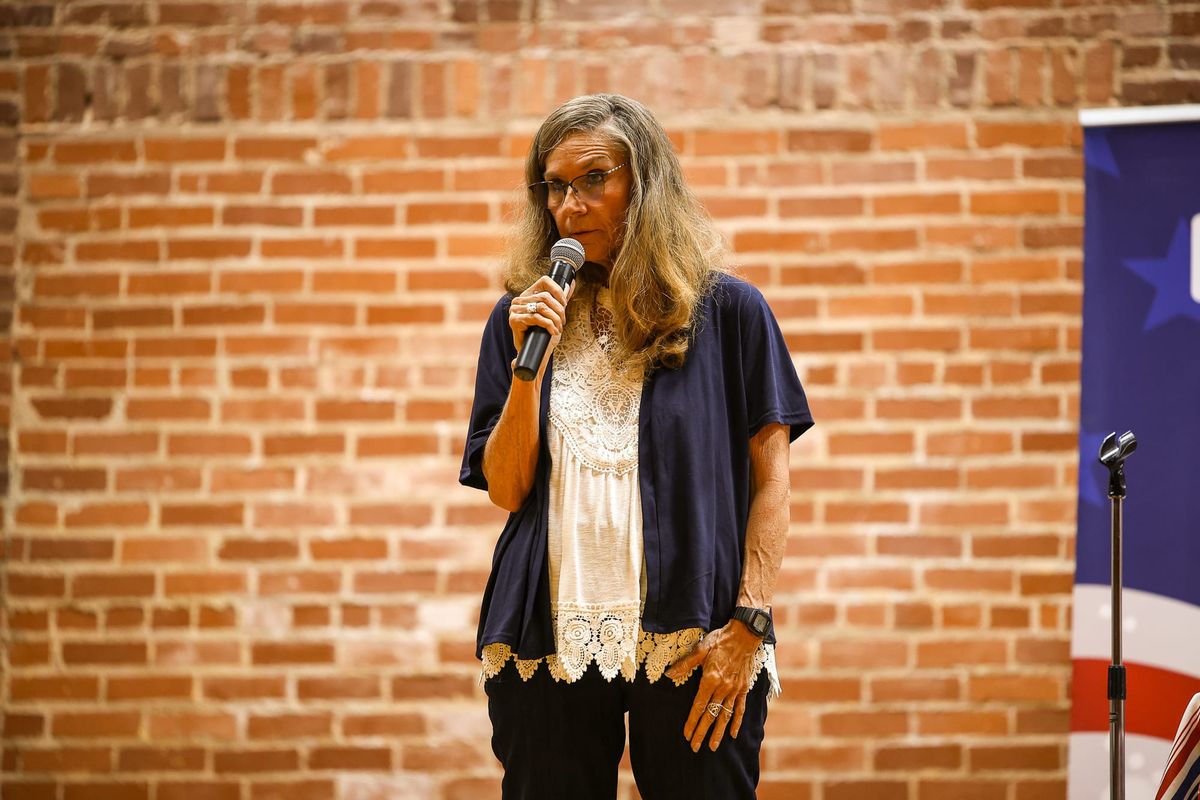
Payne County Commissioner, District 3 · Republican · Incumbent 53.0% · 1,979 votes · a 223-vote margin, the closest race of the night No Democrat or independent filed, so the primary decided the seat. See the full District 3 race →
Republican — Payne County Commissioner, District 3
Markum was elected in 2022 after eight years as the District 3 administrative assistant under two commissioners. Before filing for the seat, she earned the Road Scholars certification, a state-level course in road construction management and documentation.
Campaign Facebook: facebook.com/profile.php?id=61570963825948
| Election | Result |
|---|---|
| June 16, 2026 Republican primary, Payne County Commissioner D3 | Won — 53.0%, 1,979 votes, over Clayton Estus |
| First elected | 2022 |
1. You have served as District 3 commissioner since 2022. Walk readers through what you consider your most significant accomplishments in your first term and what unfinished work you are seeking re-election to complete.
I applied for and received $850,000 in Lake Access Grant funding from the state to repave Redlands and Lakeview roads. I applied for enough money to do the complete 6.5 miles of asphalt but was only awarded enough funding for 3 miles. The grant specified which parts of the roads the money was to be used on, and I used county funding to complete the remainder of the project.
We are currently paving 12 miles of roads. During this term, 17 miles will be paved. We continue to apply new rock and maintain about 370 miles of gravel road in District 3.
We continue to update the county road equipment and fleet. During the first part of my term, the graders and trucks constantly needed extensive repairs and were costing us significant money and downtime. At one point, District 3 was down to one road grader. I designed a plan to start replacing the graders and hauling equipment without breaking the budget. Now we have seven new graders, one refurbished grader, three semi trucks with belly dump trailers, two bobtail trucks, two roller compactors and a jetter to clean out culverts. This process took more than three years of effort. We finally have a reliable fleet that allows us to efficiently complete projects.
Early in my term, I implemented a vegetation management plan using environmental spraying for weed control, reducing right-of-way mowing costs.
In January, I will apply for another Lake Access Grant to extend the asphalt on Redlands and Airport roads to Lake McMurtry and to pave 6th Street, on the south side of Tan Tara, to Lake Carl Blackwell.
Two miles of 44th Street going east of Highway 177 needs to be widened and repaved. I will be seeking additional funding from the eight oil companies that have units along this 3-mile stretch of road.
2. A recent post on your campaign Facebook page lays out the district's actual funding sources and monthly operating costs in detail. What do you want voters to understand about the financial realities and challenges of running a road district over the next few years?
About 60% of District 3's road funds come from the quarter-cent and three-eighths-cent sales taxes, with the rest coming from fuel and motor vehicle taxes. Other than inflation over the last six years, the economy seems fairly stable, with income from taxes being fairly reliable.
Probably the biggest challenge we face is the increasing cost of materials. For instance, in 2019 it cost $165,000 to pave one mile of road. Today, it's costing $450,000 a mile. However, the 12 miles of road we are currently paving (five separate projects) were grouped together in one bid, which brought the cost to $400,000 a mile. This saved the county $600,000.
But grouping the paving into one bid has its drawbacks. It takes significant time for our crew to prepare the five road beds, grind the old asphalt and get the roads ready for the new pavement. During this preparation time, local residents have the burden of driving the sometimes rough and dusty roads. I understand this is not the best situation, but most local residents are very patient and understand the cost-saving behind the decision.
Another challenge is getting skilled workers to come and stay with the county because of the state salary schedule. They can typically make more in the private sector, especially after they have a couple years of experience operating county equipment. I am blessed to have the current crew and am thankful for them. Currently, District 3 could use four more full-time operators with a CDL. Additionally, I have skilled employees who will be retiring in the next 5 to 10 years, and it's becoming more difficult to get younger employees who want to learn and carry on the mission.
3. You won your seat in 2022 after eight years as the District 3 administrative assistant. Now you face a challenger in your first re-election bid. What do you say to voters who may be open to a change in this seat?
Change is not always positive. Each voter has the privilege of weighing each candidate's training, vision and experience for the position. Over the last 11 years, I have completed more than 250 hours of required county government training. This amount of training shows that the position of county commissioner is not just about roads. The job requires someone who can oversee and serve on several county boards, plan and execute a budget, determine and schedule various projects, write grant applications, negotiate contracts with suppliers and contractors, and ensure the legal paperwork is in place for each project, just to name a few of the responsibilities of the commissioner.
I hope voters will appreciate that the job of commissioner is all about the paperwork, because without that, nothing happens. The job of road foreman is all about the roads and making sure the projects decided on by the commissioner are carried out in a skilled and complete manner.
I have the experience, knowledge and training to continue in this position. I will make sure the paperwork is done properly so that road projects continue to be funded and completed, while keeping the many other county tasks on track.
4. Oklahoma lawmakers and voters are debating proposals to limit property taxes. What is your position on property tax reform, and how would any changes affect road and bridge funding in District 3?
State Question 847 is an issue that has many considerations. As a landowner, the ever-increasing burden of property taxes is becoming a hardship on people who have worked hard all their lives for their homes and are continually taxed every year. If this trend continues, many generational farms and businesses will not be able to keep the property in the family.
How the voters of District 3 vote on this issue is their privilege; it is not necessarily an issue county commissioners should be promoting. As a commissioner, my job is to work with the county budget board to effectively oversee the funds that are divided between the eight county departments. I have to work with the funds that are appropriated to my department. I plan the budget so that District 3 can maintain a balance between regular expenses (such as road maintenance, equipment needs and salaries) and one-time expenditures (such as bridge repair, flood damage and newly paved roads). District 3's funding comes from the following sources:
Highway Cash Fund — This money is received monthly from several different taxes: the gasoline excise tax, motor vehicle collections for county roads, the diesel fuel excise tax, the motor vehicle collection county road fund, the County Road Improvement Revolving Fund (Senate Bill 1888), the gross production tax and the special fuel tax. These funds are used for daily maintenance and operations — employee salaries, utilities, equipment repairs, gravel and fuel. It can also be used to purchase equipment.
CBRI — This is the County Bridge and Road Improvement fund. This money comes from the Oklahoma Tax Commission and the Oklahoma Department of Transportation. Typically, this fund is used for bridge engineering and replacement. No property tax money is included in this fund. The only fund that has property tax money is the County General Fund.
Three-eighths-cent sales tax — This is part of the county sales tax on items purchased within Payne County. This account receives money monthly and can be used for purchasing equipment, gravel and fuel, and for building roads.
Quarter-cent sales tax — This is also part of the county sales tax on items purchased within Payne County. This account receives money monthly and is specifically to be used on roads — for new asphalt and repair of asphalt roads.
County General Fund — The money for this fund is generated through property taxes. The county budget board distributes these funds between the county departments. According to the Payne County Assessor's website, the county receives, on average, only 11 cents of each dollar of property taxes. School districts and vo-tech receive about 86 cents of each dollar, with the remainder going to cities, county health and EMS services. This money is used to pay the road district's county employees' benefits (insurance, longevity and retirement) and the first deputy's salary.
District 3 receives about $5.2 million each year from all funding sources. Of that amount, about $425,000 is from the County General Fund (property taxes). As you can see, property tax revenue represents about 8% of District 3's budget. And yes, we would miss that if it went away. But there are many ways the state can recover those funds through other taxes or fees so that schools, cities and counties are held harmless.
5. Of all the issues facing District 3, which two do you believe matter most to your constituents, and what specifically would you do to address them?
Roads are always an issue. I will continue to find more funding to stretch the budget and look for better ways to preserve what we have to make our asphalt roads last longer. Due to flooding in different areas over the past two years, we've been working on road and creek drainage issues. Our efforts include cleaning ditches that have been silted in, replacing several culverts that failed, repairing many bridge headwalls, and continuing to address long-term drainage issues.
Property rights of the constituents. This became a big issue about a year after I took office. Many of my constituents were being approached by people representing high-voltage transmission line corridors, wind turbine installers, solar panel companies, BESS facilities and humanure projects. For the most part, these companies did not respect property owners' rights and at times were not truthful in their negotiations. I was contacted numerous times by constituents who were facing these companies and being threatened with eminent domain. As a county commissioner, I can only do so much, but I will not sign an eminent domain proceeding on someone's property dealing with the green energy scam, if it comes before the board of county commissioners.
Responses have been lightly edited for grammar, spelling, and AP style. Substance and positions have not been altered.
No reader endorsement letters were submitted for this candidate.
Rhonda Markum: if you find an error here, contact us at electiondesk@thestillwegian.news.
Last updated: 8/24/2026