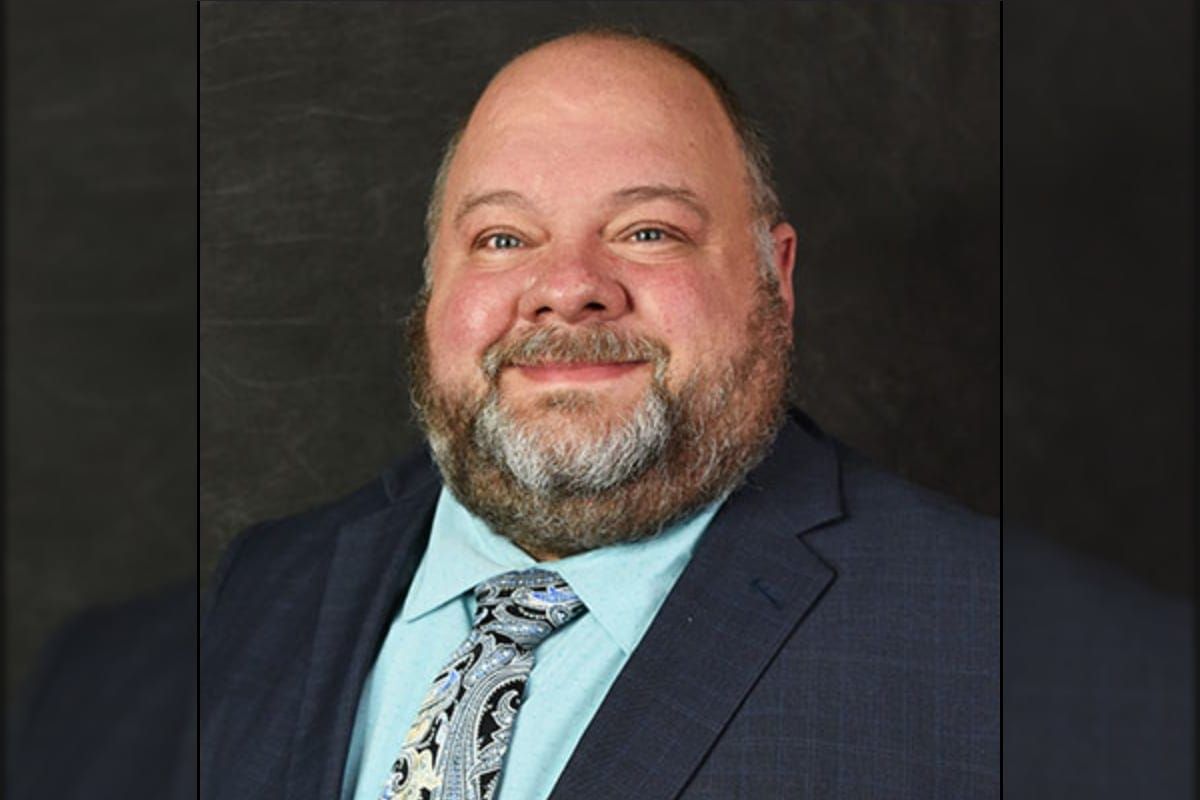
Dr. Max E. Burchett Jr.
Democratic candidate for Oklahoma House, District 33, on the Nov. 3 ballot. A pharmacist and chief information officer of the Oklahoma City Indian Clinic.


Democratic candidate for Oklahoma House, District 33, on the Nov. 3 ballot. A pharmacist and chief information officer of the Oklahoma City Indian Clinic.
Last updated: 10/26/2026
Oklahoma House, District 33 · Democrat Ran unopposed in the Democratic primary; did not appear on the June 16 Republican primary ballot See the full District 33 race →
Democrat — Candidate, Oklahoma House District 33
Burchett is a pharmacist and healthcare executive who serves as chief information officer of the Oklahoma City Indian Clinic, which his campaign describes as the largest urban Native American clinic in the United States. He has been in that role since September 2021, and previously worked as a clinical informatics pharmacist at the same organization for more than six years. A Bartlesville native, Burchett moved to Guthrie in 2021 and attended Bartlesville High School, Oklahoma State University, and Southwestern Oklahoma State University. His campaign priorities include expanding health care access, supporting public education, and infrastructure investment including rural broadband expansion.
Campaign website: burchettforok.com
Campaign Facebook: facebook.com/profile.php?id=61577466602178
My professional career has been built around health care, technology, business and public service. I am a pharmacist by training, a health care executive by profession and a small-business owner. Each of those experiences has shaped how I approach leadership and problem-solving.
I began my higher education at Rose State College, earning an associate degree in 2009. I subsequently earned my doctor of pharmacy degree from Southwestern Oklahoma State University in 2013 and a master’s degree in health care administration from Oklahoma State University in 2016. My additional doctoral studies in administration and biblical studies have further informed my understanding of organizational leadership, ethics and institutional responsibility.
My pharmacy education gave me a strong foundation in clinical decision-making, medication safety, health care delivery and the importance of evidence-based practice. As my career developed, I became increasingly interested in the systems that allow health care professionals to provide safe, efficient and accessible care.
That interest led me into health care information technology and executive leadership. Since September 2020, I have served as chief information officer of the Oklahoma City Indian Clinic, one of the nation’s largest urban Indian health care organizations.
In that role, I oversee information technology and clinical informatics, including cybersecurity, technology infrastructure, electronic health records, data management and the systems supporting patient care. I lead multidisciplinary teams, manage organizational technology initiatives and work to ensure that technology investments improve operations and support our mission.
Health care technology is not simply about computers. It is about making sure a physician can access the information needed to treat a patient, a pharmacist can identify a medication safety concern and a health care organization can protect sensitive information while using its resources responsibly.
I am also a co-founder of Bespoke Makershop, a Logan County small business specializing in custom woodworking, engraving and handcrafted products. Operating a small business provides firsthand experience with the challenges entrepreneurs face, including equipment costs, operating expenses, regulatory requirements and the need to remain competitive.
I believe this combination of clinical training, executive management, technology expertise and entrepreneurship gives me a valuable perspective on state government. I understand how to manage complex operations, evaluate expenditures, work with diverse stakeholders and measure whether investments are producing meaningful results.
My approach to public service is straightforward: identify the problem, listen to the people affected, evaluate the evidence and implement a practical solution. That is the same approach I would bring to the Oklahoma Legislature.
Stillwegian fact-check: The Oklahoma City Indian Clinic’s staff biography of Burchett lists him as chief information officer and confirms his doctor of pharmacy degree from Southwestern Oklahoma State University and his master’s degree in health care administration from Oklahoma State University. The biography says he joined the clinic in 2015 as its clinical informatics pharmacist and was promoted to chief information officer in 2021.
My campaign is rooted in the belief that the people of House District 33 deserve a representative who listens to them, regardless of political affiliation.
Our campaign has engaged residents across Logan and Payne counties through door-to-door conversations, community outreach and public events. Communities central to our outreach include Guthrie, Coyle, Perkins and the Stillwater area. We have also participated in local discussions and town hall opportunities addressing education, health care, economic development, property rights and the effects of large infrastructure projects on rural communities.
Those conversations reinforce something I have believed throughout my professional career: Most people are more interested in solving problems than assigning partisan blame.
For voters I have not yet had the opportunity to meet, I encourage them to visit burchettforok.com, follow our campaign on social media or contact our campaign directly at max@burchettforok.com. I welcome difficult questions, respectful disagreement and conversations about the issues affecting our communities.
I am running as a Democrat, but I am not running to represent only Democrats. I am running to represent everyone in House District 33, including Republicans, independents and people who are frustrated with both political parties.
I believe in fiscal responsibility, individual liberty, constitutional rights, strong public schools, accessible health care, private property rights and an economy where small businesses and working families can succeed. Those should not be exclusively Republican or Democratic priorities.
I recognize that many residents of our district are politically conservative. I respect that. I am not asking voters to abandon their principles or change their political identity. I am asking them to evaluate my qualifications, consider my priorities and decide whether my approach would serve their families and communities.
I believe government should be limited where it unnecessarily interferes with people’s lives, effective where it has legitimate responsibilities and accountable in everything it does.
My commitment is to work with anyone willing to improve Oklahoma, regardless of which side of the aisle they occupy.
At the end of the day, a family struggling to find a doctor, a teacher purchasing classroom supplies or a small-business owner dealing with rising costs does not need a partisan talking point. They need someone willing to work toward a solution.
That is what I mean by Practical Leadership for Oklahoma.
Stillwegian fact-check: According to the Oklahoma House of Representatives, House District 33 covers parts of Logan and Payne counties and includes Coyle, Cushing, Drumright, Ingalls, Langston, Mehan, Orlando, Quay, Ripley, Stillwater and Yale. The cities of Guthrie and Perkins are outside the district, though it includes rural areas with Guthrie and Perkins mailing addresses.
Burchett’s response does not name specific events or dates, and The Stillwegian could not confirm his attendance at any public campaign event. The Stillwater Chamber of Commerce listed Burchett among the candidates expected at its Meet the Democratic Candidates Breakfast on Sept. 22, 2026, at the Stillwater Community Center. The Stillwegian attended the breakfast; Burchett did not. Burchett did not respond to a request for comment.
As a pharmacist and health care executive, I believe access to health care is both a quality-of-life issue and an economic development issue. Families should not have to leave their communities or travel excessive distances to obtain routine medical care, mental health services or necessary treatment.
During my first legislative session, I would prioritize two initiatives.
First, I would pursue a Rural Healthcare Access and Workforce Initiative. This legislation would create or expand targeted incentives for physicians, nurse practitioners, physician assistants, pharmacists, behavioral health professionals and other essential health care workers who commit to serving rural and medically underserved Oklahoma communities. I would prioritize expanding existing loan-repayment and workforce-development mechanisms rather than creating an entirely new administrative bureaucracy.
Funding would be directed toward demonstrated shortages, with priority given to communities where residents face significant travel distances, limited appointment availability or inadequate access to essential services. For District 33, that means looking beyond larger health care centers and ensuring communities such as Coyle, Ripley, Orlando and other rural areas of Logan and Payne counties are not overlooked.
Second, I would pursue a Rural Telehealth and Behavioral Health Access Initiative. This proposal would strengthen access to telehealth services through existing clinics, health care partnerships, schools where appropriate and community-based facilities. It would also support improved access to mental health treatment, substance-use services and psychiatric consultation.
Telehealth cannot replace emergency departments, ambulances or hands-on clinical care. However, it can reduce unnecessary travel, improve continuity of care and make specialist consultation more accessible. I would also support reviewing rural emergency medical service funding and exploring regional partnerships that help maintain dependable emergency response capabilities.
Funding and accountability are essential. I would begin by examining existing state health care appropriations, available federal matching opportunities, workforce incentive programs and unspent or underutilized funding streams. I would favor redirecting inefficient expenditures and consolidating overlapping programs before proposing new taxes. Where additional appropriations are necessary, I would require clearly defined objectives, transparent reporting and measurable results.
Success should be evaluated through provider recruitment and retention, appointment availability, reduced travel burdens and improved access to preventive and behavioral health care.
I do not believe the solution is simply to spend more money, nor do I believe rural health care challenges can be solved by reducing government involvement alone. The responsible approach is to identify where public investment can strengthen existing private, nonprofit and community health care providers while ensuring taxpayers receive demonstrable value.
Healthy communities support stronger schools, more reliable workforces and better local economies. Improving health care access is an investment in the long-term viability of rural Oklahoma.
I believe a strong public education system is one of the most important investments Oklahoma can make in its future. However, supporting public education requires more than increasing appropriations. It requires ensuring that funding reaches classrooms, teachers have the resources and professional flexibility they need, and students graduate prepared for employment, higher education or technical training.
First, I support reviewing and modernizing Oklahoma’s school funding formula. Rural districts face challenges that are not always adequately reflected in traditional enrollment-based funding. Transportation distances, smaller student populations, special education services, staffing limitations and facility maintenance can create significant financial pressures. I would support reviewing the state aid formula to ensure these realities are appropriately considered and funding decisions are transparent, predictable and equitable. I would also favor multiyear budget planning that gives districts greater financial stability.
Second, I support greater professional autonomy for teachers. Teachers are trained professionals. They should have meaningful flexibility to determine how best to deliver state-approved educational standards to their students. I support maintaining academic standards, parental access to curriculum information and reasonable accountability measures. However, I oppose unnecessary political interference in routine instructional decisions. I would review policies that impose duplicative reporting requirements, excessive testing burdens or unnecessary administrative tasks. Parents should have a meaningful voice, and educators should have professional discretion. Those principles can coexist.
Third, I support strengthening career and technical education. Not every student needs a four-year university degree to build a successful career. Oklahoma needs skilled electricians, welders, machinists, health care professionals, agricultural specialists, information technology workers and other trained professionals. I would support stronger partnerships among public schools, career technology centers, community colleges, universities and local employers. For District 33, institutions such as Langston University, Oklahoma State University and regional career technology programs are important economic and educational assets. We should build clearer pathways into apprenticeships, industry credentials, two-year degrees and four-year programs.
Fourth, I support accountability for all uses of public education funding. Parents should have choices, but those choices should not come at the expense of transparency or the stability of rural public schools. I would support reviewing the fiscal impact of Oklahoma’s Parental Choice Tax Credit program, particularly whether public expenditures are improving educational opportunity or primarily subsidizing families who would have selected private education regardless of the credit. Any program receiving public financial support should be subject to appropriate fiscal oversight and measurable accountability.
I would also review education mandates that increase administrative costs without demonstrated benefits for student learning. I do not believe every existing education policy needs to be repealed. Legislation should be evaluated based on whether it improves literacy, attendance, graduation rates, workforce readiness and student achievement.
My goal is not to place parents and teachers on opposing sides. It is to build an education system where parents are informed, teachers are respected, students are supported and taxpayers can see the results of their investment.
Stillwegian fact-check: The Parental Choice Tax Credit, created in 2023, provides refundable tax credits of $5,000 to $7,500 per student for private school tuition and fees, according to the Oklahoma Tax Commission. Oklahoma Voice reported in June that the state issued more than $255 million in credits to 39,637 students for the 2026-27 school year, and that 3,112 of those students had been enrolled in a public school the previous semester.
I respect the Second Amendment and recognize that firearm ownership is an important part of Oklahoma’s culture, particularly in rural communities where firearms are used for hunting, recreation, sport shooting and personal protection. I also believe that responsible firearm ownership and reasonable public safety measures can coexist.
My designation as a Gun Sense Candidate reflects my willingness to discuss practical approaches to reducing firearm injuries and deaths while respecting constitutional protections. I would focus on policies that address identifiable risks without unnecessarily burdening law-abiding firearm owners.
First, I support secure firearm storage and education. I would favor voluntary firearm safety education, partnerships with local law enforcement and community organizations, and consideration of targeted incentives that help families obtain secure storage equipment. Responsible storage can reduce accidental shootings, unauthorized access by children and firearm theft without restricting lawful ownership.
Second, I support strengthening enforcement of existing firearm laws. Before creating additional restrictions, Oklahoma should ensure that existing laws addressing violent crime, unlawful firearm possession and illegal firearm trafficking are being enforced effectively. I would support improving coordination among law enforcement agencies and ensuring that legally required information is reported accurately and promptly.
Third, I support evidence-based approaches to preventing firearm-related suicide and violence. As a health care professional, I recognize that firearm-related deaths are not solely a criminal justice issue. Suicide prevention, timely mental health treatment and intervention during periods of acute crisis are also important. I would support expanding access to voluntary crisis intervention, mental health services and education about temporarily securing firearms when someone is at elevated risk.
Fourth, I believe school safety requires a comprehensive approach. I support school safety planning, emergency preparedness, appropriate security measures, threat assessment and access to student mental health resources. Decisions about armed personnel in schools should involve local school officials, law enforcement, parents and educators, with clear requirements for training, accountability and emergency coordination. I would oppose proposals that place firearms in schools without adequate safeguards, training or clearly defined responsibilities.
I do not support confiscating firearms from law-abiding citizens, and I do not believe broad restrictions that fail to address the causes of violence are an effective substitute for targeted public safety policy.
Oklahomans should not have to choose between protecting their constitutional rights and protecting their families. I believe we can respect responsible gun owners, support law enforcement, protect children and pursue practical measures that reduce preventable injuries and deaths. That is the balanced approach I would bring to the Legislature.
Responses have been lightly edited for grammar, spelling, and AP style. Substance and positions have not been altered.
| Election | Result |
|---|---|
| June 2026 Democratic primary, HD 33 | Unopposed |
| Nov. 3, 2026 general election, HD 33 | On the ballot vs. Rep. Molly Jenkins (R) |
No reader endorsement letters have been submitted for this candidate.
Submit an endorsement letter → · Deadline: 11:59 p.m., Friday, Oct. 23, 2026
Submitted a letter and changed your mind? You can retract a published endorsement at any time, no explanation needed. Email electiondesk@thestillwegian.news.
Dr. Burchett: if you find an error here, contact us at electiondesk@thestillwegian.news.