Tourism panel recommends $1.8 million overhaul of Strickland Park ball fields
SEDA vote set for March 23 on funding that would bring turf, LED lighting and facility upgrades to the complex


SEDA vote set for March 23 on funding that would bring turf, LED lighting and facility upgrades to the complex
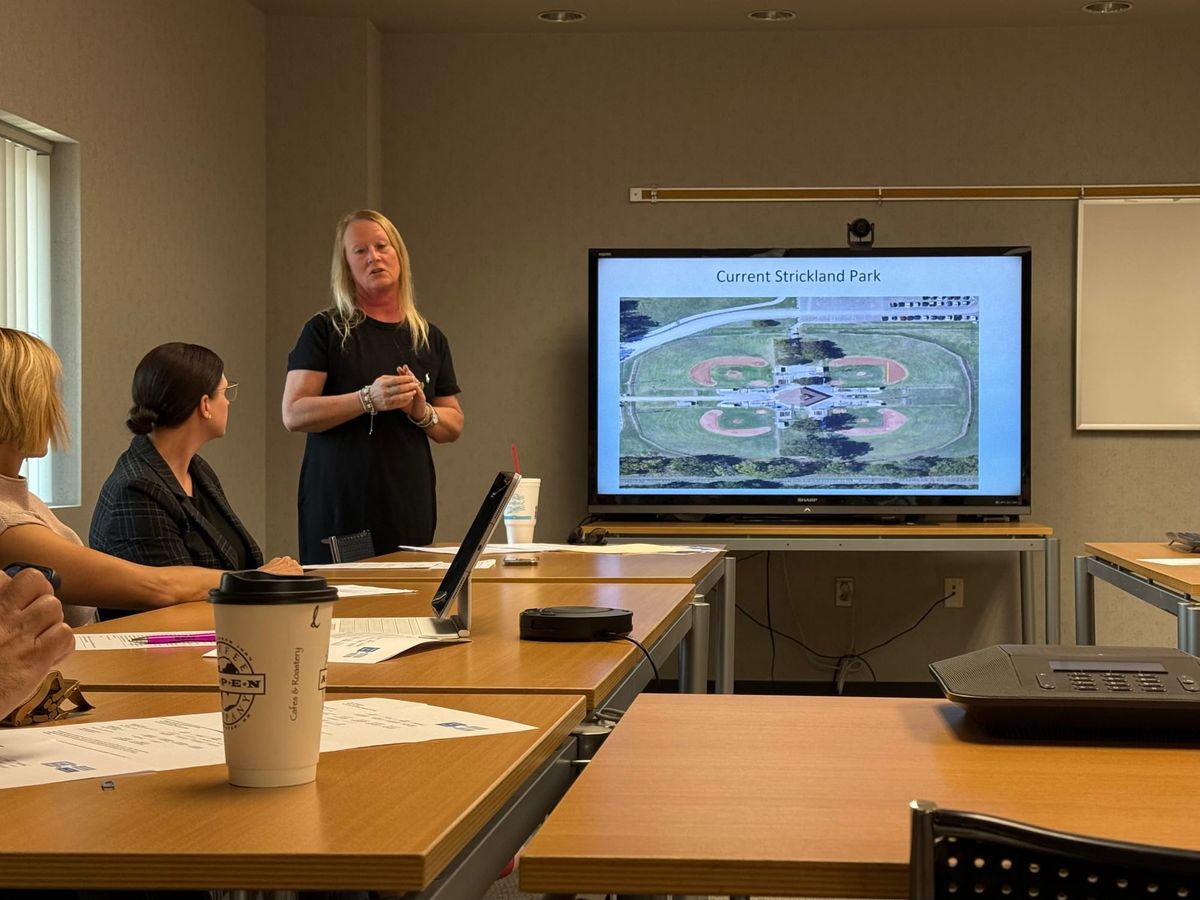
Stillwater's Tourism Advisory Committee voted unanimously March 10 to recommend the Stillwater Economic Development Authority authorize nearly $1.84 million from the Visitor Amenities Fund to renovate Strickland Park Ballfields — installing infield turf, new fencing, LED field lighting, shade structures, dugout extensions, and overhauling the restroom and concession areas — with the goal of completing the work in time for fall league play if SEDA approves the expenditure at its March 23 meeting.
The funds would be transferred to a city project account, with any unused dollars returned to the Visitor Amenities Fund.
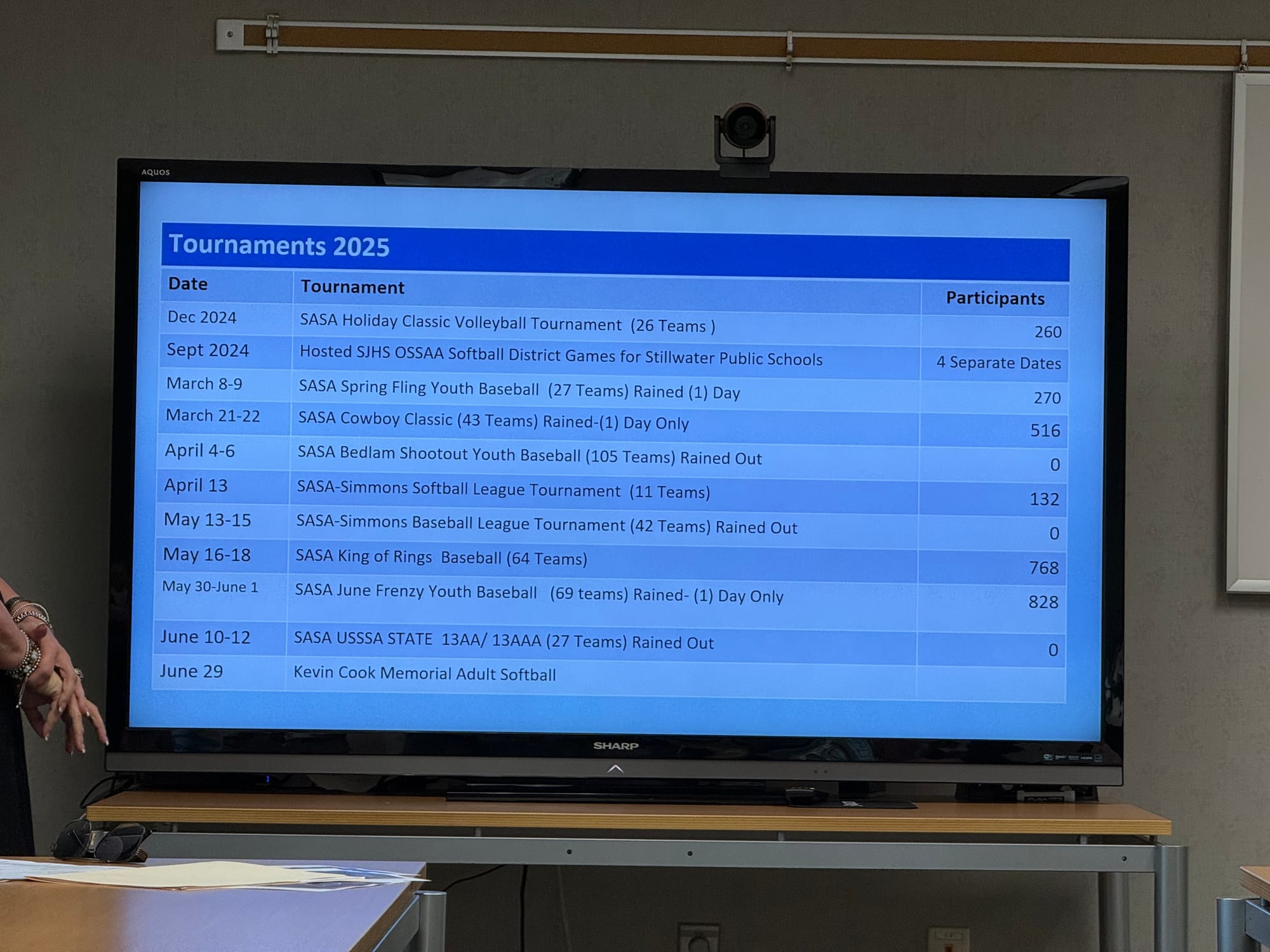
The vote came after a joint presentation from Parks and Community Resources Director Barbara Bliss and Carolyn Walstad, director of the Stillwater Area Sports Association, who argued the complex's grass-and-dirt infields absorb rain and stay wet long enough to force tournament cancellations — costing the city bookings and the visitor spending that comes with them. A rain-out occurs when field conditions become too wet or unsafe to play, forcing games to be canceled or postponed.
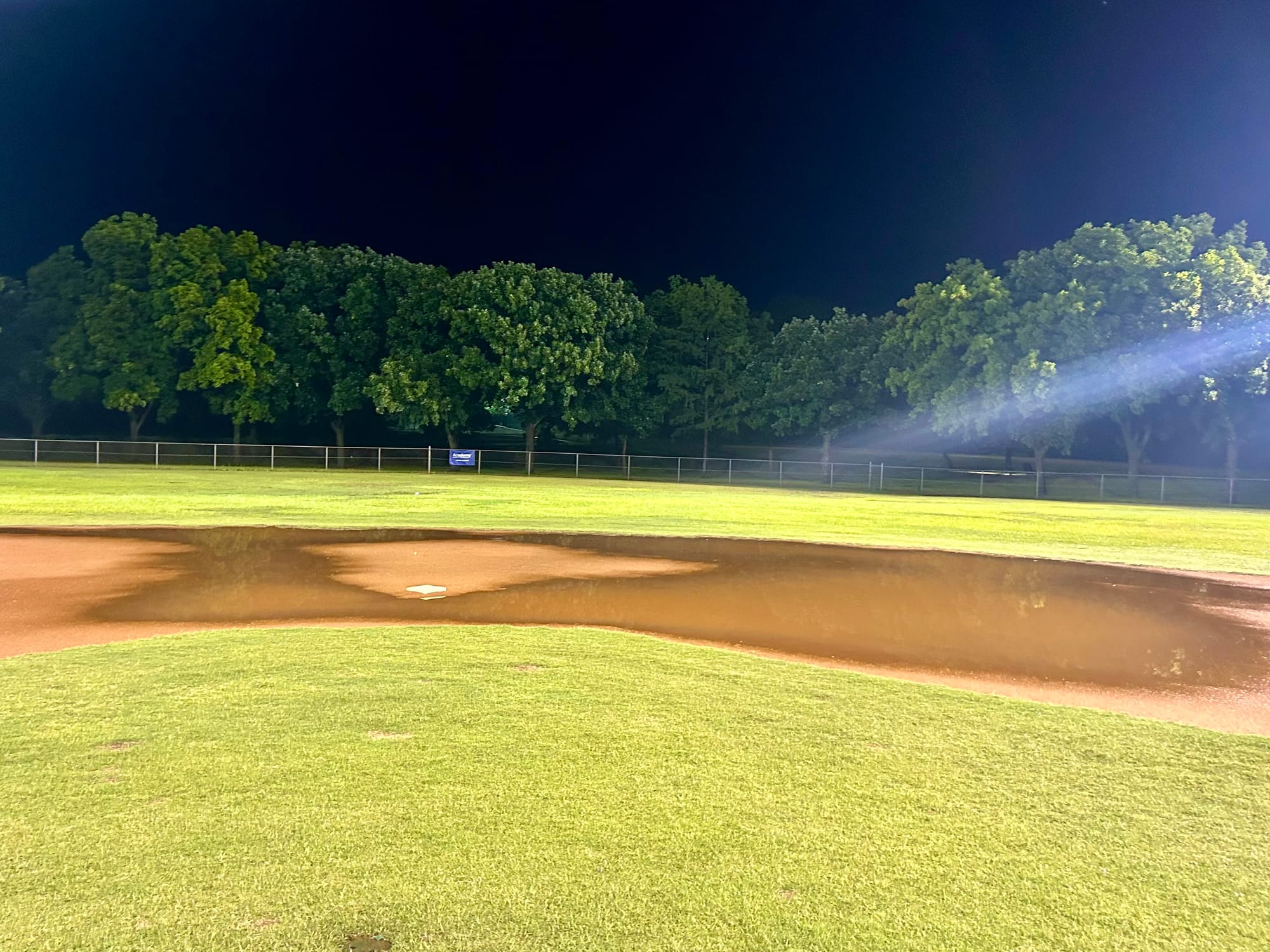
The push for turf upgrades at Strickland has been building for nearly a year. Walstad presented the same case to the Stillwater City Council in June 2025, when Mayor Will Joyce acknowledged that ball fields had been identified as likely the most impactful use of the Visitor Amenities Fund. At that meeting, Walstad estimated infield turf at roughly $98,000 per field — a figure that had already climbed to $760,000 for all four fields by March. April and May 2025 rainfall in the Stillwater area was nearly double the 30-year average, compounding the urgency.
The Stillwegian first reported on SASA's push for turf upgrades in June 2025.
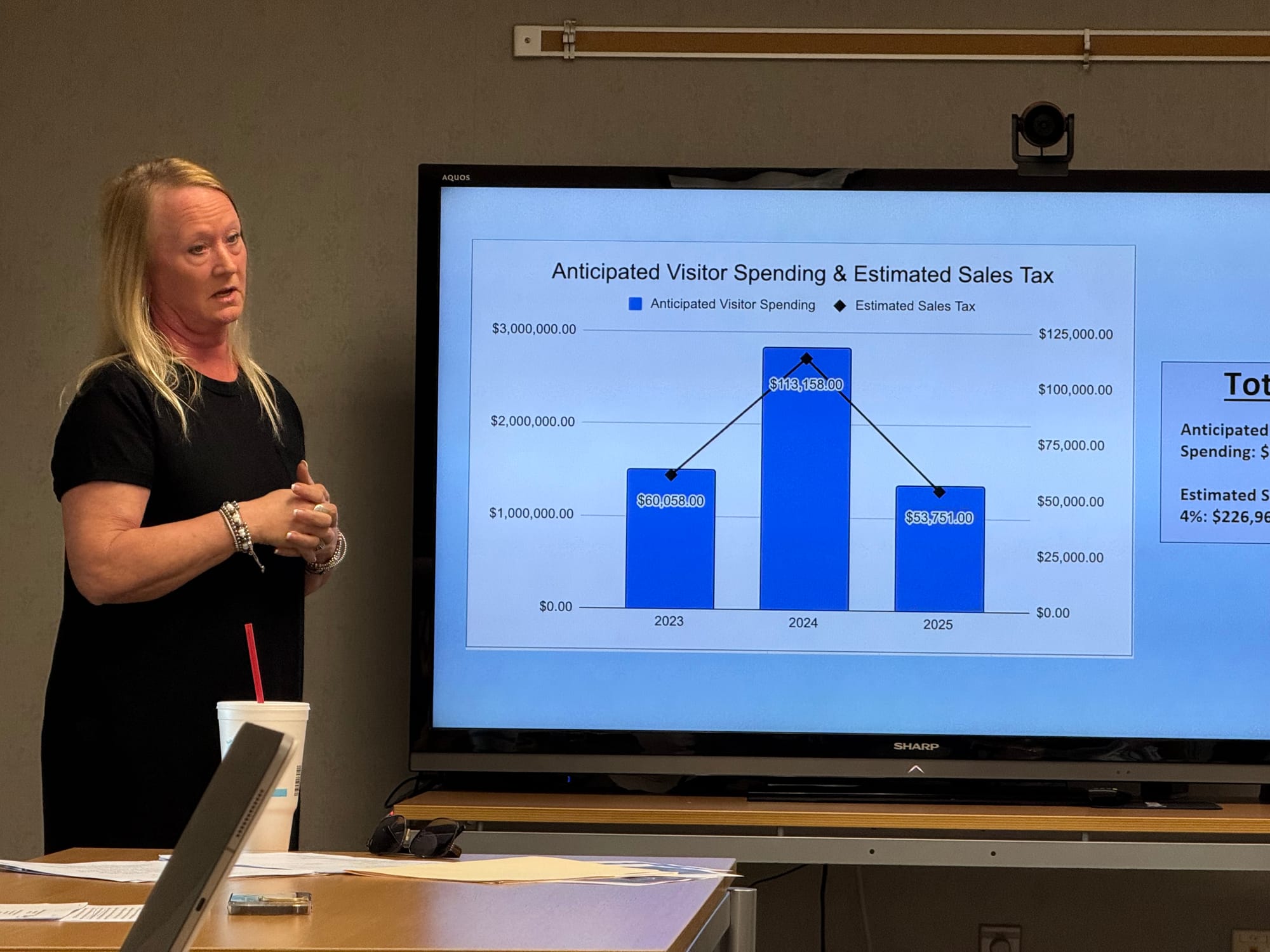
Walstad presented data spanning three years of Strickland-based SASA tournaments. In 2023, SASA tournaments drew an estimated 6,673 out-of-town visitors and generated a projected $1.5 million in visitor spending. In 2024, with no major rain-outs, those figures climbed to an estimated 12,573 out-of-town attendees and nearly $2.83 million in anticipated spending. But 2025 told a different story: repeated rain-outs — including the complete washout of a 105-team tournament in April — cut the estimate to roughly $1.34 million. Visit Stillwater's event impact analysis of just that one canceled April tournament projected a direct business sales loss of more than $1.23 million.

Daily Essentials by Axios
Get the news that matters in your inbox:
Walstad said Stillwater is falling behind competing communities that have already made the investment. "We're losing teams to Oklahoma City, Bixby, Midwest City, Edmond," she said. "But the only hook that we have is people love coming to Stillwater."
She pointed to a recently completed eight-field turf complex in Tahlequah — built at a cost of $11 million — as an example of what other communities are doing. "Other towns are doing it," Walstad said. "There's no reason why Stillwater can't do it."
Bliss described the complex as Stillwater's "jewel" for youth baseball and softball, noting the fields were built in 1994 and are now more than 30 years old. She said the park's location — within walking distance of hotels, restaurants, adjacent skatepark and fully accessible playground — makes it uniquely suited to draw and retain out-of-town teams.
The infield-only turf portion of the project is priced at $760,000. Walstad cautioned that further delays will push prices higher. The full turf upgrade — which would include outfields — was estimated at more than $1.8 million for the turf alone, which is why infields were prioritized.
Committee member Behfar Jahanshahi raised concerns about half-measures, pressing Walstad on whether the project would leave visible gaps between new and old infrastructure. Walstad and Deputy City Manager Christy Driskel acknowledged the outfield would remain natural grass but said the infield improvements, combined with the lighting and facility renovations, would produce a substantially upgraded visitor experience. Walstad noted the turf comes with a 10-year warranty and requires no rubber bead infill — a newer product she said would reduce maintenance.
Your local lumber source for any project.
Stillwater Building Center carries lumber and panels at 4521 S. Perkins Rd, just south of Stillwater on Highway 177. Convenient location, expert help.
📞 405-372-5959
Much of the $1.84 million total will be purchased through the Oklahoma Purchasing System, known as TOPS, a state-approved purchasing cooperative that allows municipalities to access pre-bid contracts and avoid a full public bidding process. City Attorney Kimberly Carnley confirmed Stillwater is a legal member of the cooperative. The restroom and concession renovation — estimated at roughly $180,000 — and the dugout extension concrete work will still require separate city bids.
Deputy City Manager Christy Driskel said the city's Visitor Amenities Fund currently holds approximately $2.27 million. The fund typically grows by around $600,000 per year. Approving the full $1.84 million would draw down roughly 82 percent of the balance, she said.
City Manager Brady Moore told the committee that Strickland was the right place to invest in part because the city's other primary youth baseball facility, Babcock Park, sits in a federally designated floodway — a more restrictive classification than a floodplain — which bars new permanent structures and makes turf investment there impractical, since turf can be ruined if submerged. Moore said a potential new multi-field complex site near 12th Avenue, adjacent to the planned YMCA development, also falls within a floodplain, presenting the same risk. With suitable land scarce, he said the strategy is to upgrade Strickland — the park where Walstad books the most hotel rooms and hosts the largest tournaments — and allow the Visitor Amenities Fund to rebuild over time before pursuing a larger project, potentially at Whittenberg Park.
Moore also pointed to a future funding source tied to Google's data center campus under construction in Stillwater. Under a development plan approved by the City Council in 2024, OG&E will pay the city a franchise fee equal to 3 percent of gross revenues from electricity sales to the data center — the fee the utility pays for the right to provide high-voltage power to the campus. The plan caps that fee at $4.5 million annually, though Moore cautioned that figure represents a ceiling on the franchise fee alone, not a parks budget. The project plan designates 29 percent of total project revenues toward parks and public amenities improvements and 30 percent toward operations and maintenance of those same facilities. Moore said the first revenues are expected to flow in fiscal year 2028, when two data centers are online.
"There is some future funding on the horizon that we could possibly bond and help do a big project," Moore said.
The committee amended the motion before approving it to ensure any unspent funds would be returned to the Visitor Amenities Fund — mirroring a condition the committee attached to its 2025 approval of $200,000 for asbestos abatement and demolition work at Washington School.
If SEDA approves the expenditure March 23, Driskel said the city would move quickly to lock in pricing through the TOPS cooperative and begin procurement. The goal is to complete installation during the June-through-August window when SASA's leagues are on break, with the renovated complex ready for fall league play in September.