The Stillwater Community Foundation presented results from its inaugural community survey last Thursday, showing affordable housing and mental health services emerged as top priorities among more than 400 residents who responded.
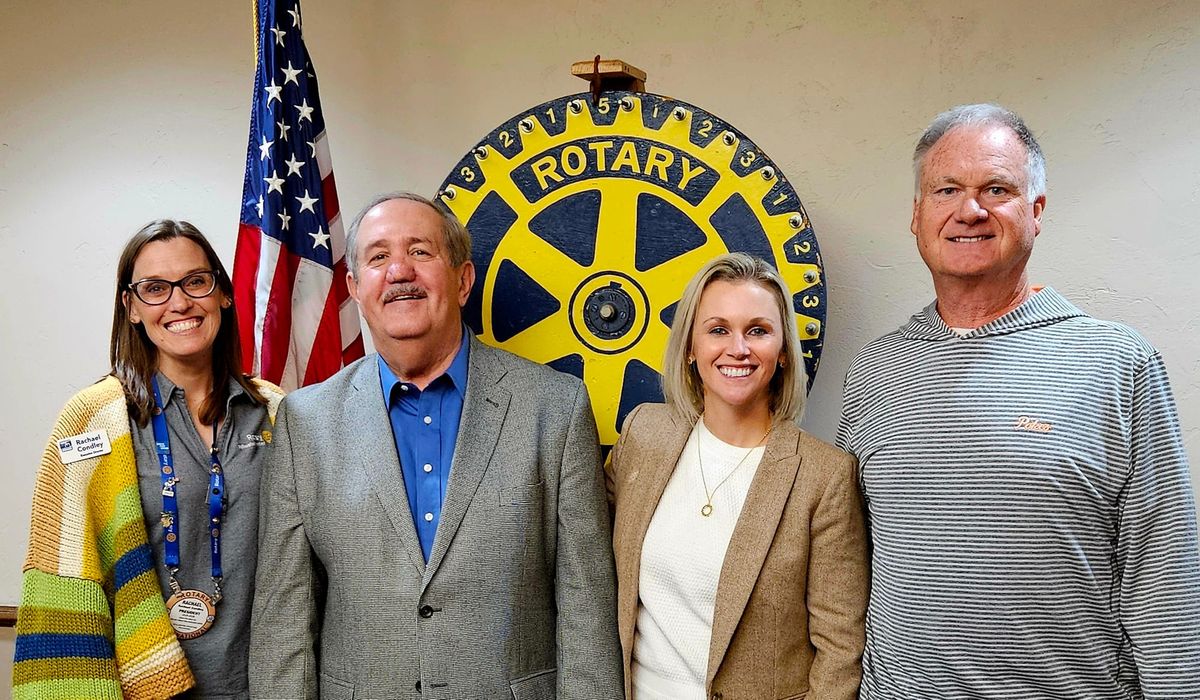
Abbey Davis, executive director of organizational development and impact at AAON Commercial HVAC Company and foundation board member, and Mike Woods, retired Oklahoma State University agricultural economics professor, shared findings at the Stillwater Frontier Rotary meeting Jan. 15.
The survey, conducted in May and June 2025 in partnership with the Stillwater Chamber of Commerce, identified community needs across different population segments including retirees, families, unemployed residents and single-person households.
"To get 400 responses is really hard," Davis said. "So we were really proud of the turnout."
The report spans more than 100 pages and includes both quantitative data and qualitative feedback. Davis said the foundation was committed to transparency in reporting results.
"This survey was really intended to be the voice of community members to be able to state what they think is going well in Stillwater and where we need to improve," Davis said. "The reason, and I joke about the report being 105 pages, is because we are super transparent and all of the qualitative responses, unless it was a derogatory term or a curse word, and there was only a few of those, any comment that you put in the survey is reported in the final results. So we really wanted to make sure that everyone's voice was represented."

Top concerns reflect economic pressures
When respondents ranked basic household needs, financial security ranked highest, followed by affordable healthcare, education resources, full-time employment, affordable housing, childcare, elderly care and mental health services.
Davis said the results did not surprise her given Payne County's higher living wage and poverty rates above the state average. The spring wildfires, which primarily hit the west side of town, compounded existing affordable housing challenges.
Rebuilding faces obstacles including shortages of materials and labor that began during the pandemic.
"There's just not an abundance of contractors and materials just ready to throw up homes," Davis said.


Survey slides show resident priorities including city government actions, educational opportunities and health barriers. (Courtesy Abbey Davis/Stillwater Community Foundation)
When asked what single action city government could take to improve Stillwater, responses included addressing homelessness, improving sidewalks and streets, creating affordable housing, supporting nonprofits and communicating initiatives better.
Residents also identified barriers to health including inability to afford healthy foods, dental care access, expensive prescription drugs and lack of medical insurance.
Build It Right — Start Local
🪜 Tools, lumber, and job-site essentials backed by local expertise. Stillwater Building Center helps homeowners and contractors get projects done right the first time. 📞 405-372-5959
Maintain before building new
A recurring theme that surprised Davis was residents' emphasis on maintaining existing parks before building new ones.
"It came up over and over of, hey, before we build more parks, let's make sure we're taking care of the ones we have," Davis said. "We've got broken down playground equipment, we've got cracks in the sidewalks, and just basic maintenance, because we've got some awesome parks."
Davis said she expected residents to request new amenities, but the message was clear that maintaining existing infrastructure should come first.
"I think everyone always wants new flashy things, but it was so loud and clear of, hey, let's take care of what we have, because those things are really good too," Davis said.
Sign up for THE STILLWEGIAN
Stillwater Oklahoma's local independent online news. Stay informed with free weekly newsletters.
No spam. Unsubscribe anytime.
Community strengths highlighted
Residents praised Stillwater Public Schools as a major community asset, along with Our Daily Bread, Stillwonder pop-ups, splash pads, the library, Prairie Arts Center and downtown investments.
"SPS is a HUGE part of why we raise our kids in Stillwater," one respondent wrote.
Areas for improvement included widening streets around schools, opening more early childhood centers, providing more summer and after-school programs, and expanding mental health resources.
Residents also want to see a community pool, family entertainment options, a large sports complex, skilled nursing facilities and more restaurants.

Survey demographics reveal gaps
The survey captured responses primarily from employed, married residents between ages 41 and 50. Ninety-three percent were permanent residents, 87 percent identified as white, 66 percent were female, 73 percent were married and 81 percent had attained a four-year degree or higher.
The Census shows 52 percent of Stillwater residents have four-year degrees, indicating the survey overrepresented more educated residents.
The foundation successfully reached retirees through board networks, Chamber connections and Rotary outreach, but the May launch meant college students had already left for summer.
"We didn't get this launched until close to May, and that was a strategic decision because of the wildfires," Davis said.
Plans to expand reach
Woods said administrators at Oklahoma State University and Northern Oklahoma College have indicated they want to partner on the next survey to ensure better college student representation.
Davis said she plans to partner with Clyde Wilson, associate vice president for access and community impact at Oklahoma State University, who recently joined the Stillwater school board. The foundation also plans to work with individual colleges to offer surveys for extra credit.
Davis identified low-income families and people experiencing homelessness as the hardest populations to reach and the ones that concern her most.
"The population that keeps me up the most, we talk about affordable housing, we talk about mental health, are low socioeconomic families, individuals experiencing, whether it's sheltered or unsheltered homelessness," Davis said. "Reaching those populations can be very, very tricky."
The foundation plans to leverage partnerships with local nonprofits to either access these populations directly or gather information from organizations about the needs they're hearing.
"We're not a nonprofit that raises money for a specific thing. We help build bridges in the community between nonprofits, between business, between whatever the needs are," Davis said. "That's what we're good at, and we'll do better at it on this next survey."
A message from Visit Stillwater
Ring in 2026 with excitement in America’s Friendliest College Town! From live music at the Tumbleweed and thrilling OSU Athletics, to livestock shows, new museum exhibits, and more, there’s something for everyone to enjoy!
Wildfire response and preparedness
The survey included a major focus on wildfire response following spring fire events. While 2.5 percent of respondents lost their home and 10.7 percent had their neighborhood impacted, 77 percent said the city and community responded extremely well or very well.

Unmet needs included funds for high deductibles, long-term housing options and mental health services. For future preparedness, respondents suggested fire protection education, cedar removal, improved communication systems and volunteer fire support.
Davis said responses included detailed suggestions like creating volunteer networks with basic firefighting tools.
Government trust discussion
At the Rotary meeting, attendees raised concerns about trust in local government institutions.
"I feel like trust in our city government, county government, even judicial systems has been burned recently," said Cara Eubanks.
Davis said the topic requires careful question design to produce meaningful feedback rather than general criticism, noting Stillwater has faced national attention for how certain situations were handled judicially.
Survey responses frequently mentioned transparency in government communications. Davis noted residents recognize officials are doing good things but not publicizing them effectively.
Planning the next survey
The foundation plans to launch its next survey this spring before OSU students leave, Woods said. The foundation will include consistent questions year after year to track changing perceptions.
Woods said housing insecurity resonated with his observations over 30 to 40 years in Stillwater.
"The last four or five years, housing insecurity, vulnerability seems to be more visible," Woods said.
The foundation welcomes community suggestions for the 2026 focus topic and plans to draft the survey within the next month or two.
Davis said the survey's success will be measured by whether it eliminates ambiguity between what residents need and what community leaders perceive those needs to be.
"Being able to shine a light on those things that may oftentimes get overlooked, to ensure that if the city comes across a pot of money to reinvest into the community, that they're doing that based upon feedback from the community, and not just making assumptions," Davis said.
About the foundation and survey origins
The Stillwater Community Foundation is a 501(c)(3) nonprofit whose mission is to connect people, businesses and nonprofits around community needs.
The survey originated during a board retreat one to two years ago, Woods said.
"As we were discussing it, Abby's eyes lit up and she said, well, you know, this is the kind of thing that I do," Woods said.
Davis, who holds a Ph.D. from Oklahoma State University and previously served as director of the Spears School of Business, is relocating to Bend, Oregon, but has agreed to assist with future surveys.
"We are losing not only a wonderful individual, but a great family," Woods said.
The full survey results are available here.
📺 Watch the presentation to Rotarians